DJI Drones: The Complete Guide to Every Line (2026)
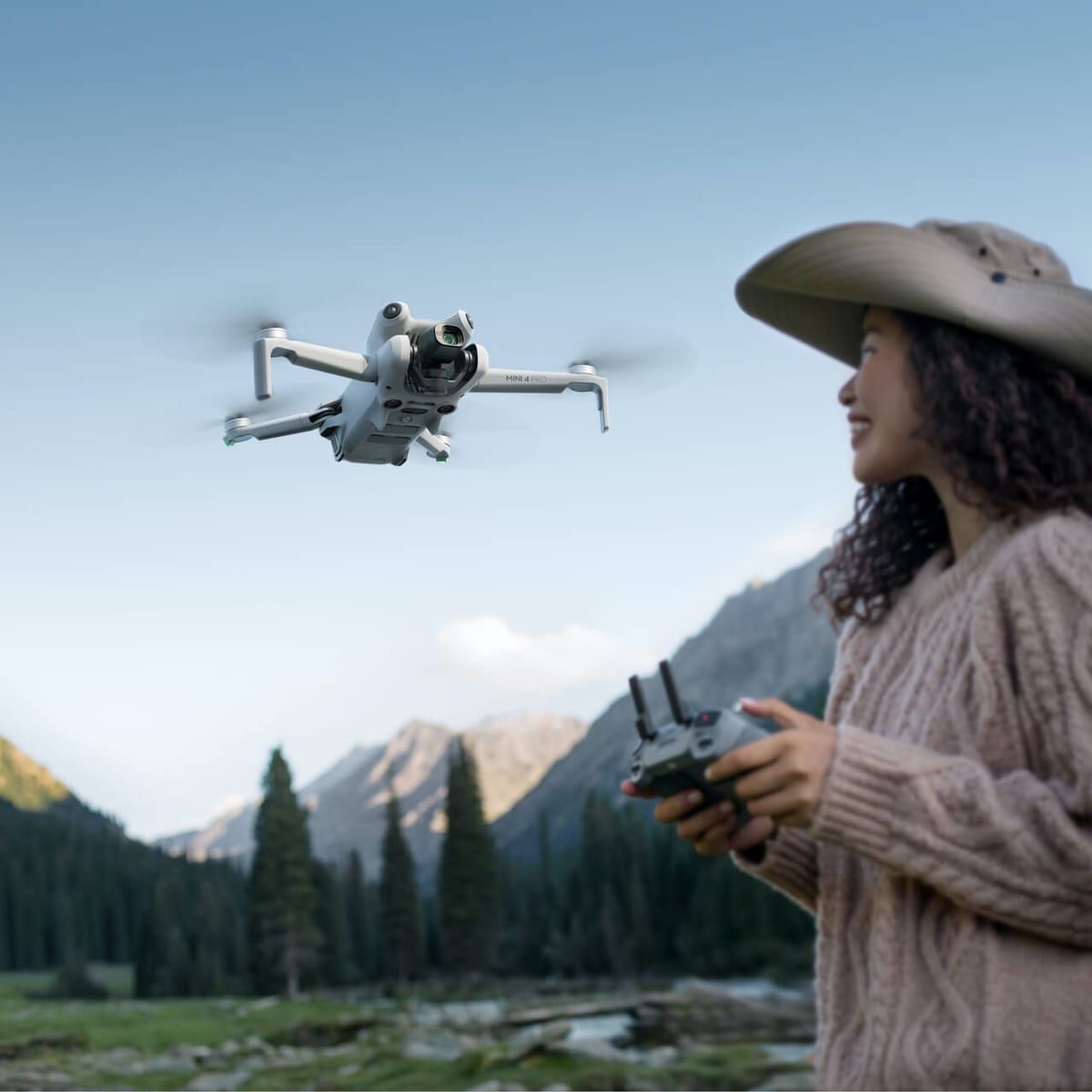
DJI controls more than 70% of the global civilian drone market and, according to FAA data published in 2025, accounts for approximately 96% of drones registered in the United States. That dominance isn't an accident - it's the result of two decades of continuous investment in camera technology, video transmission, and battery miniaturization.
Choosing between the available models, however, confuses even experienced pilots. DJI maintains more than 15 active models distributed across six distinct lines with different purposes. This guide maps each one, compares specifications and US prices, and identifies which drone to buy for each use case - from the beginner taking their first flight to the agricultural operator who needs industrial-grade performance.
Before buying, it's worth understanding the regulatory environment. In the US, commercial drone operations require an FAA Part 107 Remote Pilot Certificate. Recreational flyers must register drones weighing 0.55 lbs (250g) or more at FAA DroneZone ($5, valid 3 years). Many DJI models - including the entire Mini line - fall below that threshold, simplifying both registration and operational rules.
A note on DJI in the US: DJI drones are subject to NDAA Section 889 restrictions that prohibit their use by US federal government agencies. The FCC has also initiated proceedings related to DJI's radio frequency equipment. These restrictions affect government contractors and federal purchasers, but do not prohibit civilian or private commercial use in the United States. Private operators, businesses, and individual pilots can legally purchase and fly DJI drones.
The Mini Line: Lightweight, Legal, and Accessible
The Mini line defines DJI's identity in the entry-level market. All models weigh under 250g (0.55 lbs) - the threshold below which FAA recreational registration is not required and operational rules are somewhat simplified. There are four active options, with meaningful differences in camera capability and safety features.
DJI Neo is the lightest and least expensive: 135g, 4K/60fps, and 30 minutes of flight time, starting at $199. It operates without a remote controller - the pilot uses a smartphone running the DJI Fly app or hand gestures. Aimed at content creators who prioritize extreme portability and don't need precise trajectory control.
DJI Mini 2 SE weighs 249g, shoots 4K/30fps, flies for 31 minutes per charge, and offers O2 transmission up to 6.2 miles (10 km). Starting at $299. It's the most affordable entry into a DJI drone with a dedicated remote controller and stable transmission. It lacks obstacle avoidance - which demands extra attentiveness in urban environments.
DJI Mini 3 Pro has been officially discontinued, but still circulates on the secondary market. It was the first sub-250g drone to combine 3D obstacle avoidance, a 4K/60fps camera on a 1/1.3" sensor, and native vertical shooting - features that still hold up for content creators who find one used.
DJI Mini 4 Pro is the flagship of the Mini line in 2026 and one of DJI's best-selling models globally. It weighs 249g, has a 48 MP 1/1.3" sensor, shoots 4K/60fps, features omnidirectional APAS 360° obstacle avoidance, ActiveTrack 360°, and O4 transmission up to 12.4 miles (20 km). The only sub-250g drone on the market with these specifications.
DJI Mini 4 Pro technical specs:
| Specification | Detail |
|---|---|
| Weight | 249 g (0.55 lbs) |
| Sensor | 1/1.3" CMOS, 48 MP |
| Video | 4K/60fps, HDR, D-Log M 10-bit |
| Photo | 48 MP RAW, spherical panorama mode |
| Obstacle Avoidance | Omnidirectional APAS 360° |
| Subject Tracking | ActiveTrack 360° |
| Transmission | O4 - up to 20 km (12.4 miles) |
| Flight Time | 34 min (Intelligent Flight Battery Plus: 45 min) |
| Max Speed | 35.4 mph (57 km/h) in Sport mode |
| Wind Resistance | Level 7 (35.4 mph / 57 km/h) |
DJI Mini 4 Pro US prices (2026):
| Version | Controller | What's Included | Estimated Price |
|---|---|---|---|
| Standard | RC-N2 (no screen) | Drone + RC-N2 + 1 battery | ~$759 |
| Fly More Combo | RC-N2 (no screen) | + 2 extra batteries + charging hub + shoulder bag | ~$959 |
| Fly More Combo | RC 2 (built-in screen) | Same + controller with integrated display | ~$1,099 |
| Fly More Combo Plus | RC 2 (built-in screen) | + Plus battery (45 min) + extras | ~$1,199 |
Buying tip: The RC 2 version with its built-in display eliminates the need for a mounted smartphone - recommended for flying in bright sunlight or when a more stable connection is a priority.
| Model | Weight | Camera | Obstacle Avoidance | Flight Time | Starting Price |
|---|---|---|---|---|---|
| DJI Neo | 135 g | 4K/60fps | None | 30 min | $199 |
| DJI Mini 2 SE | 249 g | 4K/30fps | None | 31 min | $299 |
| DJI Mini 3 Pro | 249 g | 4K/60fps | 3-way | 34 min | Secondary market |
| DJI Mini 4 Pro | 249 g | 4K/60fps | APAS 360° | 34 min | ~$759 |
The Air and Mavic Lines: Cinematic Quality in a Portable Form
For pilots willing to exceed the 250g threshold in exchange for larger sensors and more flight time, DJI offers the Air and Mavic lines - still portable enough to fit in a travel backpack.
DJI Air 3 weighs 720g, carries dual cameras (a 1/1.3" wide-angle and a 3× telephoto), flies for 46 minutes, and starts at $1,099. It's the most balanced option for photographers and videographers who work on frequent outdoor shoots and need focal length flexibility without swapping lenses.
DJI Air 3S raises the stakes with a 1-inch main sensor - the same standard found in high-performance compact cameras. Also dual-cam, also 720g, also 46 minutes. Starting at $1,299. The advantage over the Air 3 shows up in low-light conditions and in the color grading latitude during post-production.
DJI Mavic 3 Classic introduces a 4/3" sensor with Hasselblad color science: 895g, 46 minutes, adjustable aperture f/2.8–f/11, and D-Log M color profile. Starting at $1,469. The larger sensor delivers a measurable advantage at higher ISOs - this is the entry point for pilots working in professional aerial photography.
DJI Mavic 3 Pro adds a third camera (7× telephoto) to the Mavic 3 Classic: triple-cam system, 958g, 43 minutes, starting at $2,199. The reference choice for content creators who need varied focal lengths without swapping equipment in the field.
| Model | Main Sensor | Cameras | Flight Time | Starting Price |
|---|---|---|---|---|
| DJI Air 3 | 1/1.3" | Dual-cam | 46 min | $1,099 |
| DJI Air 3S | 1" | Dual-cam | 46 min | $1,299 |
| DJI Mavic 3 Classic | 4/3" Hasselblad | Single | 46 min | $1,469 |
| DJI Mavic 3 Pro | 4/3" Hasselblad | Triple-cam | 43 min | $2,199 |
The FPV Line: Immersive DJI Drones
FPV (First Person View) is the flight style where the pilot sees the flight in real time through goggles. DJI entered the segment focused on content creators, not racing pilots. If you want to understand FPV flying before buying, our beginner drone flying guide covers the fundamentals.
DJI Avata 2 is the cinewhoop of the lineup: propeller guards integrated into the frame, 377g, a 1/1.3" 12 MP sensor with 155° FOV, 4K/60fps in D-Cinelike 10-bit, lateral obstacle avoidance, and 23 minutes of flight time. It's DJI's most accessible FPV drone and the category leader for content creators. Read the full DJI Avata 2 review for a real-flight analysis.
DJI Avata 360 is the latest addition to the FPV line: built-in 360° camera, 450g, 22 minutes, and omnidirectional APAS 360° obstacle avoidance. Targeted at creators exploring hyperlapse angles and parallax-free spherical footage.
The original DJI FPV (2021) has been discontinued but still surfaces on the secondary market - a cheaper entry into the format for those willing to accept limited support.
Enterprise and Professional Lines: Inspection and B2B Operations
For commercial operations requiring long optical zoom, thermal cameras, modular payloads, or centimeter-level RTK precision, DJI maintains five active models in the Enterprise and Matrice lines.
DJI Mavic 3 Enterprise takes the Mavic 3 platform and adds 56× zoom, integrated RTK support, and a modular payload slot (strobe lights, speakers, gas sensors). Weighs 915g, flies 45 minutes. Contact DJI for pricing. It's the entry-level professional DJI drone and the most widely adopted by mid-sized inspection companies.
DJI Phantom 4 RTK is designed exclusively for photogrammetric mapping: centimeter-level accuracy without ground control points (GCPs), 30 minutes of flight time, a 1" 20 MP sensor. Contact DJI for pricing. The benchmark for aerial mapping and surveying applications.
DJI Matrice 30T combines 200× optical zoom with a 640×512 px IR thermal sensor, in a 3.77 kg frame rated IP55. 41-minute flight time. Contact DJI for pricing. Preferred by fire departments, utility companies, and search-and-rescue operations. For more on thermal capabilities, see our thermal camera drone guide.
DJI Matrice 350 RTK is the largest Enterprise-line drone: 6.47 kg, 55 minutes, 2.73 kg payload capacity, IP55 certification. Compatible with the Zenmuse H20T, L2 LiDAR, and industrial inspection cameras. Contact DJI for pricing. Specified for large-scale infrastructure inspection operations.
DJI Inspire 3 is DJI's cinema drone: full-frame sensor, ProRes RAW recording in 8K, X9-8K Air gimbal, dual-pilot operation. Weighs 4 kg, flies 28 minutes. Starts at $16,999. Aimed at production companies and high-budget advertising shoots.
The Agras Line: DJI Agricultural Drones
DJI also leads the agricultural spraying drone segment. Agras drones are professional-grade aircraft, and commercial agricultural spraying in the US requires compliance with EPA pesticide application rules and applicable state regulations. Pilots operating Agras drones commercially should consult Part 137 (Agricultural Aircraft Operations) in addition to Part 107.
DJI Agras T25 has a 6.6-gallon (25-liter) tank, a 29.5-foot (9-meter) spray width, and covers up to 21.6 acres per hour. The most compact model in the line - aimed at small and mid-sized operations that prioritize portability. Starts at approximately $14,999.
DJI Agras T40 scales up to a 10.6-gallon (40-liter) tank, 65-foot (20-meter) spray width, and omnidirectional radar for autonomous flight over variable terrain. Balances capacity and accessibility for medium-to-large farms.
DJI Agras T50 is the flagship: 13.2-gallon (50-liter) tank, 79-foot (24-meter) spray width, up to 21.6 acres per hour, and support for swarm operation alongside the T25. Contact DJI for pricing. The benchmark for large-scale row crop and specialty crop operations.
| Model | Tank | Spray Width | Coverage/hr | Approx. US Price |
|---|---|---|---|---|
| DJI Agras T25 | 25 L (6.6 gal) | 9 m (29.5 ft) | 21.6 ac/h | ~$14,999 |
| DJI Agras T40 | 40 L (10.6 gal) | 20 m (65 ft) | 17.5 ac/h | Contact DJI |
| DJI Agras T50 | 50 L (13.2 gal) | 24 m (79 ft) | 21.6 ac/h | Contact DJI |
Which DJI Drone Should You Buy: Guide by Use Case
The right choice depends on three variables: weight class (above or below 250g), camera quality required for the end use, and available budget.
Beginner and recreational: Start with the DJI Mini 2 SE ($299) if budget is limited, or invest in the DJI Mini 4 Pro (~$759) if you want obstacle avoidance from your first flight. Both stay under 250g. For other entry-level models outside the DJI ecosystem, the beginner drone flying guide covers what to look for.
Intermediate content creator: The DJI Air 3S ($1,299) delivers the best value - a 1-inch sensor, dual-cam, and 46 minutes of flight time without the weight and cost of a Mavic.
Advanced content creator: The DJI Mavic 3 Pro ($2,199) for those who need triple-cam and a Hasselblad 4/3" sensor. The Mavic 3 Classic offers the same sensor for less if the 7× telephoto isn't essential for your work.
FPV and immersive footage: The DJI Avata 2 is the recommended entry point. DJI Avata 360 if spherical cameras and omnidirectional angles are the creative focus.
Inspection and professional use: The DJI Mavic 3 Enterprise handles most B2B operations at smaller scale. For thermography or long-range zoom, the Matrice 30T. For precision RTK mapping, the Phantom 4 RTK. For heavy payloads and modular configurations, the Matrice 350 RTK.
Agriculture: Size the Agras to your operation. T25 for operations up to around 500 acres per season, T40 for 500 to 2,000 acres, T50 above that or where per-hour efficiency is critical. Confirm compliance with Part 137 and state pesticide application regulations before purchasing.
FAQ
Sources: DJI - Official US Site | FAA - UAS by the Numbers | FAA - Part 107
More like this
Related Articles
Drone Remote ID Explained: Do You Need One in 2026?
Remote ID is a digital license plate for drones. See who needs it in the US, UK and EU, the 3 ways to comply, module costs and the…
Best Cheap Drones With Camera in 2026: 6 Picks Under $500
Looking for a cheap drone with a good camera? We compare 6 budget picks from $149 to $450 by real flight time, gimbal, rules and h…
How High Can a Drone Legally Fly? Limits by Country (2026)
The FAA caps drones at 400 feet; the EU, UK and Australia cap them at 120 meters. See the exact legal limit for your country and w…