eVTOL Air Taxis: Who's Flying and When You Can Ride (2026)
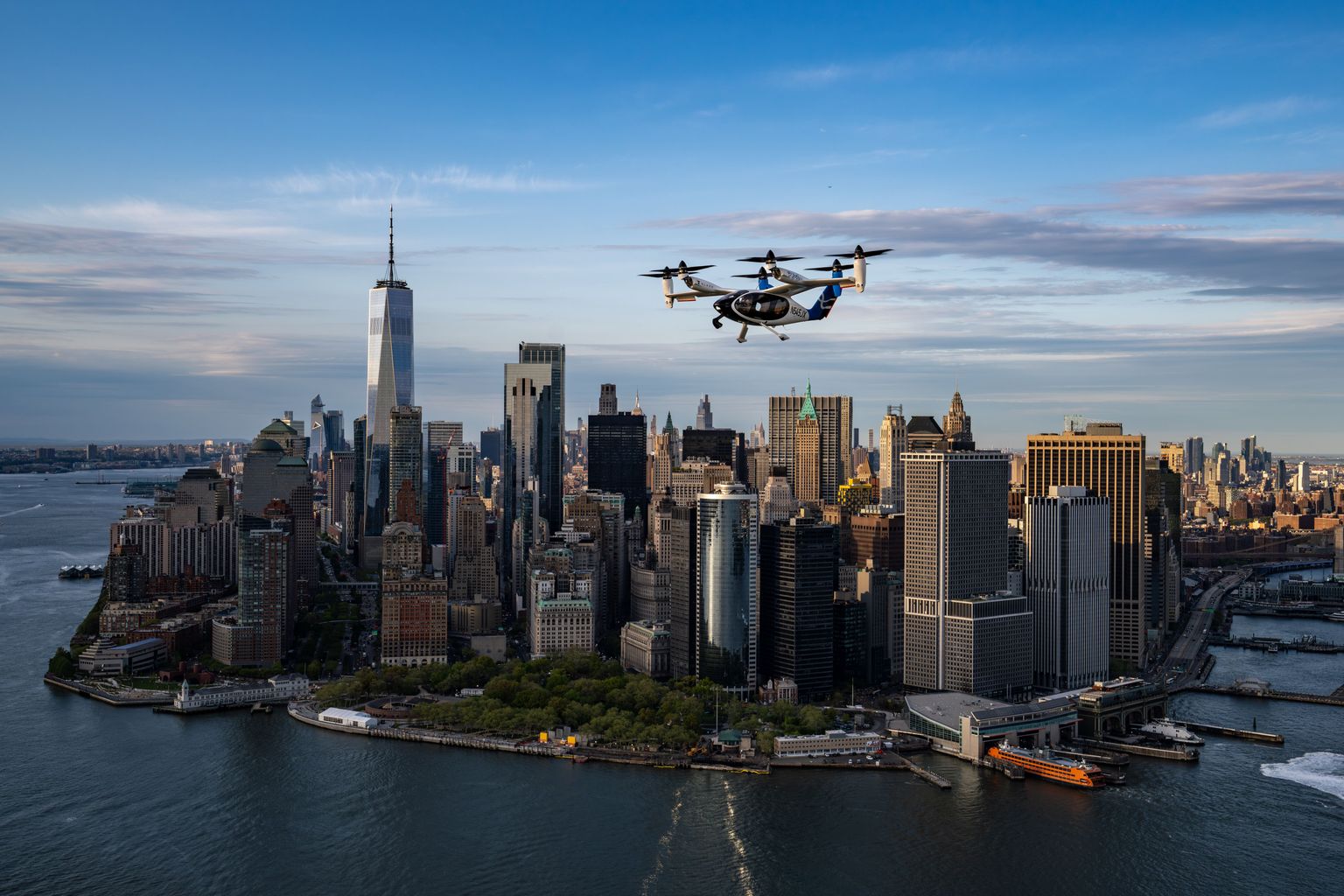
An electric aircraft that takes off like a helicopter, carries four passengers, and lands on a rooftop pad has gone from science-fiction pitch deck to something you can pre-book a seat on. In 2026, Joby Aviation and Archer Aviation are flying real eVTOL air taxis through FAA-supervised test corridors over New York, Texas, and Florida, EHang is already selling paid rides in three Chinese cities, and both Joby and Archer have signed launch agreements to carry paying passengers in the United Arab Emirates before the year is out.
This guide cuts through the hype cycle that has followed this industry since 2015. It covers how eVTOL aircraft actually work, who the serious builders are versus who has already gone bankrupt, where each company stands with regulators, what a ticket is likely to cost, and a realistic timeline for when you'll be able to fly in one — wherever in the world you live.
What Is an eVTOL Air Taxi?
eVTOL stands for electric Vertical Take-Off and Landing. It is a battery-powered aircraft that lifts off and lands vertically like a helicopter, using multiple independent electric rotors, then transitions to forward flight for efficient cruise — more like a small airplane. The category is also called AAM (Advanced Air Mobility) or, informally, an "air taxi," and it is built specifically to carry paying passengers over short urban and suburban routes.
The aircraft leading the FAA's certification race — Joby's S4 and Archer's Midnight — both carry a pilot plus four passengers, cruise at roughly 150–200 mph, and fly ranges of 20–100 miles on a single charge before needing a 10–15 minute fast recharge. Unlike a helicopter's single main rotor and turbine engine, an eVTOL distributes lift and thrust across 6 to 12 independent electric motors, which is the single biggest reason regulators consider the category inherently safer to certify.
eVTOL vs. Helicopter vs. Drone: What's the Difference?
An eVTOL is not simply a large drone scaled up to carry people, and it isn't a battery-swapped helicopter either — the distinction is passenger-carrying design and propulsion architecture, not just size.
Drones are predominantly uncrewed and built to carry cameras or cargo; the FAA and most global regulators treat them under a completely separate rulebook from passenger aircraft, such as FAA Part 107 in the US. An eVTOL, by contrast, must meet full aircraft type-certification standards — the same regulatory bar as a commercial airliner, just applied to a new airframe category — because it carries paying members of the public. Compared to a conventional helicopter, an eVTOL's advantages are concrete: dramatically lower noise (critical for dense urban operations), zero direct emissions, fewer moving parts to maintain since electric motors replace a turbine and gearbox, and — per most manufacturers' projections — a lower long-term operating cost once fleets scale, even though today's purchase price per aircraft remains high.
For context, DJI's own cargo-carrying EV50 — unveiled after high-altitude test flights above 8,861 meters on Mount Everest in July 2026 — uses the same eVTOL propulsion architecture but carries freight, not people, illustrating how the underlying technology splits into passenger and cargo branches. See our coverage of the DJI EV50 eVTOL cargo drone for the freight side of this same shift.
Who's Building eVTOL Air Taxis?
Dozens of eVTOL startups raised money during the 2020–2022 boom; most have since folded or been absorbed. The companies below are the ones with hardware actually flying test campaigns or paying passengers as of mid-2026.
| Company | Aircraft | Capacity | Range | Status (2026) | Target market |
|---|---|---|---|---|---|
| Joby Aviation | S4 | Pilot + 4 pax | ~100 mi | FAA Stage 4 of 5 type cert | US, Dubai (UAE) |
| Archer Aviation | Midnight | Pilot + 4 pax | ~20–50 mi (urban hops) | FAA Phase 3 of 4 closed | US, Abu Dhabi (UAE) |
| EHang | EH216-S | Pilotless, 2 pax | ~19 mi | Commercial type cert issued; paid flights live | China (Guangzhou, Hefei, Shenzhen) |
| Wisk Aero (Boeing/Archer) | Generation 6 | Pilotless, 4 pax | ~90 mi | Flight-testing autonomous ops | US (Texas pilot program) |
| Volocopter | VoloCity / VoloXPro | Pilot + 1–2 pax | ~22 mi | EASA cert targeted 2026–2027 | Europe |
| Vertical Aerospace | VX4 "Valo" | Pilot + 4 pax | ~100 mi | Prototype complete, cert through 2028 | UK, Europe |
Joby and Archer are the clear US front-runners, and both are edging closer to a finish line that has moved repeatedly since 2021 — treat any specific launch month as provisional until the FAA issues final type certification. Boeing sold three of its subsidiaries — Wisk, Insitu, and SkyGrid — to Archer in 2026 in exchange for a minority stake in the company, folding Boeing's autonomous air-taxi bet into Archer's roadmap. On the pilotless side, Wisk flew a supervised demonstration in July 2026 in which a single ground operator managed three uncrewed Gen 6 aircraft simultaneously alongside regular air traffic — a milestone toward fully autonomous commercial service. Lilium, once a leading contender with a distinct electric-jet design, filed for insolvency in October 2023; its assets were acquired and relaunched in 2024, though it remains behind the leaders on flight-test volume.
Are eVTOL Air Taxis Certified to Fly Yet?
No US or European eVTOL has full commercial type certification as of mid-2026 — China is the only country currently running paid passenger eVTOL service. Joby has cleared Stage 4 of the FAA's five-stage type-certification process, and Archer became the first manufacturer to close Phase 3 of the FAA's four-phase process, but neither has final airworthiness certification yet.
China's EHang holds the world's first commercial eVTOL type certificate, issued by the Civil Aviation Administration of China (CAAC), and has been running revenue passenger flights in Guangzhou and Hefei since 2023, with paid service now added in Shenzhen and a Shanghai launch underway through 2027. Two of EHang's operating partners hold Air Operator Certificates and had logged more than 3,000 accident-free flight missions as of mid-2026. In the US, Joby completed a notable milestone flight from JFK Airport to a Manhattan heliport in roughly seven minutes in April 2026 — the first point-to-point eVTOL flight from a major US commercial airport — as part of FAA-supervised testing under the eVTOL Integration Pilot Program (eIPP), which covers New York, New Jersey, Texas, and Florida. In Europe, the EASA (European Union Aviation Safety Agency) framework already defines the certification categories eVTOLs must meet, but no aircraft has cleared full EASA type certification; Volocopter is targeting a Light Sport-category certification for its VoloXPro by the end of 2026, with the passenger-carrying VoloCity expected in 2027.
How Much Does an eVTOL Air Taxi Ride Cost?
Early eVTOL air-taxi rides are priced like a premium rideshare, not a private helicopter charter — expect roughly $50 to $200 per trip at launch, well above an UberX but below a helicopter transfer. Joby has publicly quoted Dubai launch fares starting at AED 350 (about $95) for a 15-minute flight. In Abu Dhabi, Archer has said pricing will initially track premium services like Uber Black or Uber Comfort before easing toward UberX-level fares as the fleet scales and utilization improves.
Manufacturers are consistent on the trajectory even where the exact numbers vary: prices start high because early fleets are small and pilots are paid, then fall over several years as aircraft utilization rises and — eventually — autonomous, pilotless operation removes the largest single line item in the cost structure. First adopters will skew toward business travelers and airport-to-downtown transfers, where the time saved is worth the premium; mass-market pricing is a multi-year horizon, not a 2026 reality.
When Can You Actually Ride One?
The UAE is on track to be the first place outside China where ordinary passengers can book an eVTOL flight, with both Joby (Dubai) and Archer (Abu Dhabi) targeting commercial launch by the fourth quarter of 2026. In the US, both companies have pulled back from firm commercial-launch dates after previously targeting 2026, citing the pace of FAA final certification — realistic estimates now cluster around late 2026 to 2027 for the first paid US flights, most likely airport shuttle routes in New York, Los Angeles, or Texas before wider city coverage.
| Region | First paid passenger flights | Status as of August 2026 |
|---|---|---|
| China (Guangzhou, Hefei, Shenzhen) | Live since 2023 | Only market with commercial eVTOL service today |
| UAE (Dubai, Abu Dhabi) | Targeted Q4 2026 | Joby and Archer both signed; pre-booking opening |
| United States | Late 2026–2027 (est.) | FAA type certification not yet finalized |
| Europe (EASA) | 2027 (est.) | VoloXPro cert targeted end of 2026; VoloCity 2027 |
| UK | 2028+ (est.) | Vertical Aerospace certification campaign runs through 2028 |
Certification timelines in aviation slip more often than they hold — every company above has already missed at least one earlier target date, and final airworthiness sign-off is not a formality any manufacturer controls. The honest read for 2026 is: flying in an eVTOL air taxi is now a "when," not an "if," but exactly which quarter depends on a regulator, not a press release.
Are eVTOL Air Taxis Safe?
Distributed electric propulsion is the core safety argument for eVTOLs: instead of one central engine and one main rotor, aircraft like the Joby S4 and Archer Midnight split lift and thrust across 6 to 12 independent rotors, so losing one or two does not cause loss of control — the aircraft is designed to complete a safe landing on the remaining motors. Electric motors are also mechanically simpler than a turbine, with far fewer moving parts that can fail.
Regulators are not taking that argument on faith. The FAA's multi-stage type-certification process and the EASA equivalent both require manufacturers to demonstrate redundancy, controlled-failure landings, and structural integrity through extensive ground and flight testing before any aircraft is cleared to carry a fare-paying passenger — the same rigor applied to any new commercial aircraft type, compressed into a newer airframe category regulators are still building specific rules for. For a look at how the FAA's uncrewed side of this airspace is regulated today, see our guide to drone no-fly zones and airspace rules, which governs the smaller aircraft eVTOLs will eventually share urban airspace with.
FAQ
Sources: Aviation Week: Archer, Joby Advance UAE Commercial Launches | FLYING Magazine: Joby Targets 2026 Passenger Service | EHang: EH216-S Air Operator Certificates | Manufacturing Dive: Boeing Sells Wisk, Insitu to Archer
More like this
Related Articles
How High Can a Drone Legally Fly? Limits by Country (2026)
The FAA caps drones at 400 feet; the EU, UK and Australia cap them at 120 meters. See the exact legal limit for your country and w…
Drone Delivery in 2026: How It Works, Cost & Coverage
Drone delivery in 2026: how Amazon, Wing, Zipline, and DoorDash actually work, what deliveries cost, and how to check if the servi…
Is DJI Banned in the US? 2026 Status, Rules and FAQ
DJI isn't fully banned in the US, but new models can't get FCC approval. Here's exactly what's restricted, what's still legal, and…