DJI EV50: First eVTOL Cargo Drone Debuts on Everest
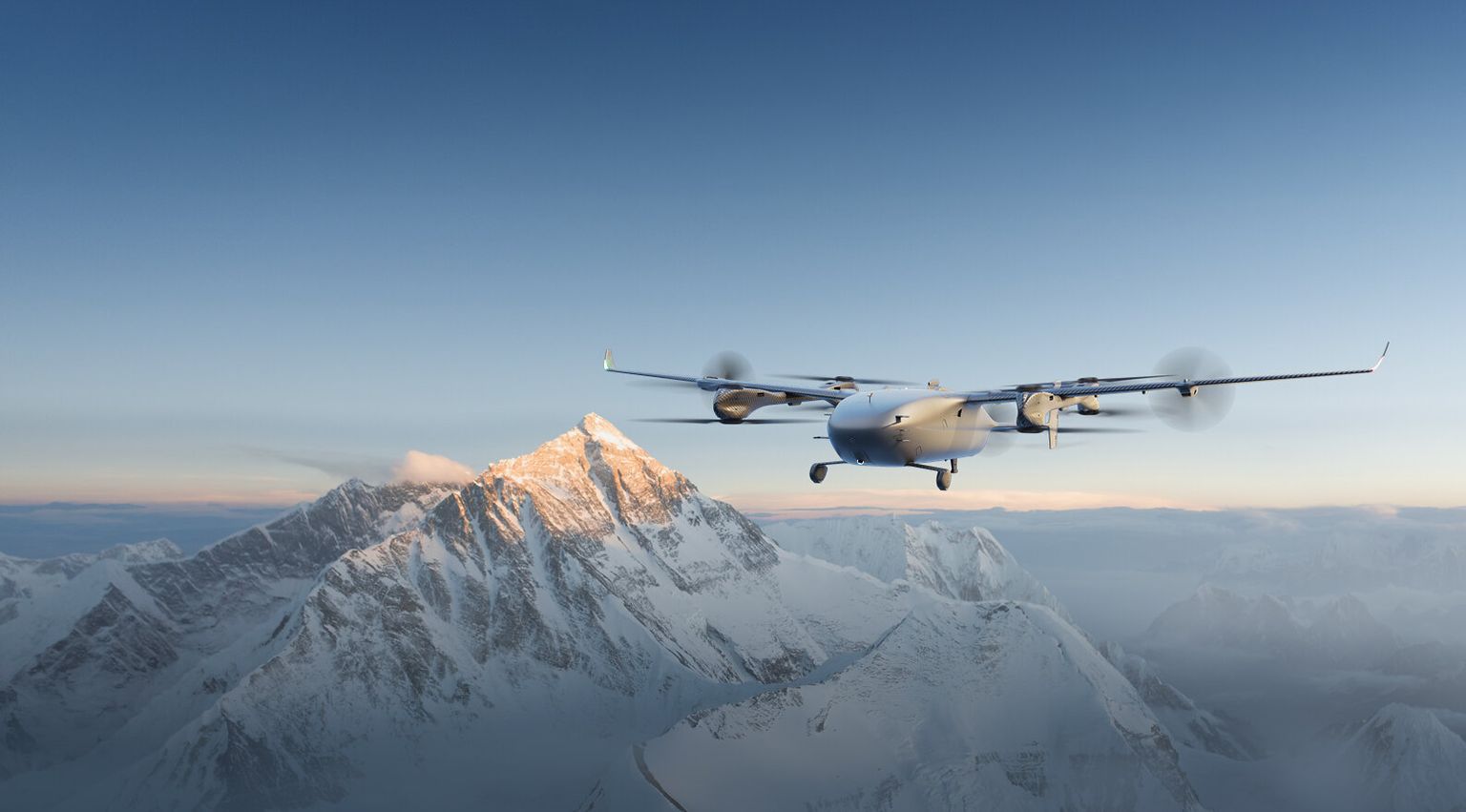
DJI revealed its first eVTOL (electric vertical takeoff and landing) cargo aircraft, the EV50, on July 9, 2026, disclosing that the drone had already completed 12 high-altitude test flights near Mount Everest, reaching 29,072 feet — higher than the mountain's 29,031.7-foot summit. The announcement, made through a press release detailing a trio of Everest missions, gave no price, launch date, or target market for the aircraft.
Background
DJI has quietly tested drones on Everest for two decades, using the mountain's extreme cold, thin air, and unpredictable wind as a stress test no lab can replicate. The company's Everest program dates back to 2009, when it validated early flight-control hardware on the mountain, and has since included 2022 summit footage captured by a Mavic 3 and 2024 cargo trials with the FlyCart 30. The July 2026 missions mark the most ambitious phase yet: three different aircraft, each built for a distinct high-altitude job, flying simultaneously in the same extreme environment.
The EV50 is the headline reveal. It is a lift-and-cruise eVTOL — a fixed-wing aircraft with vertical-lift rotors that let it take off and land like a helicopter, then fly forward on wings for range and speed, similar in concept to the cargo eVTOLs being developed for last-mile logistics in the US and Europe. DJI says the EV50 carries a 110-pound (50-kilogram) payload up to 93 miles (150 kilometers), reaches 99 mph (160 km/h) unloaded, and folds down to roughly 8 feet by 4.6 feet by 3.9 feet for transport, deployable again in about five minutes.
The Everest Altitude Record
DJI flew the EV50 on 12 atmospheric-research missions over 12 days on the north side of Everest, in China's Qomolangma National Nature Reserve, carrying ozone-measuring instruments for Peking University's College of Environmental Sciences. The aircraft's best flight reached a maximum altitude of 29,072 feet (8,861 meters) with a continuous climb of 12,238 feet (3,730 meters), using spiral ascents and reciprocating flight patterns to navigate the mountain's shifting winds.
| Aircraft | Role | Key metric |
|---|---|---|
| DJI EV50 | eVTOL atmospheric research | 29,072 ft max altitude, 12 flights |
| DJI FlyCart 100 | Heavy-lift cargo delivery | 22,207 lb moved, ~8 min per flight |
| DJI Matrice 4E | Mapping and reconnaissance | 1.1+ sq mi mapped at cm-level accuracy |
FlyCart 100 Cuts the Khumbu Icefall Trek to 8 Minutes
Running alongside the EV50 tests, DJI's existing FlyCart 100 heavy-lift drone moved 22,207 pounds (10,073 kilograms) of cargo between Everest Base Camp and Camp 1, partnered with the Nepalese logistics company Airlift. The drone carried 15,907 pounds (7,215 kilograms) of climbing supplies uphill and removed 6,301 pounds (2,858 kilograms) of waste on return trips, each flight covering the route in about eight minutes at altitudes above 20,669 feet (6,300 meters) and in temperatures as low as 5°F (-15°C).
That same route traditionally takes Sherpa porters six to eight hours on foot through the Khumbu Icefall, a shifting glacier field considered one of the most dangerous stretches on the mountain because of collapsing seracs and hidden crevasses. DJI spokesperson Christina Zhang said the company remains "dedicated to making the world's highest mountain safer and cleaner for Sherpas and mountaineers worldwide."
Matrice 4E Maps the Icefall in 3.5 Hours
DJI's Matrice 4E, a commercial mapping drone already used for infrastructure inspection, mapped more than 1.1 square miles (3 square kilometers) of the Khumbu Icefall core area at centimeter-level resolution in 3.5 hours, operating at 21,161 feet (6,450 meters) in temperatures below -4°F (-20°C). Equipped with a laser range finder, the aircraft is intended to support real-time hazard monitoring and search-and-rescue planning for expedition teams tracking the icefall's constant movement.
What This Means for Drone Pilots
The EV50 puts DJI directly into the fixed-wing eVTOL cargo category already being pursued by Western logistics and aerospace companies for last-mile and regional delivery, a market DJI had not previously entered with a dedicated aircraft. No price, availability, or regulatory filing has been announced for any market outside China, so US and EU pilots and operators should not expect the EV50 on sale soon — but its 93-mile range and 110-pound payload point to a heavier, longer-range delivery class than DJI's existing FlyCart line.
For working pilots, the more immediate takeaway is DJI's expanding complete drone lineup, which now spans consumer camera drones through heavy-lift eVTOL cargo aircraft. Long-range autonomous missions like the EV50's Everest flights also depend on the kind of extended-range, often uncrewed operation that regulators worldwide are still working to standardize — a framework generally known as BVLOS (Beyond Visual Line of Sight) flight, where the operator cannot see the aircraft directly and instead relies on telemetry and automated systems.
The reveal also signals where the broader industry is heading. Wing, Zipline, and Amazon Prime Air have built multirotor and fixed-wing delivery networks largely around suburban last-mile drops measured in a few miles, not DJI's 93-mile eVTOL range class. If DJI brings the EV50 to commercial service with a similar cost structure to its existing FlyCart line, it would put pressure on Western eVTOL cargo developers still working through certification, most of which have yet to fly a comparable payload at a comparable range in public.
FAQ
Sources: DJI press release via PR Newswire | DroneXL
More like this
Related Articles
Germany's Army Drone Regiment: 600 Soldiers, 500 km Reach
Germany will build its first Army drone regiment in 2027, with up to 600 soldiers and 500 km reach, as the US Army ends its drone…
Counter-Drone Lasers: Pentagon Picks 5 US Bases (2026)
The Pentagon chose AeroVironment, Epirus, Kord, and Boeing lasers for a yearlong counter-drone pilot at 5 US bases, starting fall…
Auterion's Nemyx VLS Packs 30% More Drones, Any Brand
Auterion's Nemyx vertical launcher fires drones from any manufacturer, packing 30% more aircraft per tube for military customers i…