SAFER SKIES Act 2026: Local Police Can Disable Drones
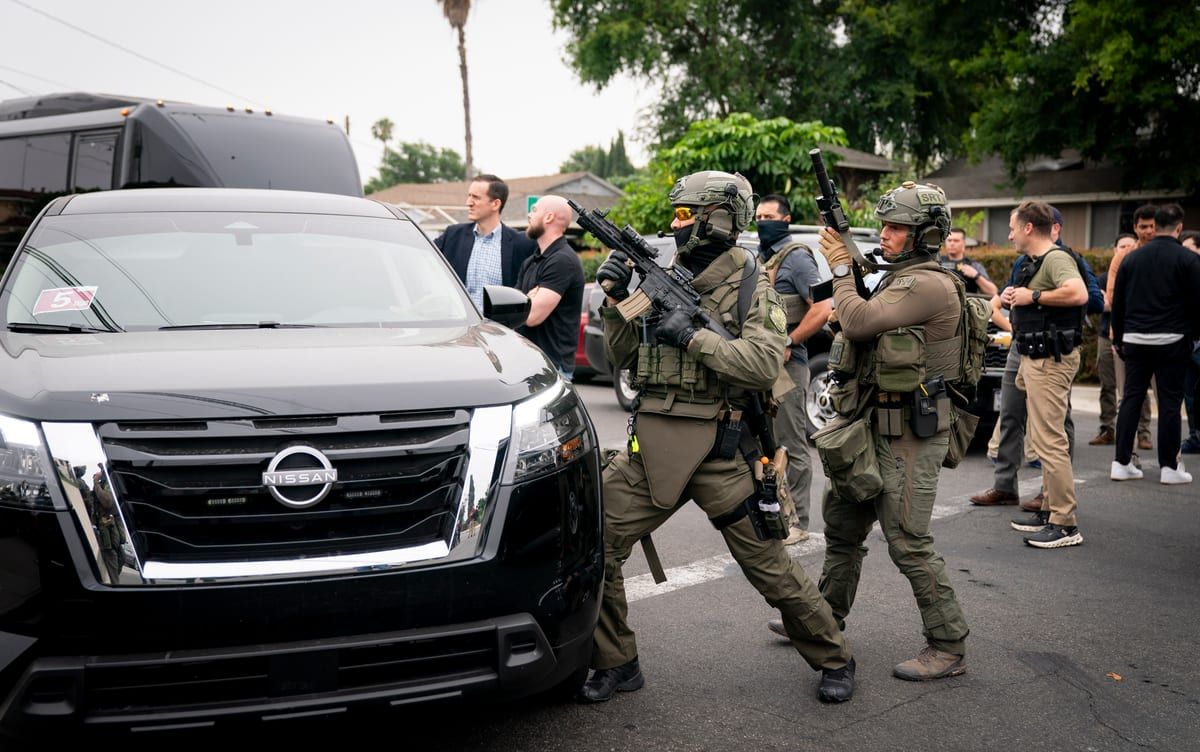
State, local, tribal, and territorial police departments across the US can now legally detect, track, and disable drones without waiting for federal agents, under an interim final rule from the Department of Homeland Security and the Department of Justice published in the Federal Register on July 6, 2026. The rule implements the SAFER SKIES Act and took effect July 1, 2026, and every drone pilot flying near an airport, prison, stadium, or public event should understand what it changes.
Background
The SAFER SKIES Act passed as part of the FY2026 National Defense Authorization Act and was signed into law on December 18, 2025. Before it, only a small number of federal agencies — the FBI, DHS, and the Department of Defense among them — had legal authority to detect or disable a drone under Section 130i of Title 10 and related statutes. Local police who spotted a suspicious drone over a stadium or a state prison yard had to call federal partners and wait, often losing the aircraft before anyone could act.
The Act changed that by authorizing state, local, tribal, and territorial (SLTT) law enforcement and correctional agencies to request their own counter-UAS (counter-unmanned aircraft systems) authority, provided they meet federal training and certification standards. The July 2026 interim final rule, developed jointly by DHS, DOJ, the FAA, and the Department of Defense, is the regulation that actually puts that authority into practice.
What the New Rule Requires
The rule creates a two-tiered structure that separates counter-drone work into two skill levels:
- Tier 1 — Detection and warning: agencies can identify and track a drone and warn its operator, using systems drawn from an Authorized Technologies List.
- Tier 2 — Mitigation: a higher certification tier that allows agencies to actually disable, jam, or seize a drone identified as a credible threat.
Every system an agency uses must appear on an Authorized Systems List, maintained through the FBI's Law Enforcement Enterprise Portal, so operators and the public can eventually check which specific counter-drone hardware a given department is cleared to use. Agencies must also file real-time notifications with air traffic control before any mitigation action and submit after-action mitigation reports, addressing a longstanding safety concern that a signal-jammed drone can fall out of the sky into a crowd or a runway approach path.
Because many counter-drone systems broadcast radio signals to detect or jam a drone, the rule required parallel action from the Federal Communications Commission. The FCC granted a 180-day blanket Special Temporary Authority so certified SLTT agencies can operate approved systems immediately, rather than filing for individual spectrum approval every time, while a permanent licensing pathway is finalized. The FCC also clarified that using FCC-authorized equipment for lawful counter-UAS work does not violate Section 333 of the Communications Act, the interference statute that has previously created legal ambiguity for jamming-capable hardware.
The departments are accepting public comment on the interim rule through September 4, 2026, even though it is already in effect.
Why Now: A Sharp Rise in Drone Incidents
The timing lines up with a spike the FAA itself just confirmed: drone sightings near US airports nearly doubled to 601 in the second quarter of 2026, up from 320 in the first quarter, according to FAA data reported by DroneLife. Add to that the ongoing enforcement effort around FIFA World Cup 2026 stadiums, where the FAA and FBI have already seized more than 500 unauthorized drones, and it's clear why DHS and DOJ pushed this rule out as an interim final rule — skipping the standard advance comment period — rather than waiting for the normal rulemaking timeline.
Federal officials have also pointed to drones smuggling contraband into correctional facilities as a driver. Unlike airports and stadiums, prisons rarely have any federal counter-drone presence at all, leaving state corrections departments with no legal tool to stop repeated drops of phones, drugs, or weapons into their yards until now.
What This Means for Drone Pilots
For the vast majority of licensed and recreational pilots flying legally, nothing changes day to day. But the practical risk landscape shifts in a few concrete ways:
- More agencies can act, faster. A city police department or county sheriff — not just the FBI or a federal task force — may now be certified to track and disable a drone it deems a credible threat, without waiting on federal coordination.
- Radio interference is now an intentional risk near sensitive sites. Flying near a stadium, prison, courthouse, or other protected facility carries a real chance of encountering active jamming or signal takeover from a certified local agency, which can cause an uncommanded landing or flyaway.
- Commercial operators need extra margin near new C-UAS zones. Pilots operating under a FAA Part 107 license for inspection, mapping, or media work should check for local counter-drone deployments before flying near correctional facilities or major public events, since Tier 2 mitigation is authorized specifically in those contexts.
- The underlying flight rules haven't changed. This rule governs who can stop a drone, not where pilots may legally fly — those baseline restrictions still come from the FAA under the framework covered in our guide to US drone laws.
Pilots who plan to fly anywhere near a stadium, correctional facility, or officially designated critical-infrastructure site should treat those areas as places where a drone can be actively disabled, not just legally prohibited.
FAQ
Sources: DroneLife | Federal Register | Unmanned Airspace
More like this
Related Articles
FAA Awards $12M for BVLOS Drone Test Research (2026)
The FAA gave $12 million to 19 BVLOS drone research projects on October 5, 2026, as its Part 108 rule sits stalled in White House…
Germany Backs Ukraine With $9.6B Drone Interceptor Deal
Germany and Ukraine signed 15 defense deals worth over $9.6B on Oct. 4, funding mass production of jet-powered interceptor drones…

Wing, Walmart Drone Delivery Hits Denver, Seattle in 2027
Wing and Walmart will launch drone delivery in Denver and Seattle in 2027, expanding toward 270 Walmart stores and 40 million US c…