Pentagon Creates Single Drone Office With $75B Backing
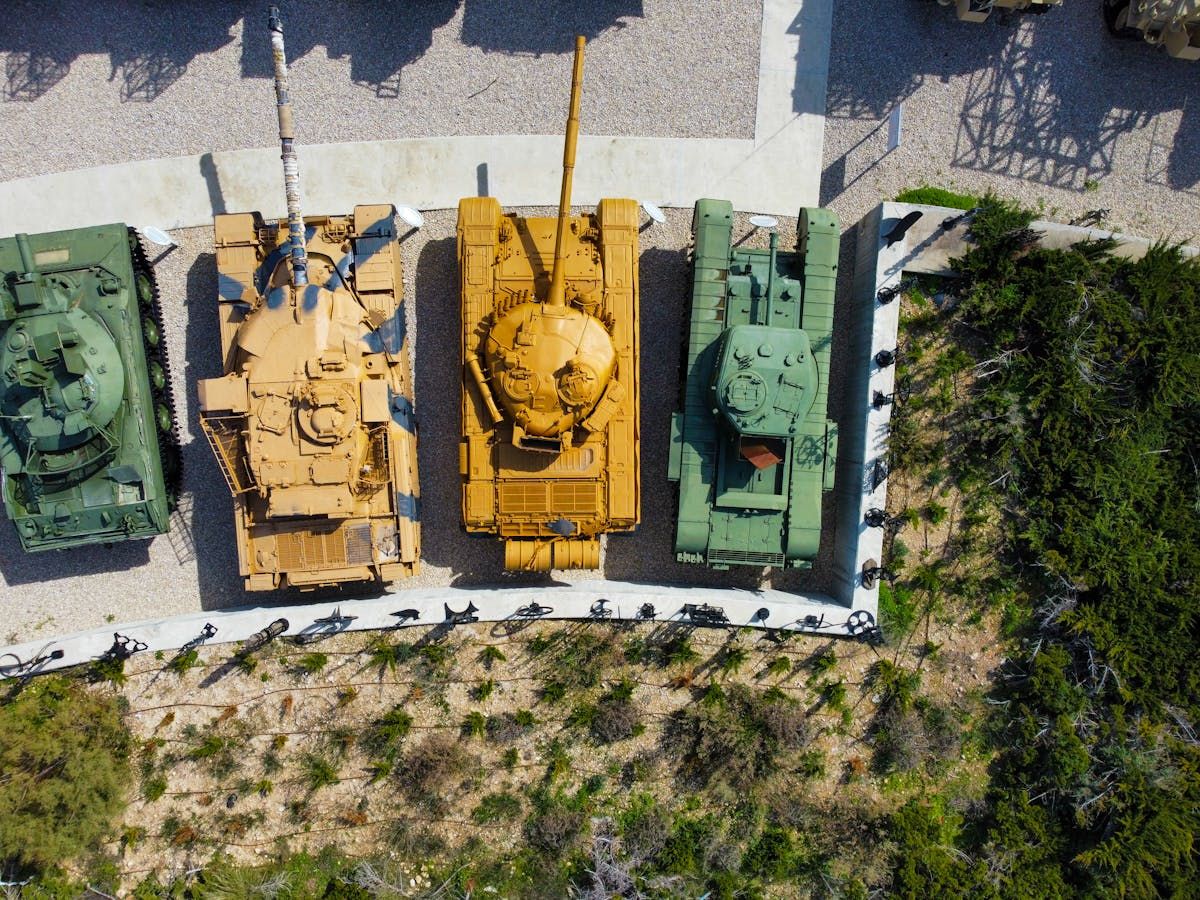
The Pentagon has consolidated nearly all U.S. military drone and autonomous-systems programs under one new office, the Direct Reporting Portfolio Manager for Unmanned Systems (DRPM-UxS), created by a June 29, 2026 memo from Defense Secretary Pete Hegseth. The office answers only to Deputy Secretary of War Stephen Feinberg and controls a budget request of $75 billion for fiscal year 2027.
The reorganization pulls unmanned aircraft, ground robots, surface vessels, and counter-drone programs out of the individual military services and hands acquisition authority to a single decision-maker for the first time — a structural shift the Pentagon says is necessary to keep pace with adversaries producing millions of drones a year.
Background
The move is the latest step in the Pentagon's Drone Dominance initiative, which Hegseth first directed in July 2025 to close a battlefield gap exposed by drone-heavy conflicts in Ukraine and the Middle East. That initiative already produced the Army's plan to field a million small drones and, in March 2026, an initial 30,000-unit order for disposable attack drones after their first real-world combat use.
Until now, drone programs were split across the military services, the Defense Innovation Unit (DIU), Joint Interagency Task Force 401, and the Defense Autonomous Warfare Group (DAWG) — the successor to the Replicator initiative. Pentagon spokesman Sean Parnell said the split had become a liability: "Drones and autonomous systems represent the most consequential battlefield innovation of this generation," he said. "The United States must move at the speed this moment demands."
The fiscal 2027 budget request backs that urgency with money: $75 billion for drones and counter-drone technology, of which $54.6 billion goes to DAWG alone — described by Bloomberg as the largest year-over-year jump of any single defense program.
Inside DRPM-UxS: What the New Office Controls
DRPM-UxS becomes what the Pentagon calls the single joint integrator for unmanned and autonomous systems. Per the memo, its portfolio covers:
- Small and medium unmanned aircraft (Groups 1–3)
- All autonomous ground vehicles
- Most unmanned surface vessels
- Counter-drone systems, with JIATF-401's mandate expanded across every domain
- Autonomy, AI, and swarming software programs
The office acts as the milestone decision authority for these programs — the official who decides whether a system advances through development — and can order the Pentagon comptroller to shift funding between programs or halt a system before it reaches the field. DAWG and JIATF-401 both become subordinate offices reporting up through DRPM-UxS rather than operating independently.
Large crewed-adjacent airframes stay with their existing services: the Air Force keeps its Collaborative Combat Aircraft program (Anduril's YFQ-44A and General Atomics' YFQ-42A), and the Navy retains the MQ-25 Stingray tanker drone and its MUSV surface-vessel program.
The table below shows what shifted under the June 29 memo:
| Authority | Before June 29, 2026 | After DRPM-UxS |
|---|---|---|
| Small/medium drone acquisition | Split across Army, Navy, Air Force, Marine Corps | Single office, milestone decision authority |
| Counter-drone systems | JIATF-401, independent | JIATF-401 reports through DRPM-UxS |
| Autonomy/swarming software funding | Spread across DAWG and service labs | Centralized under DRPM-UxS |
| Industry contact point | Multiple service contracting offices | DIU as single interface |
| Budget reallocation | Required inter-service coordination | DRPM-UxS can direct the comptroller to shift funds |
DIU Becomes the Industry's Single Front Door
For drone manufacturers selling to the Pentagon, the practical change is who they call. DIU — which already administers the Blue UAS certification list of vetted, non-Chinese-supply-chain drones — now becomes the primary interface between the Department of War and commercial industry for the entire unmanned portfolio, including the department's unmanned systems marketplaces.
That consolidation could work two ways. Companies like Skydio, Anduril, and Neros gain a clearer, single acquisition pathway instead of navigating separate service contracts. But it also creates a potential bottleneck: as of publication, the Pentagon has not named a director for DRPM-UxS, and multiple defense outlets, including Breaking Defense and DroneXL, note that appointment will determine whether the office becomes a growth accelerator or a procurement chokepoint.
What This Means for Drone Pilots
DRPM-UxS is a defense-acquisition story first, not a Part 107 or recreational flight-rules story — it changes nothing about where or how civilian pilots fly. But it matters to anyone who follows the U.S. drone industry, because military demand increasingly shapes the domestic manufacturing base that civilian and commercial buyers rely on.
A single Pentagon buyer with $75 billion to spend, working through one certification pipeline, gives American manufacturers a clearer growth path at the same time the FCC is restricting Chinese-made drones like DJI from the U.S. market. Watch which companies land Blue UAS-approved contracts through DIU in the coming months — those wins often translate into cheaper, more available components for the commercial and prosumer market too. The consolidation also formalizes autonomy and swarming software as its own funded category, a trend worth tracking alongside our guide to how drones and artificial intelligence are converging across both military and civilian types of drones.
For now, the office exists on paper without a leader. Its first real test will be whether an appointed director can actually move faster than the four-way split it replaced.
FAQ
Sources: Breaking Defense | DroneXL | USNI News
More like this
Related Articles
FAA Awards $12M for BVLOS Drone Test Research (2026)
The FAA gave $12 million to 19 BVLOS drone research projects on October 5, 2026, as its Part 108 rule sits stalled in White House…
Germany Backs Ukraine With $9.6B Drone Interceptor Deal
Germany and Ukraine signed 15 defense deals worth over $9.6B on Oct. 4, funding mass production of jet-powered interceptor drones…

Wing, Walmart Drone Delivery Hits Denver, Seattle in 2027
Wing and Walmart will launch drone delivery in Denver and Seattle in 2027, expanding toward 270 Walmart stores and 40 million US c…