Types of Drones: A Complete Guide to Every Drone Category
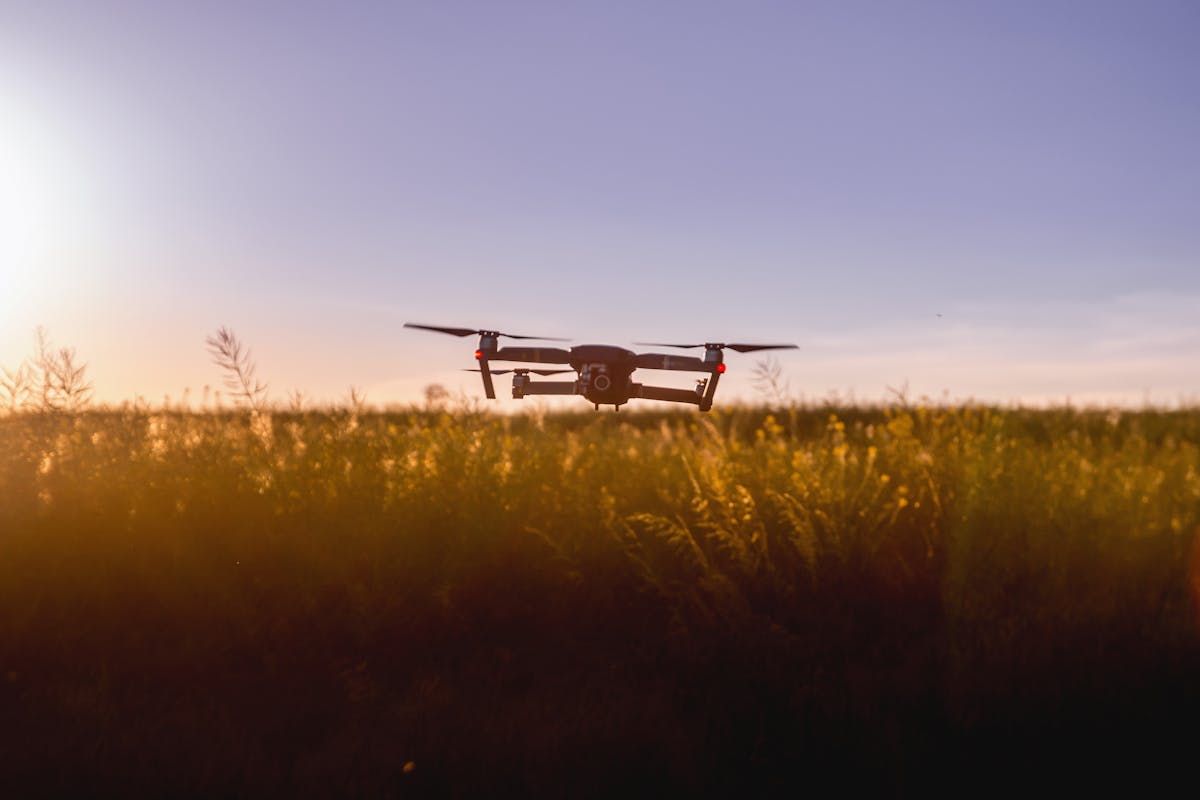
The word "drone" has become generic, and that creates real confusion. When someone says "drone," they might mean the quadcopter their neighbor uses to photograph a wedding, the unmanned aircraft that surveys 500 kilometers of power lines, the machine that sprays 50 acres of crops per hour, or the racing vehicle that challenges pilots at speeds exceeding 120 mph. These are the most distinct types of drones that exist, with radically different physics, components, and purposes. Treating them as the same thing is the first mistake anyone makes when starting to understand this industry.
This guide covers each category with concrete data, explains why each design exists, and helps you identify which type makes sense for what you need.
Multirotors: The Category That Popularized Drones
Multirotors are the types of drones that dominate the consumer market and most commercial applications. The principle is straightforward: multiple rotors positioned symmetrically create enough lift to raise the aircraft, and by varying the individual speed of each motor, movement in any direction becomes possible. The flight controller handles this calculation hundreds of times per second, making the result stable even for someone who has never flown before.
Multirotors exploded in popularity around 2010, when onboard electronics became good and affordable enough to make automatic stabilization accessible to anyone. Before that, flying a remote-control helicopter required years of practice.
Quadcopter
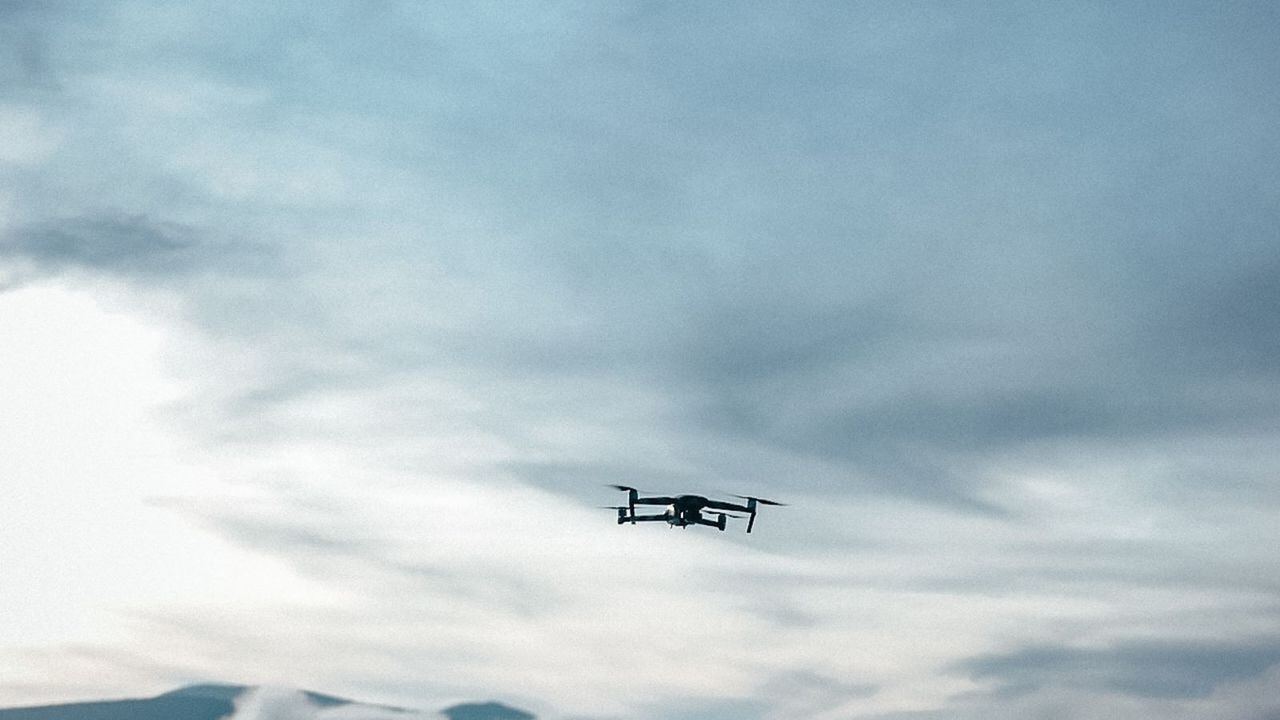
Four propellers, four motors: two spinning clockwise and two counterclockwise to cancel the torque generated by rotation. The quadcopter is the most cost- and mechanically-efficient design: fewer components mean fewer points of failure and lower manufacturing costs.
It's the format chosen by DJI for most of its consumer and prosumer products, from the Mavic 3 Pro to the Mini 4 Pro. The result is ideal for aerial photography, filming, short-range inspection, and recreational use. The main drawback is lack of redundancy: lose one motor, lose the drone.
Hexacopter and Octocopter
Six or eight propellers solve the redundancy problem. A hexacopter can lose one motor and still land under control, critical in applications where a crash represents a safety risk or the loss of expensive equipment. Octocopters go further: more rotors mean more lifting power and payload capacity, enabling them to carry cinema cameras weighing several kilograms.
The trade-off is real: weight, complexity, and cost. Hexacopters and octocopters dominate high-budget professional cinematography and industrial operations where reliability is non-negotiable.
Fixed-Wing: Efficiency Above All
A fixed-wing drone has no vertical rotors. It uses wings to generate lift, exactly like a conventional airplane. The result is radically more energy-efficient: while a quadcopter uses all its motor power just to stay in the air, a fixed-wing converts that effort into horizontal displacement. The reason is basic physics: aerodynamic lift is far more efficient than direct thrust.
In practice, this means flight times that can exceed two hours and ranges of hundreds of miles, compared to the typical 30–45 minutes of consumer multirotors. Fixed-wings dominate applications like large-area mapping, pipeline and power line inspection, border surveillance, and long-duration military missions.
The fundamental limitation is that a fixed-wing cannot hover. It needs minimum speed to maintain lift, requires space to take off and land (usually via catapult or runway), and cannot photograph a fixed point as easily as a multirotor. For covering long distances linearly, however, nothing competes.
Hybrid VTOL: The Best of Both Worlds
The hybrid VTOL (Vertical Take-Off and Landing) is engineering's answer to the dilemma between fixed-wing efficiency and multirotor versatility. The aircraft takes off and lands vertically like a quadcopter using dedicated rotors, then transitions to fixed-wing horizontal flight, shutting down (or tilting) the lift rotors. The result is endurance comparable to fixed-wing with the flexibility to land on any flat surface.
The price of this solution is real: VTOL systems are mechanically more complex, heavier, and more expensive than either category alone. The electronics managing the transition between modes also need to be robust. Still, the segment is growing rapidly in professional mapping and industrial inspection, where the cost is justified by operational versatility.
FPV: When Speed Is the Point
FPV (First Person View) drones represent a category of their own, technically multirotors, but with a completely different design philosophy. While a DJI Mavic was conceived to be stable and easy, an FPV drone was built to be fast and agile, delegating stability to the pilot's reflexes.
The pilot wears goggles that transmit the live image from the drone's front camera, creating the sensation of being inside the aircraft. The most popular racing frames use 3 to 5-inch propellers, weigh between 7 and 12 ounces, and can exceed 130 mph in a straight line, in seconds.
The segment divides into racing (maximum speed on closed tracks), freestyle (acrobatic maneuvers), and cinematic FPV (video recordings with an action camera in movements impossible for conventional drones). It's the category with the steepest learning curve, and the most addictive for those who get through it.
Agricultural Drones: The Frontier Agribusiness Has Crossed
Among all types of drones, agricultural ones represent the use case with the greatest economic impact globally. They are multirotors, typically quadcopters or hexacopters, designed specifically to carry and apply crop inputs with millimeter precision.
The DJI Agras T50, for example, carries up to 110 lbs of product in a single flight and can cover up to 100 acres per hour with centrifugal spray nozzles. Beyond spraying, multispectral sensors attached to these aircraft map the phytosanitary status of crops, identifying water stress, pests, and nutritional deficiencies with precision that no visual inspection can match.
This precision agriculture application has transformed farming economics in many regions: drones can reduce chemical usage by up to 30% compared to ground application while providing actionable data that traditional aerial surveys could never deliver at this cost.
Military Drones: From Reconnaissance to Strike
Military use was the first and remains the most diverse among drone types. The classification ranges from micro intelligence drones that fit in a backpack to strategic vehicles that remain airborne for over 30 hours.
Reconnaissance drones, like the Israeli HERON and the American RQ-4 Global Hawk, fly at high altitude for long durations collecting imagery and signal intelligence. Attack drones, like the MQ-9 Reaper and Turkey's Bayraktar TB2, which gained global attention in the 2020 Nagorno-Karabakh war, combine persistent surveillance with the ability to engage targets at safe distances from the operator.
The war in Ukraine introduced the military vocabulary of kamikaze FPV drones: small, cheap (often costing less than $500 each), guided by a pilot with goggles to the target. They're manufactured at industrial scale and used in numbers that would make conventional munitions impractical. The conflict transformed perceptions of military drones from sophisticated high-cost weapons to accessible, decisive tactical tools.
Micro and Nano Drones: Too Small to Ignore
The most important regulatory threshold in the consumer drone market is 250 grams. In most international regulations, drones below that weight face significantly fewer restrictions. The FAA uses this cutoff to define the lightest registration requirement tier, and in practice it's what determines what can fly in parks and urban areas with less bureaucracy.
The DJI Mini 4 Pro, with its precise 249 grams, is the most refined example of this category: a camera with a 1/1.3-inch sensor, 4K video, transmission up to 12 miles, and folding design that fits in any backpack. Nano drones go further, with some under 100 grams, weighing just tens of grams, used mainly for indoor recreation or swarm robotics research.
How to Choose the Right Type
The right question isn't "what's the best type of drone?" but rather "what's the best for what I need to do?" The logic is straightforward:
For casual photography and video: compact quadcopter under 250g, like the DJI Mini 4 Pro. Easy to transport, simpler regulations, image quality sufficient for social media and personal use.
For professional photography and video: prosumer quadcopter like the DJI Mavic 3 Pro or Air 3S, with larger sensors, multiple cameras, and robust obstacle detection systems.
For high-budget cinematography: hexacopter or octocopter with a dedicated camera stabilizer, capable of carrying cinema cameras.
For large-area mapping: fixed-wing or hybrid VTOL, depending on whether you need to take off without a runway.
For agriculture: an agricultural drone specifically designed for the purpose, sized for the farm area and application type.
For speed and acrobatics: an FPV drone, with awareness that the learning curve is long.
FAQ
Sources: DJI: Product Categories | FAA: Unmanned Aircraft Systems
More like this
Related Articles
Drone Remote ID Explained: Do You Need One in 2026?
Remote ID is a digital license plate for drones. See who needs it in the US, UK and EU, the 3 ways to comply, module costs and the…
Best Cheap Drones With Camera in 2026: 6 Picks Under $500
Looking for a cheap drone with a good camera? We compare 6 budget picks from $149 to $450 by real flight time, gimbal, rules and h…
How High Can a Drone Legally Fly? Limits by Country (2026)
The FAA caps drones at 400 feet; the EU, UK and Australia cap them at 120 meters. See the exact legal limit for your country and w…