UK Backs Military Drones With Record $6.6B Investment
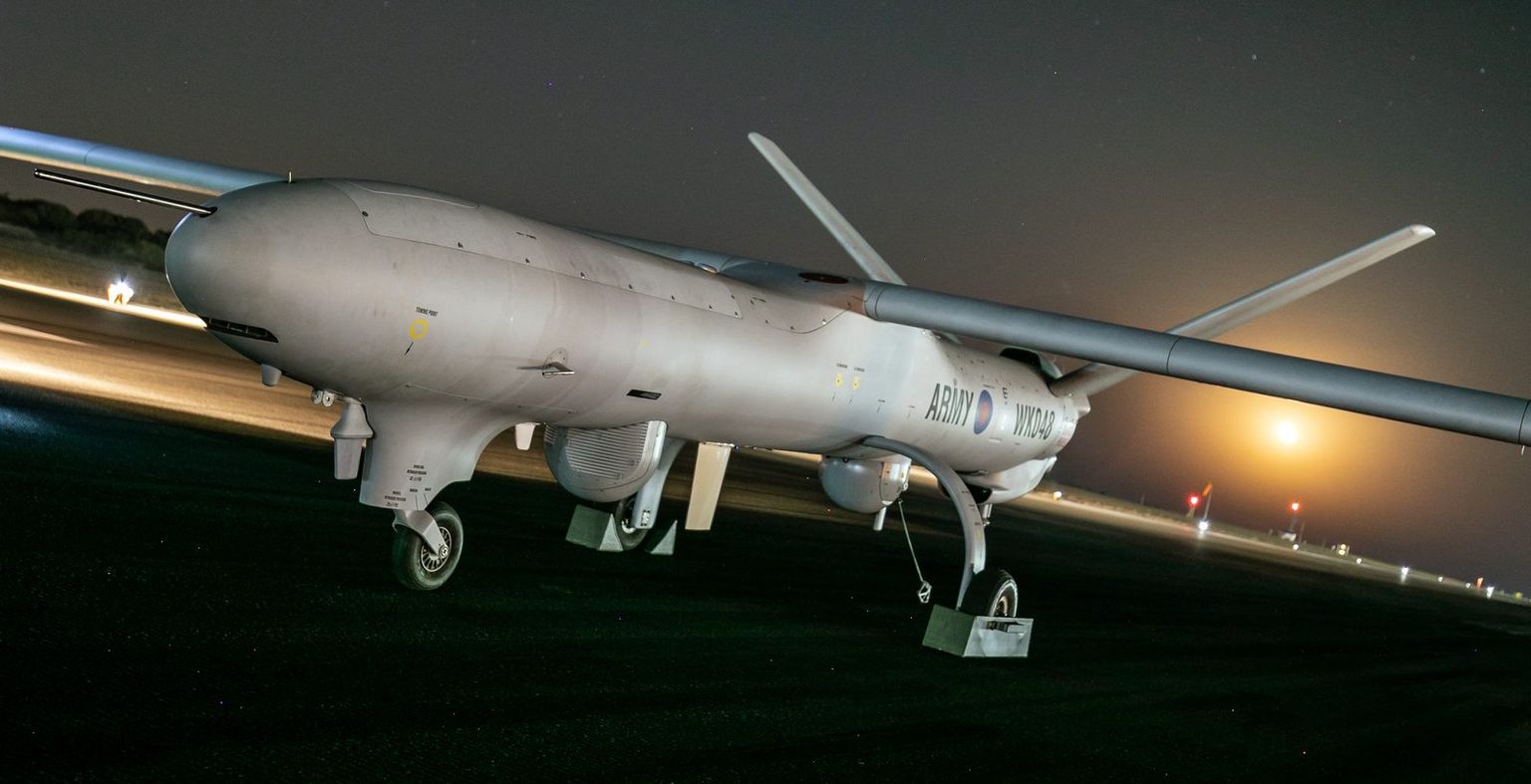
The UK government will spend more than £5 billion ($6.6 billion) on drones and other uncrewed systems over the next four years, Prime Minister Keir Starmer announced on June 30, 2026, as part of a new Defence Investment Plan. It is the largest drone-related commitment in British military history, funding new autonomous capabilities across the Army, Royal Navy, and Royal Air Force.
The announcement follows thedefensepost.com reporting on July 3 and an official release on GOV.UK from the Ministry of Defence. The money sits inside a broader package that raises the UK's total defence budget by £15 billion ($20 billion) over four years, pushing overall spending toward almost £300 billion.
Background
The plan is the UK's response to a shift in warfare that Ukraine and recent Middle East conflicts have made impossible to ignore: cheap, mass-produced drones now shape battlefield outcomes as much as, or more than, expensive traditional platforms. Defence Secretary Dan Jarvis put it directly: "The character of warfare is rapidly changing. In Ukraine and the Middle East, uncrewed systems are defining conflicts."
Uncrewed systems is the umbrella term the UK government uses for drones, autonomous ground vehicles, and unmanned surface and underwater vessels — machines that operate without an onboard human crew, whether remotely piloted or autonomous. The Defence Investment Plan treats these systems as a standing category of military spending rather than a one-off purchase, mirroring a broader Western trend: the U.S. Department of War made the same structural bet on July 5, 2026, when it folded nearly all its own drone programs into a single $75 billion office.
Where the $6.6 Billion Goes
The funding is split across all three services, each getting distinct autonomous capabilities rather than a shared, generic drone budget:
| Service | Key programs funded |
|---|---|
| British Army | Project NYX (24 armed drones by 2030), Project Corvus (24 surveillance drones), loitering munitions, uncrewed ground vehicles |
| Royal Navy | Uncrewed missile and sensor platforms, underwater vessels, a hybrid carrier air wing mixing crewed jets with drones |
| Royal Air Force | Storm Shroud electronic-warfare drone, the Collaborative Combat Air Programme for autonomous fighter jets |
The plan also funds a new Uncrewed Systems Centre in Swindon and an Uncrewed Systems Taskforce, which will work directly with drone manufacturers to speed up how quickly new autonomous technology reaches frontline units — a response to complaints that Ministry of Defence procurement moves too slowly to keep pace with drone warfare's rapid evolution.
Starmer framed the investment as a readiness measure rather than a reaction to any single threat: "This game-changing investment will strengthen our Armed Forces on land, at sea and in the air, ensuring our servicemen and women have the cutting-edge capabilities they need to deter evolving threats and keep the British people safe."
A Global Pattern, Not a One-Off
The UK's £5 billion program is smaller in absolute terms than the United States' $75 billion drone budget request, but the timing is not a coincidence. Both announcements landed within a week of each other, and both cite the same evidence: Ukraine's drone-heavy defense against Russia and drone use in Middle East conflicts have pushed uncrewed systems from a niche capability to a core one for every major military. NATO members are watching each other's commitments closely, and analysts expect France, Germany, and other allies to publish comparable drone-specific budget lines within the next fiscal cycle.
For the commercial drone industry, government programs at this scale matter beyond the military sphere. Contracts through the new Uncrewed Systems Taskforce will flow to UK-based manufacturers and suppliers, and the same underlying technology — autonomy software, swarm coordination, and long-endurance airframes — increasingly crosses over into the artificial intelligence systems used in civilian mapping, inspection, and delivery drones.
What This Means for Drone Pilots
This is a defense-procurement story, not a change to UK CAA rules — it does not alter what recreational or commercial drone pilots can fly today, and no part of the £5 billion touches civilian airspace regulation. Hobbyist and Part 107-equivalent commercial operators in the UK see no immediate change to registration, Flyer ID requirements, or no-fly zones.
The indirect effect is on the industry itself. A four-year, guaranteed pipeline of military drone contracts gives UK-based manufacturers — and the wider pool of engineers and suppliers who also build components for consumer and enterprise drones — a stronger, more predictable base to invest around. Readers who want the fuller picture of how drone hardware splits between recreational, commercial, and military use should see our guide to the different types of drones on the market today.
FAQ
Sources: GOV.UK — Ministry of Defence | The Defense Post
More like this
Related Articles
FAA Awards $12M for BVLOS Drone Test Research (2026)
The FAA gave $12 million to 19 BVLOS drone research projects on October 5, 2026, as its Part 108 rule sits stalled in White House…
Germany Backs Ukraine With $9.6B Drone Interceptor Deal
Germany and Ukraine signed 15 defense deals worth over $9.6B on Oct. 4, funding mass production of jet-powered interceptor drones…

Wing, Walmart Drone Delivery Hits Denver, Seattle in 2027
Wing and Walmart will launch drone delivery in Denver and Seattle in 2027, expanding toward 270 Walmart stores and 40 million US c…