Amazon Prime Air Expands Drone Delivery to 500 Cities
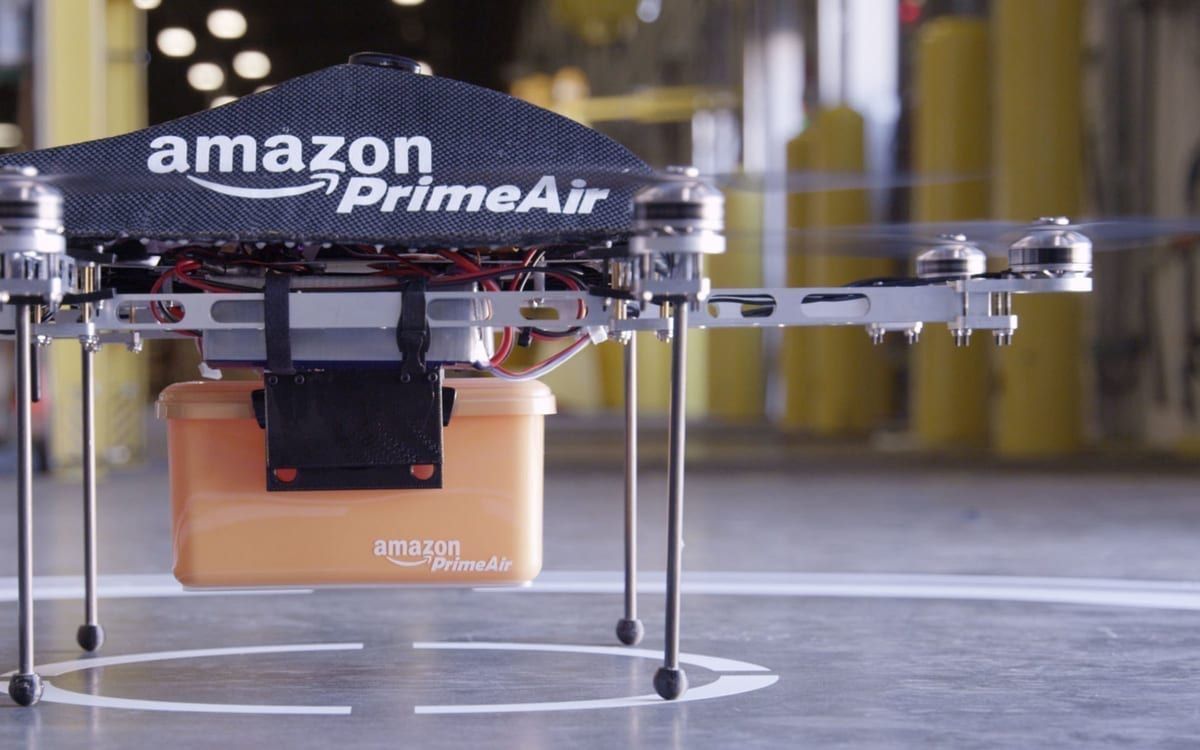
Amazon said on August 19, 2026 that its Prime Air drone delivery service will expand to nearly 500 US cities and towns by the end of the year, a sixfold increase from the roughly 80 communities it currently reaches out of 11 delivery sites. The rollout adds new markets in Arizona, Florida, Kansas, Louisiana, Michigan, Texas and Nebraska immediately, with Georgia, Ohio, Illinois, Idaho and New York — including Chicago, Atlanta, Cleveland, Syracuse and Boise — coming soon.
Background
Prime Air is Amazon's drone delivery arm, flying fully electric, remotely supervised aircraft that drop packages weighing 5 pounds or less into a customer's yard in as fast as 30 minutes. The service operates under an FAA Part 135 air-carrier certificate — the same authority used by small cargo airlines — rather than the Part 107 rules that cover most commercial drone work, which lets Amazon run scheduled, repeated flights instead of one-off waivered operations.
Until this announcement, Prime Air had stayed largely confined to a handful of Sun Belt metro areas — Tolleson, Arizona; College Station, Texas; and a cluster of Texas suburbs including San Antonio, Richardson and Waco — after a slower-than-planned rollout following its 2022 launch. The jump to nearly 500 cities and towns marks the company's clearest signal yet that it considers the technology, and the regulatory path underpinning it, ready to scale nationally.
What Amazon Announced
Amazon says Prime Air has already delivered hundreds of thousands of packages in 2026 and now serves some of the highest average daily delivery volumes of any drone operator in the country, with each site covering roughly 175 square miles. David Carbon, Amazon's vice president of Prime Air, said the expansion builds on that momentum: "Customers already turn to Amazon for fast Same-Day and Next-Day Delivery, and Prime Air gives them an even speedier option when they need it."
Eleven new launch locations go live immediately: Tolleson, AZ; Ruskin, FL; Kansas City, KS; Papillion, NE; Baton Rouge, LA; Hazel Park and Pontiac, MI; and Richmond, San Antonio and Waco, TX. Amazon says Chicago, Atlanta, Cleveland, Syracuse and Boise will follow as the company works through its target list of nearly 500 cities and towns by December 31, 2026.
More than 60% of the items customers frequently buy on Amazon qualify for drone delivery, spanning groceries, electronics, cosmetics, medications and household goods, provided the package fits in a container roughly the size of a large shoebox. Prime members get free delivery on qualifying orders of $50 or more, pay $2.99 below that threshold, and non-members pay $4.99 per delivery.
The Delivery Drone Race Is Accelerating
Amazon isn't alone in racing to scale drone delivery in 2026. Walmart and Google's Wing operate the largest rival network in the US, adding seven markets this year including Phoenix, Philadelphia and the Bay Area. Zipline said its US delivery volume grew 13X in the first half of 2026, and DoorDash has begun its own drone pilot in Charlotte.
| Operator | 2026 footprint | Delivery weight limit | Typical speed |
|---|---|---|---|
| Amazon Prime Air | ~500 cities/towns (target, by Dec. 2026) | Up to 5 lb | ~30 min |
| Walmart / Wing | 7+ new markets added in 2026 | Up to 2.5 lb (Wing) | 10–15 min |
| Zipline | 2.5M+ lifetime flights, 13X US growth | Up to 8 lb | 10 min flight, cable-lowered |
The competitive pressure is pushing every operator toward the same bottleneck: FAA approval to fly BVLOS (Beyond Visual Line of Sight) — routes flown without a pilot keeping the aircraft in direct sight — at scale. Amazon, Walmart and Zipline all currently rely on individual Part 135 certificates and case-by-case waivers rather than a single national standard, which is why the FAA's pending Part 108 rulemaking, still under federal review as of August 2026, matters more to this race than any single city launch.
What This Means for Drone Pilots
Prime Air's expansion doesn't put commercial Part 107 pilots in direct competition with Amazon — Prime Air flies its own fleet under a Part 135 air-carrier certificate, a bar few independent operators can clear. But the buildout matters for the wider industry: every new Prime Air site adds real-world Detect-and-Avoid flight data and BVLOS operating hours that shape how the FAA writes the rules the rest of the industry will eventually fly under. Pilots doing inspection, mapping or agricultural work in newly added metro areas should also expect more local airspace coordination and no-fly notices around delivery hubs as Amazon's flight volume grows.
FAQ
Sources: Amazon (About Amazon) | TechCrunch
More like this
Related Articles
FAA Awards $12M for BVLOS Drone Test Research (2026)
The FAA gave $12 million to 19 BVLOS drone research projects on October 5, 2026, as its Part 108 rule sits stalled in White House…
Germany Backs Ukraine With $9.6B Drone Interceptor Deal
Germany and Ukraine signed 15 defense deals worth over $9.6B on Oct. 4, funding mass production of jet-powered interceptor drones…

Wing, Walmart Drone Delivery Hits Denver, Seattle in 2027
Wing and Walmart will launch drone delivery in Denver and Seattle in 2027, expanding toward 270 Walmart stores and 40 million US c…