
K200 Drone Interceptor: Sweden's Answer to Jet Shaheds
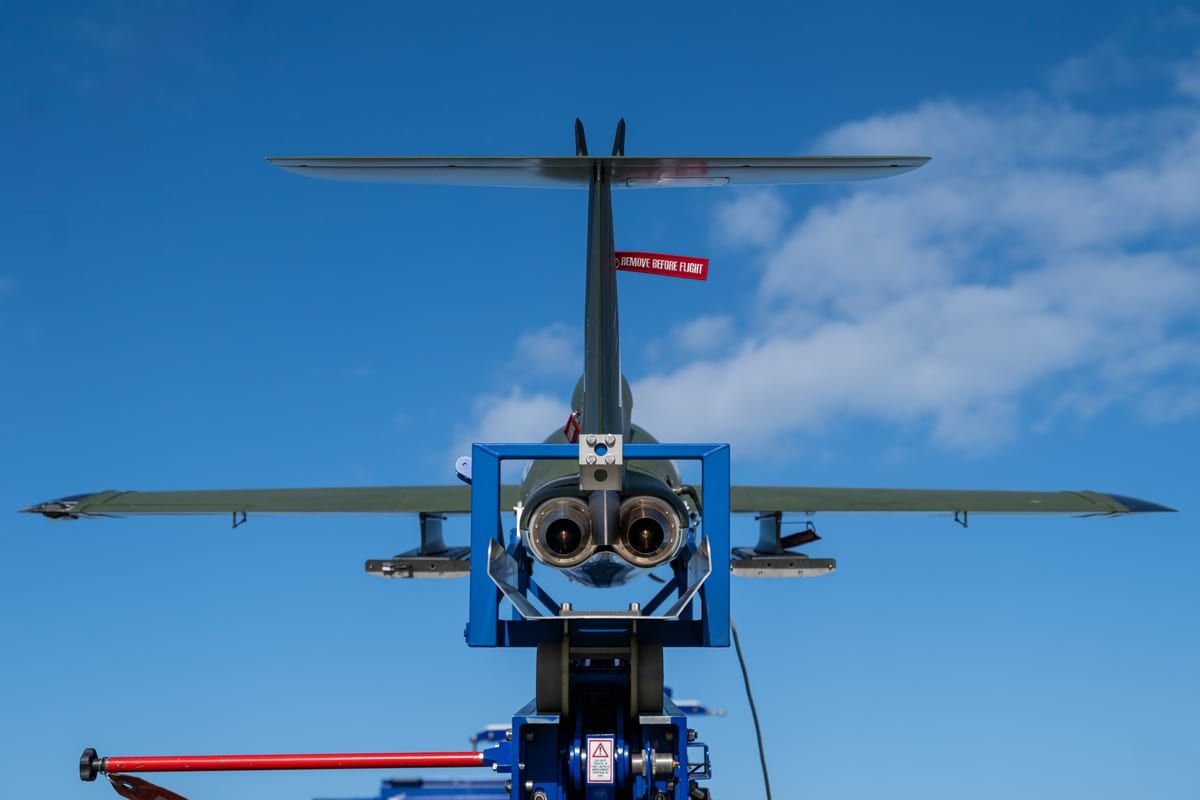
Swedish startup Nordic Air Defence (NAD) unveiled the K200 drone interceptor on November 20, 2026, an autonomous, fixed-wing counter-drone weapon designed to stop jet-powered threats such as Russia's Geran-3a, according to Breaking Defense. The K200 is headed to Ukraine for testing, and NAD has opened a staffed office there.
The K200 carries a heavier warhead and flies faster than NAD's earlier Kreuger 100XR, and it is pitched as a far cheaper alternative to conventional air defense missiles.
What is the K200 drone interceptor?
The K200 is an autonomous interceptor drone from Stockholm-based Nordic Air Defence, the successor to the Kreuger 100XR. It uses a single-propeller, fixed-wing design and a 500-gram (about 1 lb) warhead, and it is built to destroy fast, jet-powered attack drones rather than slower propeller-driven ones.
NAD's earlier product, the Kreuger 100, was described by The Defense Post in March 2025 as a compact, high-speed interceptor designed to counter low-cost aerial threats without relying on expensive hardware. The K200 extends that approach to a more dangerous class of target.
How the K200 finds and hits its target
According to Breaking Defense, the K200 does not hunt on its own from launch. Its guidance works in two stages:
- Cueing: external radars and electro-optical/infrared (EO/IR) cameras direct the interceptor toward an incoming threat.
- Terminal guidance: an onboard infrared camera takes over for the final approach.
- Re-engagement: if the first pass misses, the K200 can turn around and try again.
- Intercept geometries: tail-chase, head-on, and crossing engagements are supported.
The interceptor connects to layered air defense networks through data links and associated radars. NAD says a family of launchers could support vehicle-mounted, fixed-site, and shipboard deployments. Breaking Defense did not report a speed, range, unit price, or production timeline.
Why jet-powered drones are driving demand for interceptors
Russia's jet-powered Shahed variants fly faster than the propeller-driven drones Ukraine's older interceptors were built to catch. We covered how that shift cut Ukraine's intercept rate from 90% to 60% earlier this year, and how Germany committed billions to mass-produce jet-powered interceptor drones.
The pressure is still rising. Breaking Defense reports that Russia launched more than 400 attack drones and over 110 missiles, including 27 ballistic missiles, in a single overnight attack around the K200 announcement. Ukraine's shortage of Patriot interceptors has strained its defenses against ballistic missiles, which makes cheap drone-killing options more valuable. President Volodymyr Zelenskyy also told the Financial Times that Kyiv is testing five locally produced jet-powered interceptors.
What This Means for Drone Pilots
The K200 is a military system, and it does not change any civil rule under the FAA, EASA, or other aviation authorities. For hobbyist and commercial pilots, the relevance is indirect but real.
Counter-drone technology developed for the battlefield tends to reach civilian markets within a few years, shaping how airports, stadiums, and critical infrastructure detect and stop unauthorized drones. That is one reason airspace restrictions near sensitive sites keep tightening. If you want the background, see our guides on the history of military drones and the main types of drones now built for defense work.
Pilots should expect continued scrutiny of flights near airports and critical infrastructure, and should always check local airspace rules before launching.
FAQ
Sources: Breaking Defense | The Defense Post
More like this
Related Articles
Zipline Asks FAA for 130,000 Arizona Drone Deliveries a Day
Zipline wants FAA approval for 130,000 drone deliveries a day in Phoenix and Tucson. Here's what the draft says, the noise finding…
AIR 120D Cargo eVTOL Ships to Florida for U.S. Demos
AIR shipped its first AIR 120D autonomous cargo eVTOL to Florida for U.S. demos. It carries 550 lb with no pilot. Here is what it…
Elroy Air Chaparral: Barq Orders 20 Cargo Drones, $70M
Abu Dhabi's Barq Group signed for up to 20 Elroy Air Chaparral cargo drones worth $70M. See what the deal includes, when deliverie…