Russia's Jet-Powered Drones Cut Ukraine Intercepts to 60%
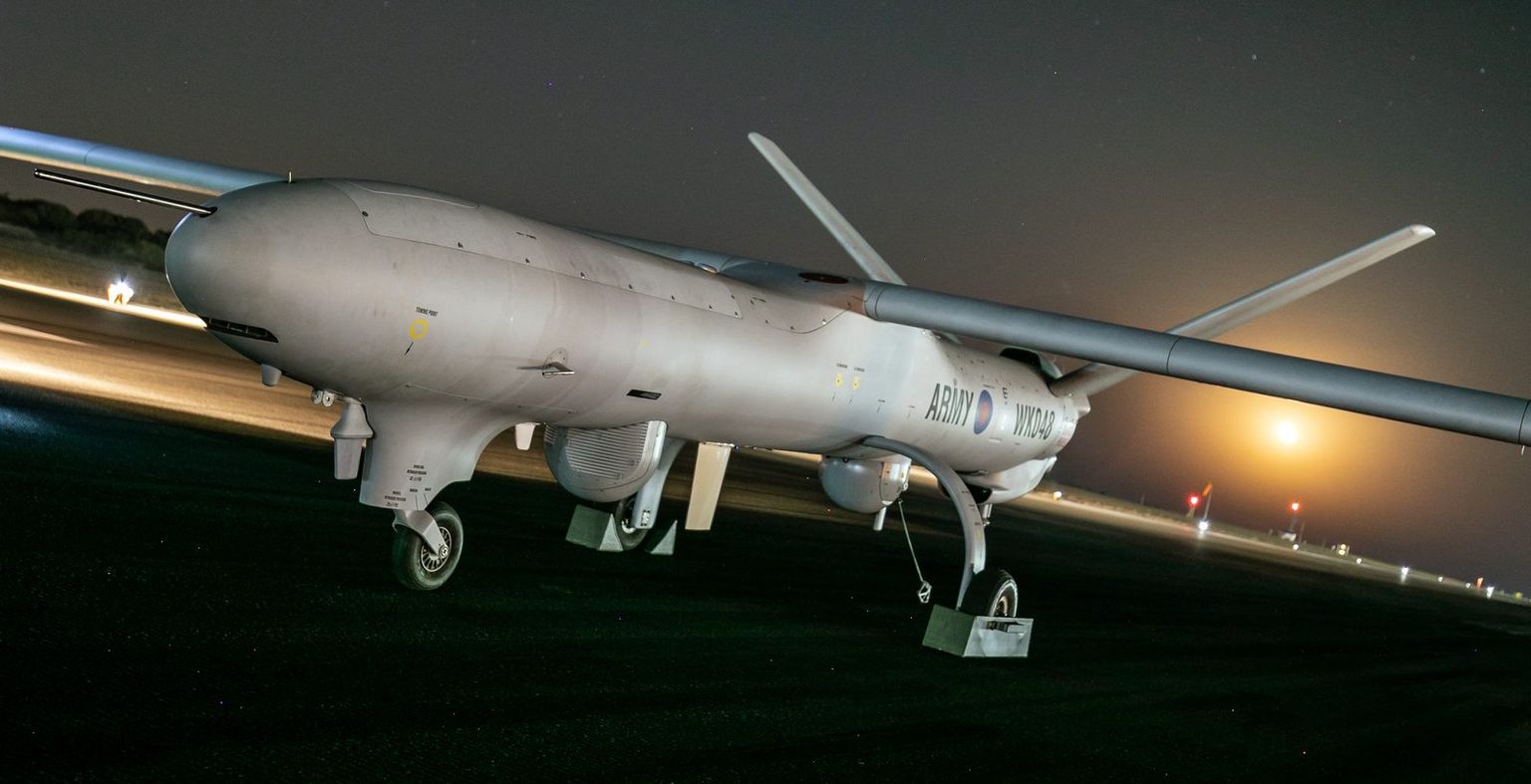
Russia launched roughly 2,800 jet-powered attack drones against Ukraine in August 2026, nearly double July's total of about 1,500, according to Ukrainian Air Force figures reported September 4. The faster airframes are eroding Ukraine's air defense: interception rates that held near 90% against older propeller-driven drones have fallen to about 60% against the jet-powered versions, forcing Kyiv to burn through far more expensive missiles to stop the ones its cheap FPV interceptors cannot catch.
Background
Russia's long-range strike drone, known as Shahed-136 in its Iranian-designed original and Geran-2 in Russian production, is a propeller-driven loitering munition, a drone that flies to a target area and then dives into it, rather than dropping a separate weapon. For most of the war it flew around 180 to 200 km/h, slow enough that Ukraine built a whole tier of cheap countermeasures around catching it, including mobile machine-gun teams and FPV (first-person-view) interceptor drones costing about $3,000 each.
That balance started shifting in mid-2026. Russia began fielding a jet-powered variant, referred to as Geran-4, built on a new airframe rather than the reused Geran-2 shell, which could not survive the G-loads of high-speed flight. The jet version is reportedly powered by a Chinese-made turbojet engine and can fly at 400 to 650 km/h, roughly two to three times faster than its predecessor, with a range of around 450 km. It also flies at a higher altitude than the propeller version, which further complicates visual and radar tracking for defenders who spent three years tuning their systems around a much slower, lower target.
An earlier interim model, Geran-3, tried adding a jet engine to the existing Geran-2 airframe, but the structure was not designed for the stress of sustained high-speed flight. Geran-4's clean-sheet airframe is the version now being produced and launched at scale, which is why the jump in numbers between July and August 2026 also marks a jump in how hard each individual drone is to bring down.
The August Numbers, and What Sept 2 Showed
Colonel Yurii Ihnat, spokesman for Ukraine's Air Force, has said jet-powered drones now make up as much as two-thirds of some individual Russian attack waves. The trend was visible in a single overnight strike on September 2 to 3, when Russia launched 163 drones and roughly half were jet-powered Geran-4 variants; Ukrainian air defense intercepted 135 of the 163 targets, an 83% blended rate, but the jet drones specifically are the ones consistently getting through.
That blended rate has been sliding through the end of August, from 88% on August 27 to 79% on August 31, according to Ukrainian officials cited by independent outlet Meduza. Two recent strikes underline the cost: a drone hit an ammunition depot in the village of Myla on August 29, killing 38 people, and attacks across the country on September 1 killed 12 more. Ukrainian President Volodymyr Zelensky has described the intensifying drone campaign as an attempt to "wear down Ukraine and Ukrainians."
| Propeller-driven (Shahed-136 / Geran-2) | Jet-powered (Geran-4) | |
|---|---|---|
| Typical speed | 180–200 km/h | 400–650 km/h |
| Range | Shorter, radio-effective near border | ~450 km |
| Ukraine intercept rate | ~90–98% | ~60% |
| Primary Ukrainian countermeasure | $3,000 FPV interceptors, gun teams | Still emerging (see below) |
Ukraine's Counter-Drone Response
The core problem is speed: Ukraine's standard FPV interceptor tops out around 300 km/h, so it physically cannot catch a target flying at 500 km/h or more. Two responses are now in combat trials. SkyFall's JetKiller interceptor has been upgraded from a 310 km/h baseline to about 370 km/h and added an AI module for autonomous target detection and tracking, reducing its dependence on a live video link an operator has to fly by hand. A separate, unnamed jet-powered interceptor exceeding 600 km/h is also undergoing trials, though officials say confirmed kills are still pending. Defense-industry sources told Meduza they expect a broader countermeasure rollout within about a month, but Ukraine currently has only "a few hundred" drones capable of matching the jet-powered threat, far short of the thousands needed to restore prior intercept rates.
The pattern echoes what has driven drones and artificial intelligence research more broadly: as strike speeds outrun what a human operator can track and react to in real time, autonomous target acquisition stops being a convenience and becomes the only way an interceptor can work at all.
What This Means for Drone Pilots
For hobbyist and commercial pilots outside a conflict zone, this fight over speed and interception is playing out in the same drone category, military UAVs, that also drives most of the counter-drone technology now being adapted for airports, stadiums, and other civilian sites. Jet-propulsion and AI-guided autonomous interception, both being combat-tested against Geran-4 right now, are the same technologies that end up in the anti-drone systems airspace security teams deploy at major public events. Expect the counter-drone and detection market to keep pulling investment and R&D directly from what is being learned in this campaign.
For anyone flying commercially near international borders or in regions with active airspace restrictions, the broader lesson is that "slow, cheap drone" and "fast, expensive drone" are no longer separate threat categories regulators plan around independently; systems built to counter one increasingly need to counter both.
There is also a supply-chain angle worth watching: reporting on the Geran-4 program points to a Chinese-made turbojet engine inside a Russian-built airframe, which is the same cross-border component sourcing that has already drawn scrutiny in the drone tariff and export-control debates playing out in the US and EU this year. As jet propulsion moves from a niche FPV-racing feature into mainstream military production, expect regulators to start asking the same "where do the parts come from" questions of jet-powered systems that they have already been asking about batteries, cameras, and flight controllers.
FAQ
Sources: Al Jazeera | Meduza | Aerotime
More like this
Related Articles
Ukraine 1,000-Drone Attack on Russia: What We Know
Russia says it downed 1,015 Ukrainian drones in one night as St. Petersburg's oil terminal burned. Here is what happened and what…
Ukraine Drone Evacuates Wounded Soldier in World First
Ukraine says a heavy hexacopter flew a wounded soldier 62 km from the front line, the first drone casualty evacuation. See the spe…
Jovistar FCC Drone Approval Dismissed: DJI Shell Exits
Jovistar, a suspected DJI front company, asked TÜV to dismiss its own FCC drone approval on Oct. 8, 2026. Here's what happened and…