Germany Backs Ukraine With $9.6B Drone Interceptor Deal
Germany and Ukraine signed 15 security agreements worth more than €8.5 billion ($9.6 billion) in Kyiv on October 4, 2026, including a dedicated program to mass-produce jet-powered interceptor drones. German Chancellor Friedrich Merz and Ukrainian President Volodymyr Zelensky announced the package at a joint press conference, with roughly €1.3 billion ($1.46 billion) earmarked for immediate military and energy support.
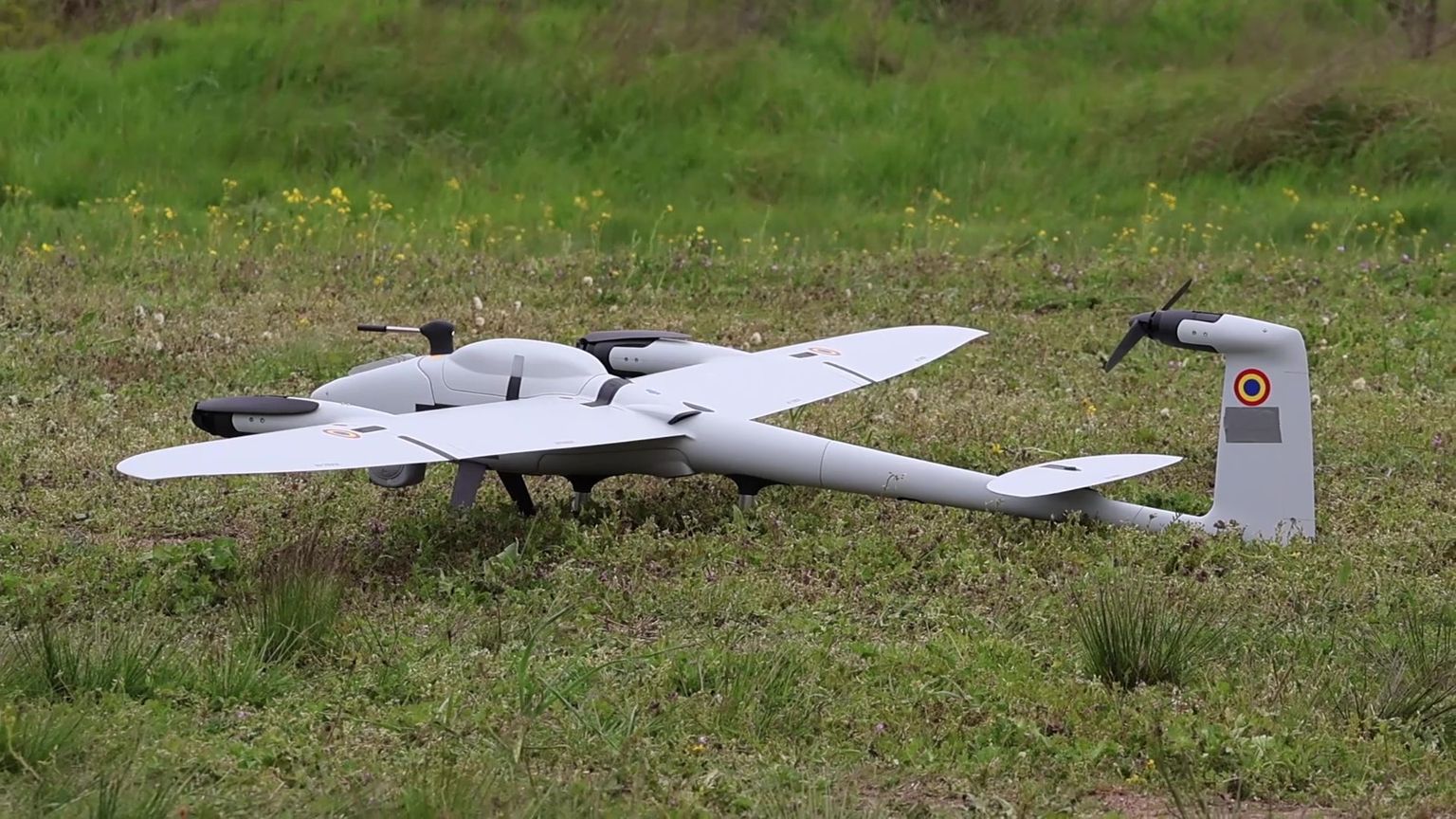
Germany is funding production of interceptor drones built to shoot down Russia's jet-powered attack drones, with manufacturer Quantum Systems set to build tens of thousands of units in Ukraine under a joint program with Ukrainian firm Fire Point. The deal responds directly to a battlefield problem: Russia launched more than 1,900 attack drones against Ukraine in the week before the announcement, over 800 of them jet-powered, while Ukraine's best interceptor currently stops only about 30% of them.
Background
Russia's shift to jet-powered, mass-produced attack drones — exemplified by the Geran-4, a variant built around a roughly $25,000 Chinese turbojet engine — has outpaced Ukraine's existing air defenses. Russia now produces an estimated 3,000 Geran-series drones per month, and the Kremlin has reportedly budgeted $12 billion for jet-powered drones and loitering munitions in 2027 alone, according to figures cited by DroneXL.
Loitering munitions are explosive-carrying drones that circle a target area before striking, as opposed to drones flown to a fixed target on a direct path. Older propeller-driven interceptors are generally too slow to catch jet-powered drones, which can exceed 300 mph — forcing a new generation of faster, cheaper interceptor aircraft purpose-built for the intercept role rather than adapted from reconnaissance platforms.
The $9.6 Billion Package
The 15 agreements signed October 4 span air defense, drone production, and energy infrastructure. Companies involved include Quantum Systems, Siemens Energy, Hensoldt, Diehl Defence, and Alpha Robotics, alongside Ukrainian manufacturers Fire Point and the National Guard's domestic drone program.
| Category | Amount / Detail |
|---|---|
| Total agreements | €8.5B ($9.6B) |
| Immediate package | €1.3B ($1.46B) |
| — Military aid | €1B ($1.13B) |
| — Energy support | €350M ($394M) |
| Interceptor producer | Quantum Systems + Fire Point |
| IRIS-T missiles | "Thousands" of units, plus additional fire units |
Beyond interceptors, the package funds IRIS-T air defense missiles and radar systems from Hensoldt, unmanned rescue systems through Alpha Robotics, and power-grid repair work with Siemens Energy and German grid operators ahead of winter. "This will quickly and noticeably strengthen Ukraine's air defense," Merz said, according to DroneXL. Zelensky said the technologies would "strengthen our air defense" and confirmed part of the funding draws on European loan tranches, per Mezha.
The SPYS and Bars Interceptors
Two interceptor programs sit at the center of the deal. The SPYS interceptor, a jet-powered drone co-developed by Ukrainian and German engineers, reaches a top speed of roughly 373 mph (600 km/h) and carries a 300-gram payload; the first 50 units went to Ukraine's military for combat evaluation in July 2026, and the design recently passed further testing, according to DroneXL.
The Bars interceptor is currently Ukraine's best-performing system against jet-powered drones, with roughly a 30% hit rate — the figure German and Ukrainian officials cited as the baseline the new funding is meant to improve. Under the October 4 agreement, Quantum Systems and Fire Point aim to scale interceptor output to tens of thousands of units within months, localizing production inside Ukraine to shorten supply lines and cut costs.
Quantum Systems, a German reconnaissance and interceptor drone maker valued at roughly $8 billion, already supplies its Vector VTOL aircraft to German and Ukrainian forces and used backing from the CIA's venture arm to enter the US defense market earlier in 2026. The company's growing interceptor line builds directly on that reconnaissance-drone foundation.
What This Means for Drone Pilots
This deal is a defense and government story, not a civilian aviation rule change — it does not alter FAA, EASA, or any other civil airspace regulation. But it matters to the wider drone industry in two concrete ways.
First, it accelerates the commercial maturity of counter-drone and interceptor technology. Techniques developed to detect and destroy fast, small aerial targets at scale — sensor fusion, high-speed autonomous intercept, low-cost mass production — tend to migrate from the battlefield into civilian counter-UAS markets within a few years, shaping how airports, stadiums, and critical infrastructure defend against unauthorized drones.
Second, it reinforces a funding pattern worth tracking: European governments are treating drone and counter-drone manufacturing as strategic industrial policy, not one-off purchases. For pilots and manufacturers outside the defense sector, that translates into more European-made components, more domestic supply chains, and continued scrutiny of foreign-made hardware in sensitive markets — a dynamic already playing out in the history of military drone development and across the broader range of drone categories now built for defense use.
FAQ
Sources: DroneXL | Mezha | Kyiv Independent
More like this
Related Articles
FAA Awards $12M for BVLOS Drone Test Research (2026)
The FAA gave $12 million to 19 BVLOS drone research projects on October 5, 2026, as its Part 108 rule sits stalled in White House…

Wing, Walmart Drone Delivery Hits Denver, Seattle in 2027
Wing and Walmart will launch drone delivery in Denver and Seattle in 2027, expanding toward 270 Walmart stores and 40 million US c…
Cleaning Drone Hits Record 280 Feet With New Pulley
Lucid Bots' Sherpa drone cleaned a 23-story tower at 280 feet using a rooftop pulley that carries the hose's weight — the highest…