Who Invented the Drone? A History of Unmanned Aircraft
The History of Drones
The drone was invented by Abe Karem, an Israeli-American engineer who developed the Albatross and Amber prototypes in the 1980s - the direct precursor to the Predator drone. The idea is older still, though: it traces back to the V-1 flying bomb, built by Germany during World War II.
The history of drones is remarkably similar to the history of the Internet.
Imagine the world before the internet - the age of exploration, physical maps carried on sailing ships, information that traveled at the speed of horses and tides.
The moment globalization accelerated, distances collapsed and a revolution began.
The popularization of drones has triggered a comparable revolution in the world we know.
Both technologies began with military applications. Both became accessible over time, gained widespread adoption, and ultimately reshaped daily life around the world.
UAVs (unmanned aerial vehicles) were initially used for terrain reconnaissance, providing aerial views that gave commanders decisive advantages. They served as support, as attack platforms, and as surveillance tools - and in their earliest forms, even as message carriers.
The first UAVs emerged around the 1960s, but it was in the 1980s that they began attracting serious attention - driven by their military utility. The decisive advantage was the ability to conduct dangerous missions without putting a human life at risk. Whoever was operating the drone remained safely on the ground; the worst-case outcome was losing the vehicle.
What most people don't know about the history of drones is that it was inspired by a bomb.
The popularly nicknamed buzz bomb - so called for the characteristic sound it made in flight - was developed by Germany during World War II.
Despite its simplicity - which made it easy to intercept, since it flew in a straight line at constant speed - it achieved considerable impact. More than 9,000 V-1 flying bombs were launched against Allied targets in England and Belgium, causing enormous casualties and infrastructure damage.
The V-1 was not the only weapon of its kind. The V-2 followed, though as a ballistic missile rather than a sustained-flight vehicle. But the V-1 was the conceptual breakthrough - the first unmanned aerial vehicle used at large scale in warfare, and the direct inspiration for the drone technology that followed.
Who Invented the Drone?
The modern drone, as we know it today, has one of its most important inventors in Abe Karem - an Israeli-American engineer responsible for the American UAV that was the most feared and successful of its era.
"I just wanted unmanned air vehicles to operate to the same standards of safety, reliability and performance as manned aircraft." - Abe Karem
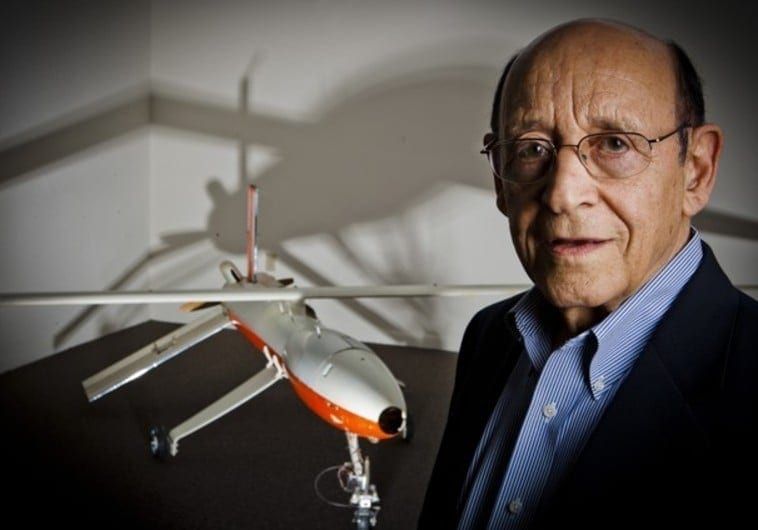
According to Karem, when he arrived in the United States in 1977, controlling a drone required 30 people. The model of the era, the Aquila, flew for only a few minutes on average despite having 20 hours of theoretical endurance.
Seeing that situation, Karem founded Leading Systems and, using simple materials - scraps of wood, homemade fiberglass, and an engine similar to those used in go-karts - created the Albatross.
The Albatross stayed airborne for 56 continuous hours without recharging, operated by just 3 people - compared to the Aquila's 30. That demonstration earned Karem DARPA funding to refine the prototype, which led to the Amber - the direct precursor to the famous Predator, which entered US military service in the 1990s.
Defining What a Drone Is
People often hear the term for the first time and ask: what exactly is a drone?
A drone is an unmanned aerial vehicle. Unlike planes and helicopters, it carries no pilot on board - it is controlled remotely and, in many cases, equipped with high-quality cameras and sensors.
For a period, drones were seen primarily as toys, an evolution of the traditional model aircraft. Today there is a large and growing professional market for drone pilots across virtually every sector.
The popularization of drones is a recent phenomenon - and Google Trends data tells that story more clearly than any narrative.
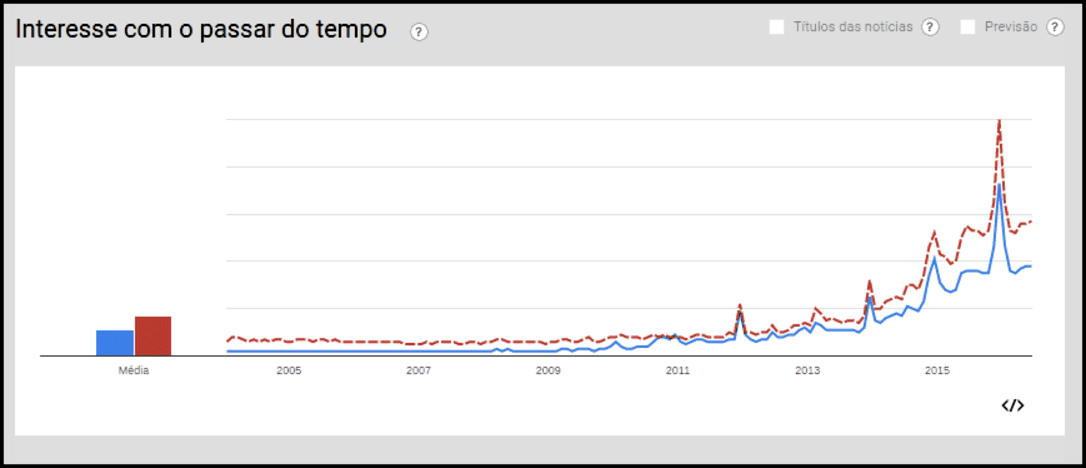
The chart above tracks search volume over time: until 2010, almost no searches. From 2013, nearly exponential growth - exactly when a specific product changed everything. We'll get to that.
The 2015 data, when this article was first published, revealed some interesting patterns about global interest:
- France, Norway, and the Netherlands led the world in drone search volume
- The United States followed closely behind, about 7 points below the third place
- Globally, the pattern reflected a technology still in the early adoption phase - with enormous runway ahead
Those numbers proved to be an understatement. The decade that followed confirmed every upward trend.
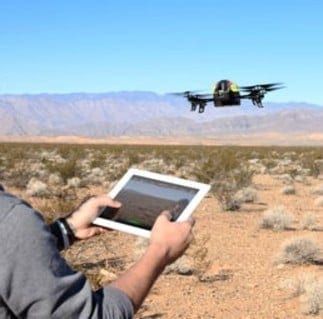
Technological evolution now allows anyone who wants to become a pilot to control their drone directly from a smartphone or tablet. Some models can even be controlled using the phone's accelerometer, making the experience even more intuitive.
Uses of Drones
With the unfolding of the drone era, UAVs have spread across virtually every industry.
Early models were used almost exclusively for images and video. Today they are increasingly durable, autonomous, and versatile.
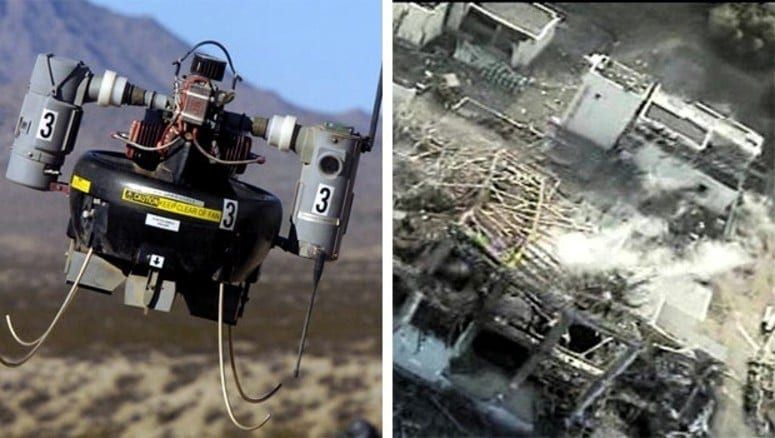
- Aerial photography and imaging: At the Fukushima accident in Japan, a T-Hawk drone was used to capture images of damaged reactors without any risk of radiation contamination. More commonly, drones are used at weddings, sporting events, and news coverage. During the 2013 protests in Brazil, aerial drone footage became iconic news imagery.
- Hurricane monitoring: Scientists in Florida created storm-hardened drones designed to be flown into hurricanes, collecting trajectory, wind speed, and pressure data - information that allows timely evacuation of at-risk areas.
- Underwater imaging: The OpenROV system enables real-time imaging of the ocean floor, reaching points inaccessible to divers, cataloguing new species, and exploring oceanic mysteries.
- Military use: The first use of drones continues to this day - and has evolved radically. In the Ukraine war (2022–present), drones have moved from being reconnaissance tools to battlefield protagonists. Commercially adapted FPV drones are used as precision guided munitions, and Ukraine produced nearly 2 million drones in 2024, many equipped with AI for GPS-denied navigation and target recognition.
- Deliveries and logistics: Amazon Prime Air conducted its first commercial deliveries in College Station, Texas, in 2022 - making real what in 2015 still seemed like science fiction. Deliveries cover items up to 5 lbs and arrive in under 60 minutes. Wing (Alphabet) and Zipline operate similar services in select US and global markets.
- Medicine and emergency response: Companies like Zipline deliver blood, vaccines, and medication to more than 5,000 health facilities across Africa. In Rwanda, the technology reduced maternal deaths from postpartum hemorrhage by 51%. See our full article on drones in medicine.
- Agriculture: Agricultural drones represent one of the fastest-growing segments globally. Equipment like the DJI Agras T50 sprays crops with centimeter-level precision, reducing pesticide use by up to 30%. The global agricultural drone market is projected to exceed $10 billion by 2030.
- Sports and broadcasting: At the 2026 Winter Olympics in Milan-Cortina, 15 FPV drones weighing under 243g and capable of 140 km/h flew alongside athletes on the slopes, delivering images no fixed camera could capture.
- Search and rescue: In 2015, the Gimball - a drone enclosed in a protective cage inspired by flying insects - won the international Drones for Good competition. Equipped with a temperature sensor, GPS, cameras, and high impact resistance, it was designed to navigate hostile environments like rubble and fires, assisting search and rescue operations without putting human lives at risk.
As drones became ubiquitous, they also started making news for unexpected reasons: a Texas pizzeria attempted a delivery by drone. A UAV interrupted a soccer match. Another flew over a nudist beach and caused an uproar. These were the first signs that drones had arrived in everyday life - and were here to stay.
The DJI Era: When Drones Became Mass Market
In 2013, a Chinese company called DJI launched the Phantom - and the drone market was never the same.
Frank Wang, DJI's founder, created the first "plug and fly" consumer drone: charge the battery, attach the GoPro camera, and fly. No assembly, no technical calibration, no engineering degree required. Anyone could operate it.
In 2016, the Mavic Pro followed - the first foldable, genuinely portable drone from the company, the size of a water bottle, with a 4K camera stabilized by a 3-axis gimbal.
Today DJI controls more than 70% of the global commercial drone market and more than 90% of the consumer market. It is the industry's de facto standard. Learn more in the complete history of DJI.
Drone Regulations: The Basics
The popularization of drones brought with it the need for regulation. In the United States, the FAA (Federal Aviation Administration) governs drone operations.
The most important points for any pilot:
- Drones weighing 0.55 lbs (250g) or more must be registered at the FAA DroneZone (faadronezone.faa.gov) - $5 fee, valid for 3 years
- Maximum altitude is 400 feet (approximately 120 meters) above ground level in uncontrolled airspace
- Drones must remain within visual line of sight at all times
- Flying near airports requires LAANC authorization
- Part 107 certification is required for any commercial drone operation
- Fines for violations can exceed $20,000
Other countries have their own frameworks: the EU follows EASA regulations, the UK follows CAA rules, Canada uses Transport Canada's RPAS regulations. If you fly internationally, always check local rules before your first flight.
The History of Drones Isn't Over
It is happening right now, at this very moment.
Drones have evolved from technological curiosity to infrastructure. They are in the fields of the American Midwest, in hospitals in Rwanda, on the luge runs of the Italian Alps, and on the battlefield in Ukraine. The next frontier is electric air taxis (eVTOL) that promise to transform urban mobility - with companies like Joby Aviation, Archer, and Lilium among the protagonists.
As many researchers argue: history is not static. It is built every day - and with drones, it is no different.
Interested in being part of this revolution? Start with our guide to how to fly a drone and take your first steps in the air.
FAQ
Sources: FAA - Unmanned Aircraft Systems | Zipline - Operations | Wikipedia - V-1 flying bomb | DJI - Company History
More like this
Related Articles
Drone Remote ID Explained: Do You Need One in 2026?
Remote ID is a digital license plate for drones. See who needs it in the US, UK and EU, the 3 ways to comply, module costs and the…
Best Cheap Drones With Camera in 2026: 6 Picks Under $500
Looking for a cheap drone with a good camera? We compare 6 budget picks from $149 to $450 by real flight time, gimbal, rules and h…
How High Can a Drone Legally Fly? Limits by Country (2026)
The FAA caps drones at 400 feet; the EU, UK and Australia cap them at 120 meters. See the exact legal limit for your country and w…