Joby Completes First 3,199-Mile Autonomous US Flight
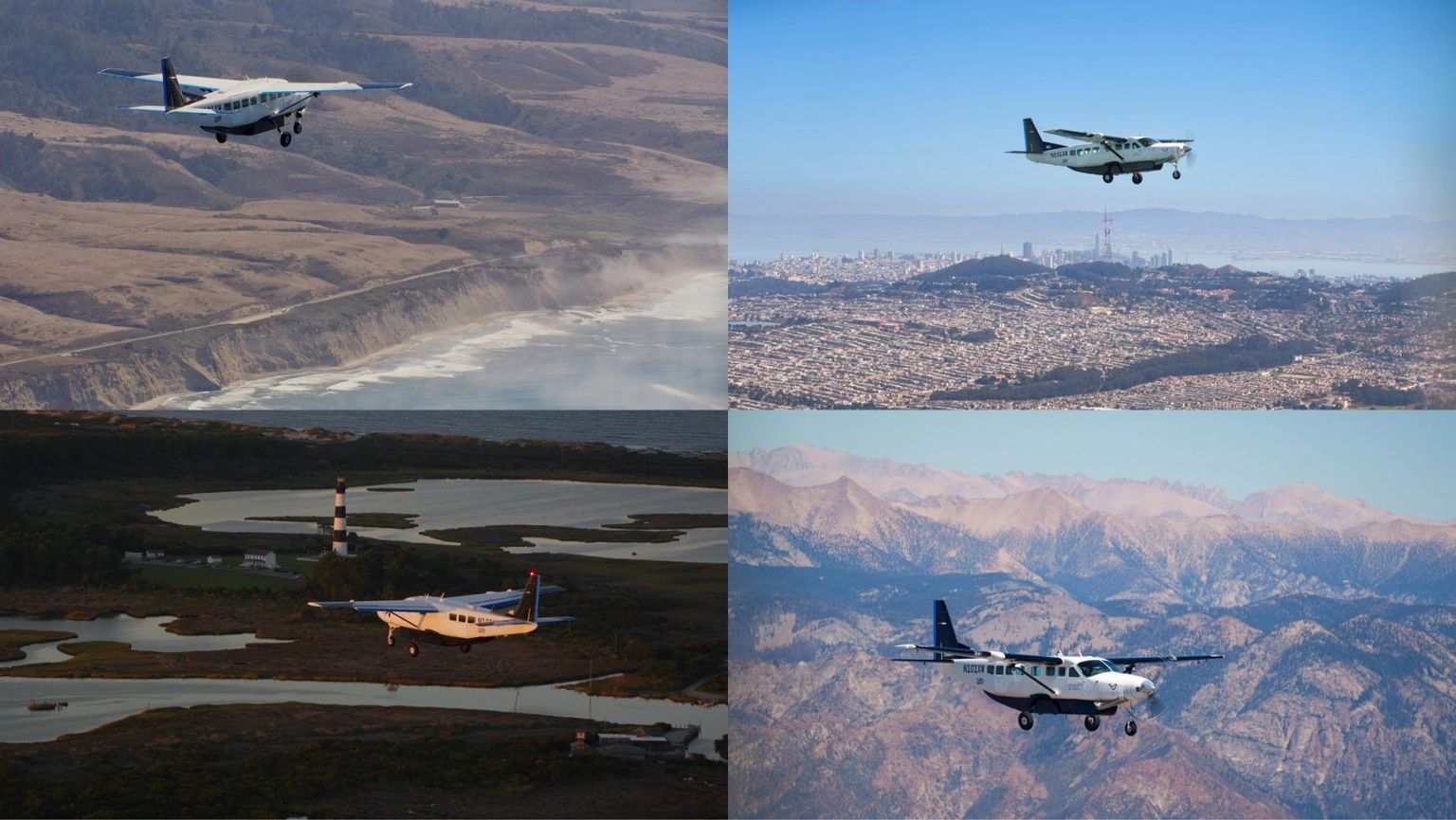
Joby Aviation flew an uncrewed autonomous aircraft 3,199 miles across the United States, the company announced on September 18, 2026 — the first flight of its kind completed with zero pilot input. The modified Cessna Caravan, called the J208, taxied, took off, navigated, and landed itself from California to North Carolina using autonomy software Joby acquired from Xwing in 2024.
Background
Joby Aviation is best known for its piloted eVTOL (electric vertical takeoff and landing) air taxi, which is moving through FAA type certification and began demonstration flights over Dallas-Fort Worth in September under the agency's eVTOL Integration Pilot Program. The J208 program is a separate, parallel effort: rather than a new aircraft, it retrofits a proven airframe — a 1993 Cessna 208B Grand Caravan (serial 208B0382) — with an autonomy stack so it can fly with no one at the controls.
That software traces back to Xwing, a startup Joby acquired in June 2024 specifically for its autonomous cargo-flight technology. Before this cross-country run, the system had logged more than 400 flights and 800 automated flight hours, including three U.S. military exercises — Agile Flag and REFORPAC among them — that tested the aircraft alongside the Department of Defense. The J208 still operates on an FAA experimental airworthiness certificate, a research-and-development category that permits testing but not commercial passenger or cargo service; the aircraft's original type certificate was issued by the FAA in October 1984, underscoring that the airframe itself isn't new — the autonomy layered on top of it is.
The 3,199-Mile Route
The flight was the eastbound leg of "Electric Skies," a tour that launched over San Francisco Bay in March 2026 and is working through 10 states. The J208 departed Buchanan Field in Concord, California, and flew to Phoenix Deer Valley Airport in Arizona, Fort Worth Alliance Airport in Texas, Shaw Air Force Base in South Carolina, and finally Dare County Regional Airport on North Carolina's Outer Banks — 3,199 miles (5,148 km) in total. Along the way, the aircraft performed a low pass near the Wright Brothers National Memorial at Kitty Hawk, the site of the first powered flight in 1903.
| Leg | Stop | State |
|---|---|---|
| 1 | Buchanan Field, Concord | California |
| 2 | Phoenix Deer Valley Airport | Arizona |
| 3 | Fort Worth Alliance Airport | Texas |
| 4 | Shaw Air Force Base | South Carolina |
| 5 | Dare County Regional Airport (Outer Banks) | North Carolina |
Joby says the tour will continue with stops in Raleigh, the Washington, D.C. area, Louisville, Wichita, Oklahoma City, Salt Lake City, and Portland, Oregon, before the aircraft heads back to California.
How Autonomous Was the Flight?
A safety pilot sat in the cockpit for regulatory compliance, but Joby says that pilot never touched the controls. Instead, a ground-based Remote Pilot in Command — operating from Joby's Autonomy Headquarters in California and, for part of the route, from Shaw Air Force Base — supervised the aircraft from as far as 2,323 miles away. The J208 handled taxiing, takeoff, en-route navigation, and landing on its own, including working through high-density traffic at Phoenix Deer Valley Airport and rerouting around severe weather in real time without human intervention.
"This journey across America offers a glimpse into a new era of aviation," said JoeBen Bevirt, Joby's founder and CEO, in the company's announcement. "Autonomy has an important role to play in the future of flight, allowing us to connect remote communities, deliver critical supplies, respond faster to disasters, support military operations, and keep pilots out of harm's way."
Joby is positioning the J208 for medical transport, disaster response, defense logistics, and commercial freight — markets distinct from the passenger air-taxi business the company is best known for, though both draw on the same underlying push toward reducing how much a human has to fly the aircraft directly. The company already holds a $17 million AFWERX contract with the U.S. Air Force and describes a "long-standing relationship" with the Department of Defense, which the military exercises behind the J208's flight hours reinforce.
What This Means for Drone Pilots
The J208 isn't a drone, and it isn't cleared for commercial service — it's flying on an experimental certificate, and Joby has not given a certification timeline for autonomous passenger-free cargo operations. But the flight matters to the broader UAS community because it demonstrates, at full scale and over thousands of miles, exactly the capability the FAA's stalled Part 108 BVLOS rule is meant to eventually govern: an aircraft operating beyond visual line of sight with a remote pilot supervising rather than directly flying it. Regulators evaluating how to scale drone autonomy and remote supervision of BVLOS operations now have a real, well-documented data point — 800+ automated flight hours and a transcontinental flight — to point to as the technology outpaces the rulemaking built to manage it.
For operators building toward eVTOL air taxi or long-range BVLOS drone services, the J208 tour is also a signal about where remote-pilot staffing models are headed: one ground-based controller supervising an aircraft thousands of miles away, intervening only when needed, rather than a dedicated pilot for every flight. That ratio — one remote operator to many aircraft — is the same efficiency argument BVLOS drone operators have been making to the FAA for years.
FAQ
Sources: Joby Aviation | TechCrunch | DroneXL
More like this
Related Articles
Drone Halts Flights at Reagan National for 20 Minutes
An unauthorized drone forced a 20-minute halt of all Reagan National Airport flights on Sept. 16, 2026 — here's what happened and…
Zipline Nears $20B Valuation in New $1B Funding Round
Zipline is in talks to raise about $1 billion at a $20 billion valuation, nearly tripling its worth as US drone delivery scales pa…
FCC Opens Nationwide Cellular Test for Drone Safety
The FCC has waived airborne cellular restrictions so the DOT can test mobile networks on 200 drones and 2,000 pilots, a real step…