Wisk Hollister Vertiport Opens as FAA Drafts New Rules
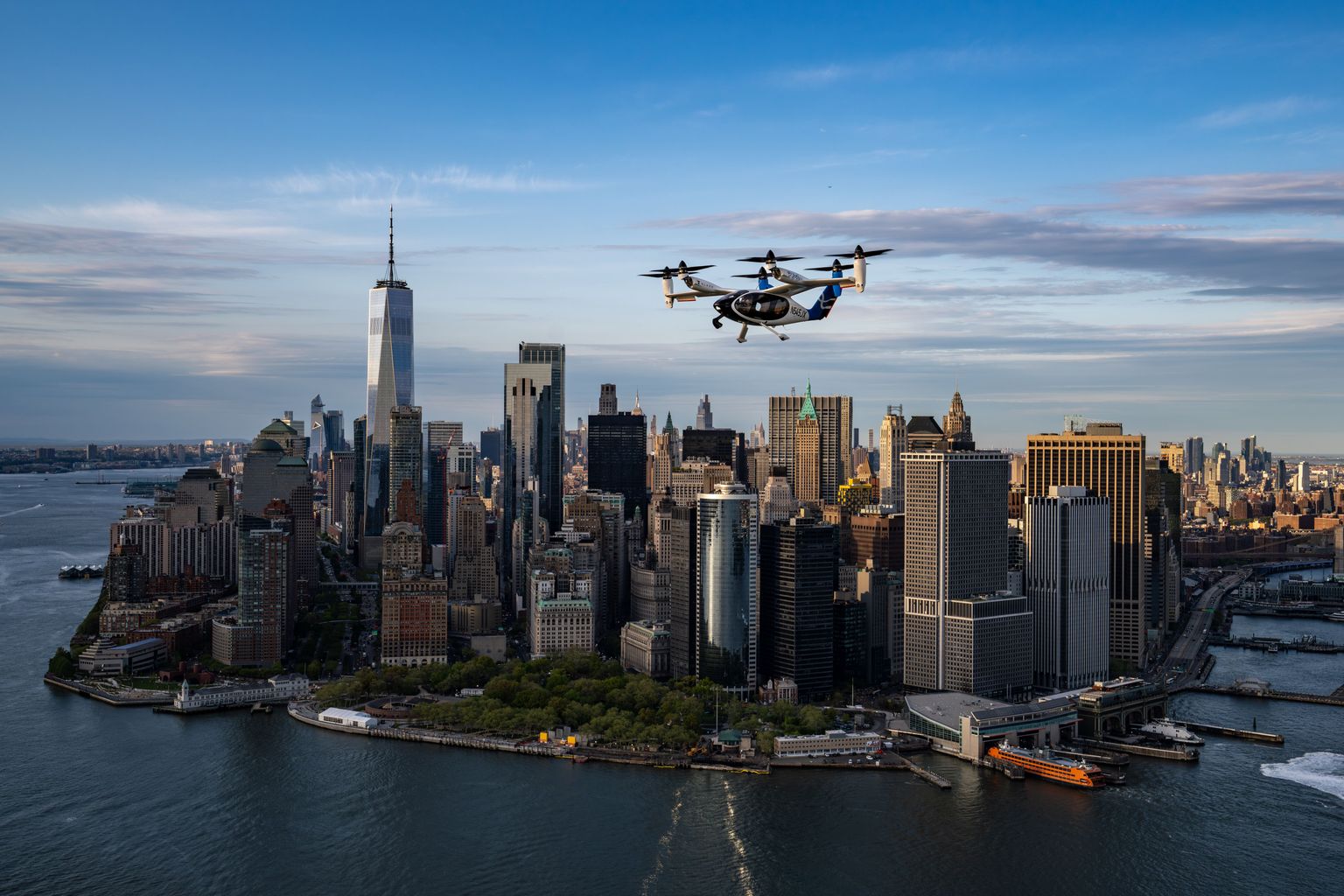
Wisk Aero, a Boeing subsidiary, opened a 100-by-100-foot vertiport at Hollister Municipal Airport in California on October 29, 2026, one week after the FAA posted a draft advisory circular that would replace its interim vertiport design guidance. A vertiport is a landing and takeoff pad for electric vertical takeoff and landing (eVTOL) aircraft. Public comments on the FAA draft close January 11, 2027.
Wisk Hollister Vertiport: What Opened
According to DroneXL, the pad measures 30 by 30 meters (100 by 100 feet) and is built from elevated steel sections, with solar panels, power banks, and taxiway connectors. Wisk says it is one of the first public, on-airport U.S. vertiports designed for both piloted and autonomous operations, and that it was built to existing FAA standards.
Construction was announced in August, roughly nine weeks before the ribbon-cutting. Wisk credited Caltrans, the City of Hollister, the FAA's local Airports District Office, and the FAA Office of Airports for the fast build.
Wisk's second Generation 6 aircraft, tail number N607WA, was displayed on the pad during the event. The company has not said that a Gen 6 has flown to the site yet; that aircraft first flew on May 4. The first traffic is expected to be Wisk's existing surrogate helicopter operations moving to Hollister.
What Does the FAA's Draft Vertiport Standard Change?
The FAA's draft advisory circular AC 150/5390-4, posted October 22, 2026, would replace Engineering Brief 105A, the interim guidance used for vertiports today. The agency expects final standards in summer 2027.
Per the same report, the draft:
- Drops the aircraft limits written into EB 105A
- Sets the touchdown area at the aircraft's rotor diameter plus 10 feet (3 meters)
- Requires a powered-lift approach surface of 15:1 or shallower
| Item | Current (EB 105A) | Draft (AC 150/5390-4) |
|---|---|---|
| Status | Interim guidance | Proposed, comments close Jan. 11, 2027 |
| Aircraft limits | Included | Dropped |
| Touchdown area | Per EB 105A | Rotor diameter + 10 ft (3 m) |
| Approach surface | Per EB 105A | 15:1 or shallower |
| Final standard expected | n/a | Summer 2027 |
Why Hollister Matters for Advanced Air Mobility
Wisk says the pad provides "the exact physical setup needed to validate precision landing technologies," in the words of CEO Sebastien Vigneron. It will host testing in GPS-denied and low-visibility conditions using proprietary transceivers designed to work with any VTOL aircraft.
The site also anchors the California Advanced Air Mobility Corridors Initiative, led by the Monterey Bay Economic Partnership. Wisk says its data feeds the FAA's eVTOL Integration Pilot Program (eIPP) through the Texas Department of Transportation's project; the FAA selected eight eIPP projects in March.
Other operators are building their own ground networks. Our coverage of Archer's planned L.A. LIVE vertiport shows how quickly the infrastructure race is moving ahead of the 2028 Olympics.
What This Means for Drone Pilots
Vertiports do not change Part 107 rules for small drones today. The draft is aimed at airport and eVTOL operators, not recreational flyers. But pads at public airports add low-altitude traffic near airfields, so pilots flying near them should keep checking LAANC authorizations and NOTAMs.
The bigger signal is regulatory: the FAA is moving from interim guidance toward permanent standards for powered-lift aircraft, the same direction it is pushing on BVLOS. For background on the aircraft themselves, see our eVTOL air taxis guide. Anyone can submit comments on the draft before January 11, 2027.
FAQ
Sources: DroneXL | DroneXL eVTOL tracker
More like this
Related Articles

Axon Invests $1.2B in Skydio, Gets Exclusive US Police Sales
Axon is investing $1.2 billion in Skydio at a $5.2B pre-money valuation and becomes its exclusive US and Canada public safety sell…
Pentagon: US Starts at 'Basically Zero' on Cheap Drones
The Pentagon says the US is starting from basically zero on cheap drones while Russia builds 7.3M this year. Here are the numbers…
FCC Opens 800 MHz Spectrum to Drones in 3-0 Vote (2026)
The FCC voted 3-0 on Oct. 29 to let drones use 50 MHz of 800 MHz cellular spectrum. Here's what the order changes, what it doesn't…