DJI AP100 Parachute Unlocks BVLOS Flights in Europe
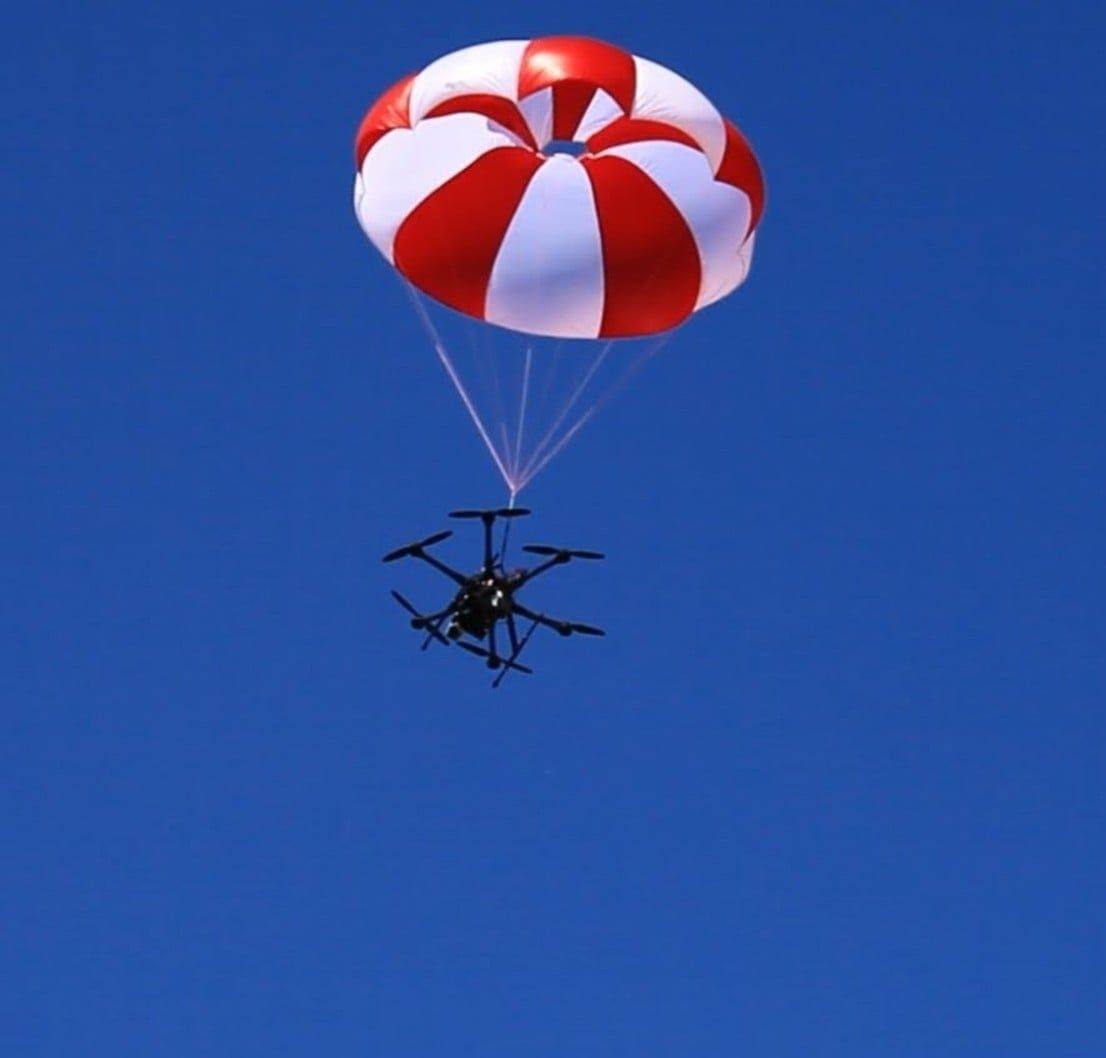
DJI released the AP100 on July 8, 2026, its first in-house recovery parachute for an enterprise drone. Mounted on the Matrice 400, the 935-gram system deploys in under 600 milliseconds and lets the aircraft qualify for EASA C6 and UK CAA UK6 class marking — the certification tier required to fly beyond visual line of sight over populated areas in the European Union and the United Kingdom.
Background
BVLOS (Beyond Visual Line of Sight) is drone flight conducted past the point where the pilot can see the aircraft with the naked eye. Under EASA's "Open" and "Specific" category framework, an aircraft needs a class marking from C0 through C6 to certify it meets defined safety requirements for a given type of operation. C6 is the tier that unlocks BVLOS missions under the STS-02 standard scenario over populated areas — the scenario inspection, mapping, and public-safety operators most want to scale.
Before the AP100, anyone needing parachute recovery to fly a DJI drone over people relied on third-party systems from companies like AVSS or ParaZero, which certify their own hardware separately for aircraft across multiple brands. By building the AP100 itself and integrating it natively with its Pilot 2 and FlightHub 2 software, DJI now competes directly with those suppliers instead of depending on them.
How the AP100 Works
The AP100 mounts on the rear of the Matrice 400 and runs on its own flight control, sensors, and power supply — independent of the aircraft's main systems, so it keeps working even if the drone loses power.
| Spec | Value |
|---|---|
| Weight | 935 g (2.1 lb) |
| Deployment time | Under 600 ms |
| Descent rate | Less than 5 m/s (16.4 ft/s) |
| Backup power | Up to 1 hour (dual capacitors) |
| Operating temperature | -20°C to 50°C |
| Ingress protection | IP55 |
| Flight-time cost | About 6 minutes |
Deployment triggers automatically if the drone breaches a preconfigured geofence, and the Matrice 400's maximum takeoff weight of 15.8 kg (34.8 lb) holds even with the parachute installed. The tradeoff: installing the AP100 disables the aircraft's downward- and rear-facing millimeter-wave radars, and the pyrotechnic ejection mechanism is single-use — DJI recommends replacing it after every deployment and retiring the unit after three years.
What Changes for European Certification
The regulatory detail is what makes the AP100 more than a safety accessory. Matrice 400 units equipped with it from the factory receive EASA C6 marking (Europe) or UK CAA UK6 marking (United Kingdom), authorizing BVLOS flight over populated areas under the STS-02 standard scenario. Aircraft already in the field can be sent to DJI for a retrofit that earns C5/UK5 marking — enough to fly over uninvolved people under STS-01 — but not the full C6/UK6 tier, which DJI only certifies on factory-built units.
The system meets the MOC 2511 and MOC 2512 means-of-compliance declarations and the ASTM F3322 standard, the reference frameworks regulators use to certify recovery parachutes on drones. DJI has not brought the AP100 to the US market, and the announcement makes no mention of American availability — a reflection of the FCC's Covered List restrictions, in effect since December 22, 2025, which block new DJI equipment from gaining US certification.
For background on how BVLOS certification works and how the FAA's approach differs from Europe's, see our guide to what BVLOS means. DJI made a related move on July 1, 2026, extending standalone C6 BVLOS certification to the Matrice 4D without requiring a dock — together, the two updates show DJI moving fast to clear EASA's hardware bar across its enterprise lineup.
What This Means for Drone Pilots
European and UK operators running inspection, mapping, or public-safety missions with a Matrice 400 gain a factory-certified path to BVLOS over populated areas without waiting on a third-party parachute vendor's separate approval. That shortens the road from purchase to a compliant STS-02 operation.
Outside Europe, the direct impact is limited — the AP100 isn't sold in the US, and BVLOS approval frameworks elsewhere don't hinge on EASA-style hardware class marking. But the move is a signal worth tracking for any operator evaluating the broader DJI drone lineup: DJI is now building safety hardware in-house rather than leaving it to third parties, and further class-marking upgrades across its enterprise fleet are likely to follow the same pattern.
FAQ
Sources: DroneXL | DJI Enterprise
More like this
Related Articles
Amazon Prime Air Eyes Australia, Posts CASA Approvals Job
Amazon Prime Air is hiring a Head of Regulatory Approvals in Australia to win CASA sign-off for its MK30 drone. Here's what the jo…
Dronus K500L Drone Gets FCC Ban Exemption (Oct 2026)
The FCC granted the Italian Dronus K500L drone a Covered List exemption on Oct. 2, 2026. Here's what the Conditional Approval requ…
Germany's Army Drone Regiment: 600 Soldiers, 500 km Reach
Germany will build its first Army drone regiment in 2027, with up to 600 soldiers and 500 km reach, as the US Army ends its drone…