Zipline Answers 30 Drone Safety Questions, Amazon Won't
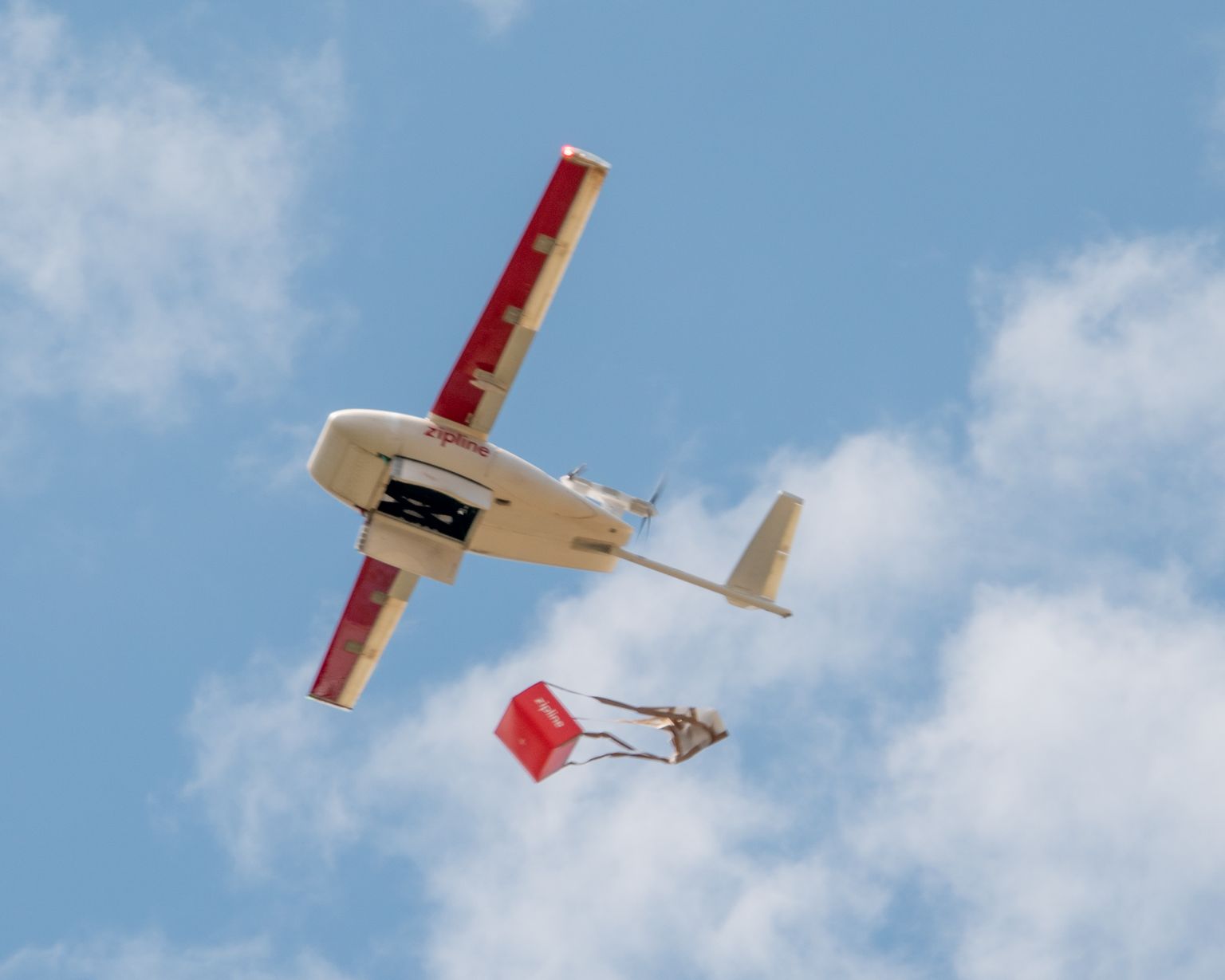
Zipline answered 15 of 30 written safety questions from drone news outlet DroneXL on September 16, 2026, disclosing its delivery drone's dual-parachute system and 500-plus-checks-per-second monitoring. Amazon Prime Air and Alphabet's Wing did not answer any of their questions — 25 and 30, respectively — despite deadlines that had already passed.
Background
DroneXL, an independent outlet that has covered US drone delivery incidents since 2025, sent identical-purpose written questionnaires to the three companies now racing to scale drone delivery nationwide: Zipline, Amazon Prime Air, and Wing. All three operate under FAA BVLOS — Beyond Visual Line of Sight — authority, which lets their aircraft fly delivery routes without a human observer tracking every drone. That authority is what makes rapid multi-city expansion possible, and it is also why safety transparency matters: regulators, insurers, and the public have no independent way to verify an operator's safety record beyond what the company chooses to disclose.
Zipline built its reputation delivering medical supplies by drone in Rwanda and Ghana before expanding into the US consumer and retail market through partnerships with Walmart, Cleveland Clinic, and, as of August 2026, Uber Eats. That delivery history — including years of dropping blood and vaccines into rural clinics — is part of why DroneXL treated its response as a meaningful data point rather than a formality.
What Zipline Disclosed
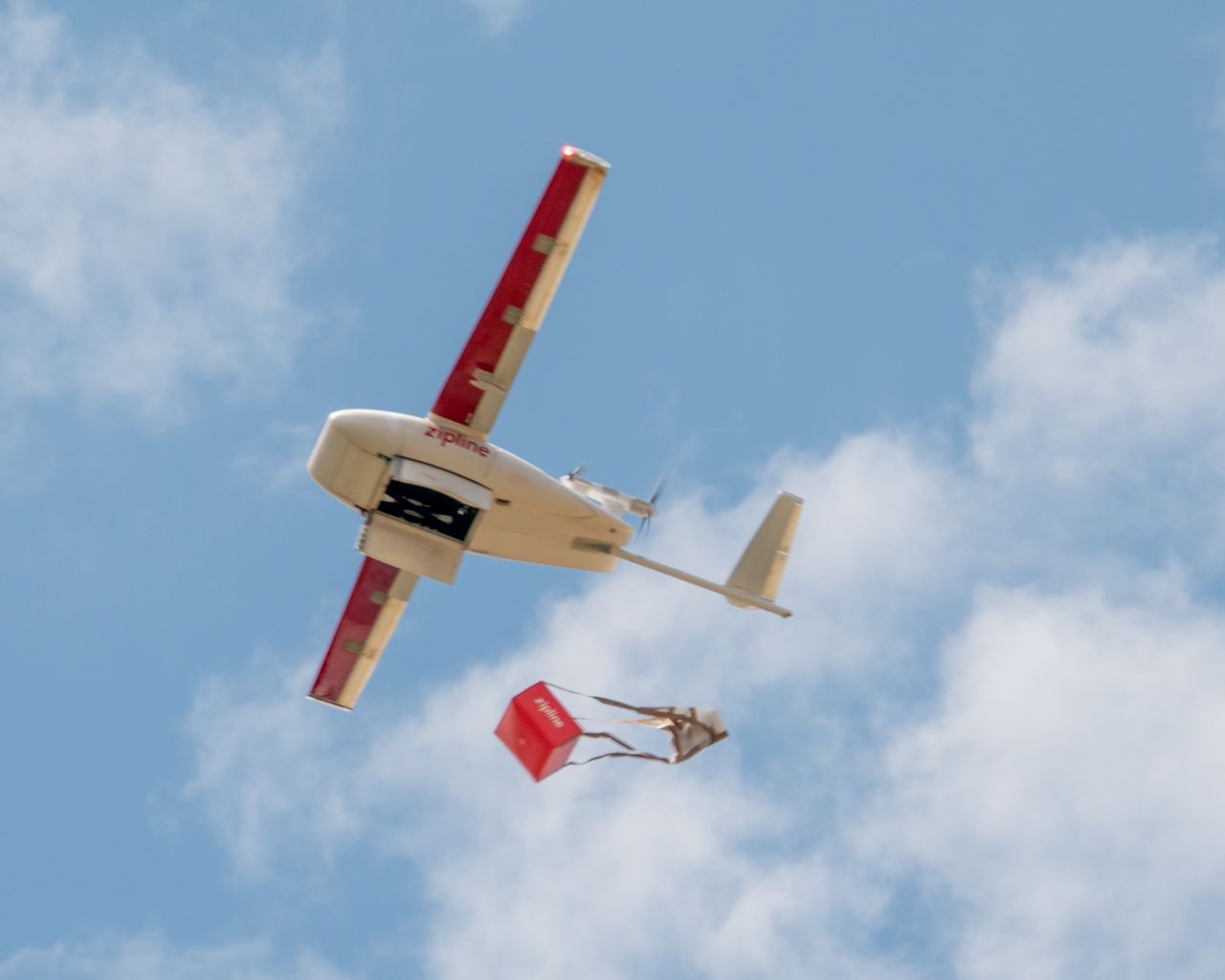
Zipline answered five of DroneXL's 30 questions in full and another ten partially. The company confirmed its current delivery aircraft weighs 55 pounds empty and up to 63 pounds loaded with an 8-pound payload, cruises at 70 mph, and lowers packages from roughly 300 feet using a tethered droid that detaches with its own parachute if the tether is cut or pulled. The aircraft itself also carries a separate parachute that can deploy automatically.
On the cameras that ride along on every delivery, Zipline said: "All cameras are in a fixed position and cannot pan, tilt, or zoom." The company said there is no live video feed to a remote pilot and no joystick control of individual aircraft — deliveries run on pre-programmed, automated routes. Zipline also said its aircraft run more than 500 automated safety checks per second before and during flight, with no single point of failure designed to bring a drone down.
Zipline declined to answer questions that asked for specific incident counts, decibel-level noise data, operating weather limits, and liability terms, telling DroneXL that a formal safety disclosure document covering those topics was still pending.
Amazon and Wing's Silence
Amazon Prime Air received 25 questions across three separate rounds — September 3, September 8, and September 10 — and let every deadline pass without answering any of them. PickDrones reported on September 7 that Amazon had already missed an earlier round of eight questions about the MK30 drone's lack of a parachute and its history of striking a crane, a utility cable, and an apartment building since October 2025; this second, larger round of unanswered questions extends that pattern into a third and fourth attempt.
Wing, Alphabet's delivery drone subsidiary that partners with Walmart in several US markets, received 30 questions with a September 15 deadline and also did not respond — a notable gap given that, according to DroneXL's reporting, Wing has no recorded US incidents on the public record. DroneXL editor-in-chief Haye Kesteloo wrote that Zipline's willingness to engage, even with a partial response, sets a baseline for transparency that its two largest US competitors have so far declined to meet.
What This Means for Drone Pilots
The gap in disclosure matters beyond these three companies because it is happening while the FAA's Part 108 BVLOS rule sits under White House review, with the agency saying it hopes to publish a final version by the end of 2026. Regulators writing rules for routine, human-observer-free drone flights are watching exactly this kind of public accountability test — an operator's willingness to explain its safety systems in writing, on the record, before an accident forces the issue.
For any commercial drone operator, not just delivery fleets, the episode reinforces that a BVLOS waiver or Part 135 certificate does not end public scrutiny of a company's safety practices. Journalists, insurers, and local officials increasingly expect operators to answer specific, technical safety questions rather than deflect them, and companies that build that record early may face less regulatory friction as BVLOS rules tighten. Pilots and businesses operating in or near Zipline, Amazon, and Wing delivery zones should expect continued reporting on each company's incident history as the disclosure gap becomes part of the public conversation around Part 108.
FAQ
Sources: DroneXL | DroneXL — Amazon MK30 questions
More like this
Related Articles
Drone Halts Flights at Reagan National for 20 Minutes
An unauthorized drone forced a 20-minute halt of all Reagan National Airport flights on Sept. 16, 2026 — here's what happened and…
Joby Completes First 3,199-Mile Autonomous US Flight
Joby's J208 flew 3,199 miles across the US with zero pilot input on September 18, 2026 — the first fully autonomous coast-to-coast…
Zipline Nears $20B Valuation in New $1B Funding Round
Zipline is in talks to raise about $1 billion at a $20 billion valuation, nearly tripling its worth as US drone delivery scales pa…