Zipline Nears $20B Valuation in New $1B Funding Round
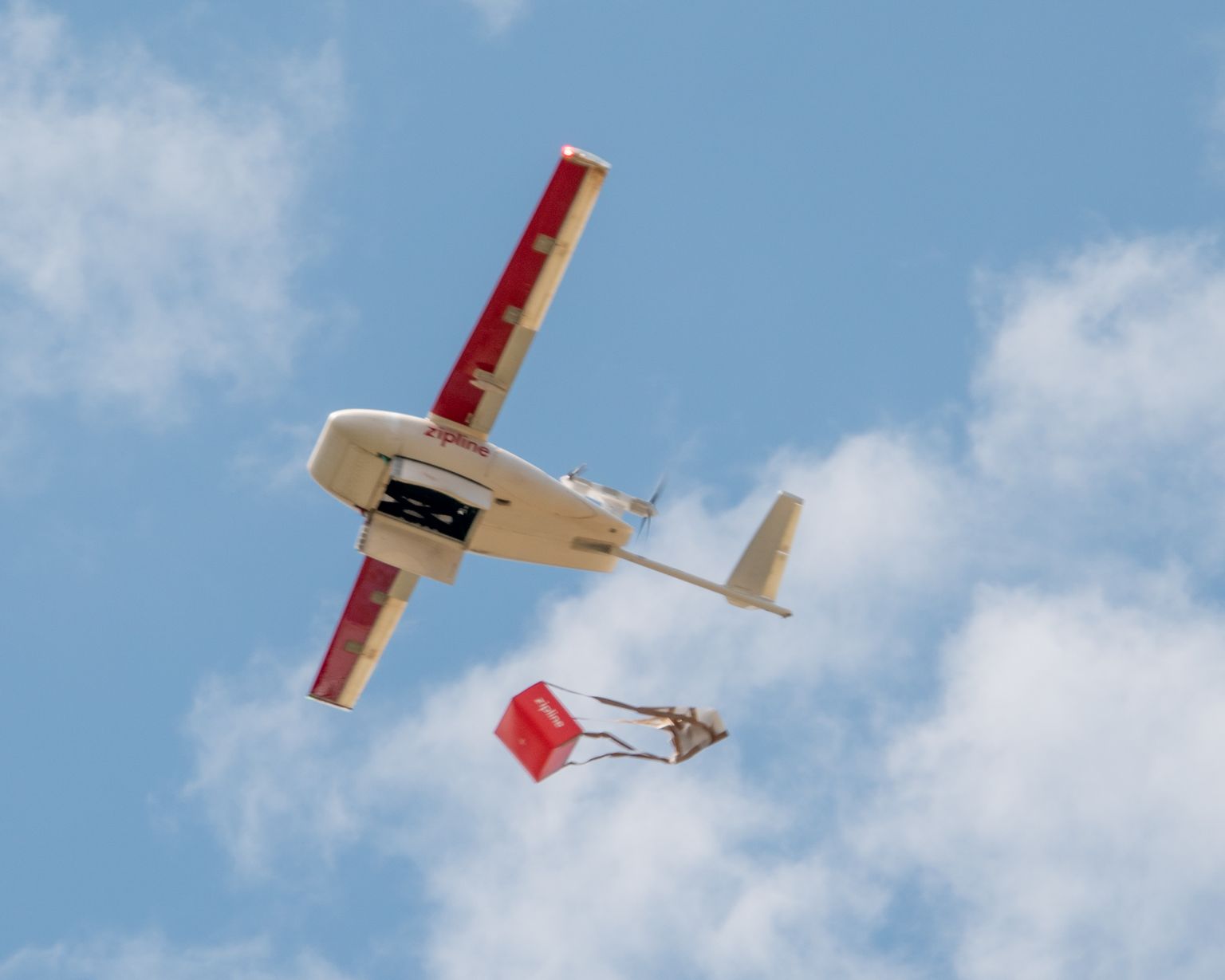
Zipline, the drone delivery company known for medical supply flights in Rwanda and consumer deliveries across the US, is in talks to raise roughly $1 billion at a $20 billion valuation — nearly triple the $7.6 billion it was worth in January 2026. Venture firm Paradigm is discussing leading the round, Bloomberg reported on September 16, 2026, with existing backer Tiger Global Management considering joining.
The talks are still early and terms could change before any deal closes. If it holds, the round would be one of the largest ever raised by a drone company and would push Zipline's valuation past most publicly traded aerospace suppliers.
Background
Zipline was founded in 2014 and built its reputation delivering medical supplies by drone — blood, vaccines, and emergency medication — to rural clinics in Rwanda and Ghana, long before US regulators allowed routine drone delivery at home. The company has since expanded into US consumer and retail delivery through partnerships with Walmart, Chipotle, Jimmy John's, and Cleveland Clinic, and in August 2026 it struck a partnership with Uber that included an undisclosed strategic stake from the ride-hailing company.
That track record is central to the new valuation talk: Zipline says it has completed nearly 3 million deliveries across more than 140 million flight miles worldwide, a scale none of its US drone-delivery rivals can currently match. The company has raised roughly $2 billion in total funding to date, including a $600 million round in January 2026 led by Fidelity Management & Research and Baillie Gifford with participation from Valor Equity Partners and Tiger Global, followed by a $200 million extension in March 2026 with Paradigm joining as a new investor.
How the New Valuation Stacks Up
A $20 billion valuation on roughly 3 million lifetime deliveries works out to about $7,000 of valuation per completed delivery — a ratio DroneXL's analysis flagged as a bet on future volume rather than current revenue, since Zipline has not disclosed cost-per-delivery or unit economics.
| Milestone | Valuation | Date |
|---|---|---|
| Series F extension | undisclosed (pre-Jan 2026) | 2025 |
| January 2026 round | $7.6 billion | January 2026 |
| March 2026 extension | $7.6 billion (add-on) | March 2026 |
| New round (in talks) | ~$20 billion | September 2026 |
The jump is driven largely by the August 2026 Uber partnership, which targets 1 million combined drone deliveries per day by the end of 2029. The companies plan to launch a smaller, short-range delivery drone for groceries, takeout, and retail orders in Dallas and Houston before the end of 2026, extending Zipline's existing Walmart and Uber Eats delivery routes into new metro areas.
Part 108 Delay Still Looms Over the Raise
Investors are betting on a regulatory shift that has not yet arrived. BVLOS (Beyond Visual Line of Sight) is drone flight conducted without a pilot keeping the aircraft in sight at all times, and it is the operating model every large-scale delivery network depends on. Today, US drone delivery companies fly BVLOS routes under individual FAA waivers and Part 135 air-carrier certificates rather than a standardized rule.
The FAA's long-awaited Part 108 rule, which would replace that waiver-by-waiver process with a general BVLOS framework, has been stuck at the White House's Office of Information and Regulatory Affairs since July 10, 2026 — five months past the rule's original February 2026 deadline. Speaking at Commercial UAV Expo 2026, the FAA's Robert Reckert said the rule was at the "10-yard line" and that the agency still hopes to publish it before the end of 2026. Until it does, every drone delivery operator, Zipline included, keeps scaling under case-by-case federal approval rather than a settled legal framework — a risk investors are apparently willing to accept at a $20 billion price tag.
What This Means for Drone Pilots
A $20 billion valuation for a drone delivery company signals to the broader industry that institutional capital now treats BVLOS logistics as a mainstream, fundable business line rather than a regulatory experiment — a shift that should accelerate hiring, fleet expansion, and demand for certified remote pilots and BVLOS-qualified operators across the sector, not just at Zipline. It also raises the competitive stakes for Amazon Prime Air and Wing, Zipline's two largest US rivals, both of which are expanding delivery footprints without a comparable public funding signal behind them.
For working drone pilots and small commercial operators, the raise is a reminder that the regulatory bottleneck at Part 108 is now a business problem for investors, not just a compliance headache for pilots. When the rule finally publishes, expect the standardized BVLOS waiver process it introduces to move faster and carry more industry pressure behind it, given how much capital is now positioned to benefit from routine BVLOS approval.
FAQ
More like this
Related Articles
Drone Halts Flights at Reagan National for 20 Minutes
An unauthorized drone forced a 20-minute halt of all Reagan National Airport flights on Sept. 16, 2026 — here's what happened and…

Joby Completes First 3,199-Mile Autonomous US Flight
Joby's J208 flew 3,199 miles across the US with zero pilot input on September 18, 2026 — the first fully autonomous coast-to-coast…
FCC Opens Nationwide Cellular Test for Drone Safety
The FCC has waived airborne cellular restrictions so the DOT can test mobile networks on 200 drones and 2,000 pilots, a real step…