FCC Opens Nationwide Cellular Test for Drone Safety
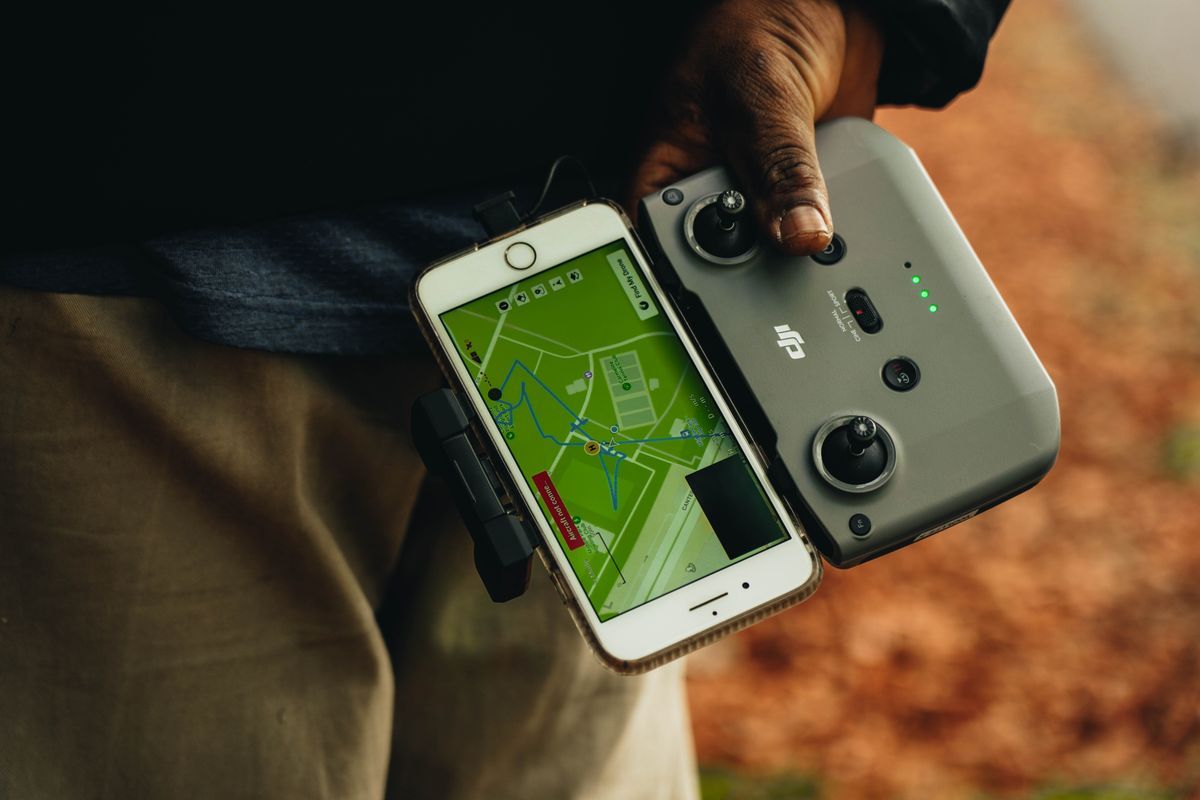
The Federal Communications Commission issued a temporary waiver on September 11, 2026, clearing the way for a nationwide test of commercial cellular networks aboard drones and manned aircraft. The order, DA 26-972, backs the Department of Transportation's Mobile Network Aviation Assessment Program (MNAAP), which will measure whether phone networks can reliably carry safety-critical drone data like command-and-control links and detect-and-avoid alerts.
Up to 2,000 general aviation pilots using a smartphone app and up to 200 unmanned aircraft fitted with dedicated MNAAP modules will collect signal-quality data at various altitudes and locations across the contiguous United States. The waiver runs through October 1, 2029, but does not legalize general airborne cellular use — only DOT-approved test participants may fly connected.
Background
Most commercial drones today fly on radio links with a range of a few miles, which is why BVLOS (Beyond Visual Line of Sight) operations — flights where the pilot cannot see the aircraft — remain rare and require special waivers in the United States. Scaling BVLOS to routine, everyday operations means replacing short-range radio with something that works at highway speeds and at distance: a job cellular networks are built for, but have never been certified to do in the sky. Our BVLOS explainer covers why that gap has held back drone delivery and infrastructure inspection at scale.
The FCC has historically restricted airborne cellular use because a phone flying at altitude can connect to dozens of ground towers at once, causing interference on the network below. MNAAP exists to find out whether modern spectrum-sharing and network engineering can solve that problem well enough to trust it with aviation safety functions.
What the Test Actually Measures
MNAAP will gather data across a wide slice of the US spectrum map: 600 MHz, 700 MHz, FirstNet Band 14, 800 MHz cellular, AWS, PCS, WCS, BRS, 3.45 GHz, CBRS, 3.7 GHz, and millimeter-wave bands. The goal is a real-world signal-quality map — not a lab simulation — of where and how well commercial networks perform hundreds to thousands of feet above ground.
DOT has named five specific applications it wants the results to validate:
| Application | What it does |
|---|---|
| Command and control (C2) | Pilot-to-drone control link over cellular instead of short-range radio |
| Autonomous detect-and-avoid | Real-time traffic data to keep drones clear of other aircraft |
| Electronic conspicuity | Broadcasting a drone's position so others can see it |
| Remote ID | Transmitting the drone's identity and location, as already required by the FAA |
| Counter-UAS detection | Identifying unauthorized or non-cooperative drones in shared airspace |
If cellular networks prove reliable enough for even a subset of these, regulators gain a nationwide, already-built communications layer instead of requiring operators to install proprietary long-range radio systems — a cost that has kept BVLOS out of reach for smaller operators.
Timeline and Scope
The order takes effect immediately and stays in force through October 1, 2029, giving DOT and the FCC roughly three years to gather data before any permanent rule change. Participation is capped at 2,000 general aviation pilots and 200 unmanned aircraft, all data-collection only — no participant gains new authority to fly BVLOS as a result of joining MNAAP. Results feed into a centralized DOT-managed database that will inform future rulemaking, most notably the FAA's long-awaited Part 108 BVLOS rule, which the agency has said it hopes to publish by the end of 2026.
What This Means for Drone Pilots
For most recreational and Part 107 commercial pilots, nothing changes today: the waiver authorizes only DOT-selected MNAAP participants to connect to cellular networks in flight, and general airborne phone use remains prohibited. But the test matters for the industry's near-term direction. If MNAAP shows commercial networks can reliably carry C2 and detect-and-avoid data, it strengthens the technical case for a cellular-based path to BVLOS approval under Part 108 — potentially a cheaper, faster route than the dedicated radio infrastructure BVLOS waiver holders rely on today. Pilots studying for their Part 107 certificate should expect BVLOS provisions, whenever they arrive, to reference connectivity standards shaped by exactly this kind of testing.
Operators already running BVLOS waivers or planning Part 108 applications should watch for DOT's MNAAP participant selection process — landing a test slot now could mean early access to whichever connectivity standard the FAA eventually adopts.
FAQ
Sources: FCC — FCC Waiver Supports DOT Program to Test Drone Use of Mobile Networks | DRONELIFE — FCC Clears Nationwide Test of Cellular Networks for Drone Safety
More like this
Related Articles
Drone Halts Flights at Reagan National for 20 Minutes
An unauthorized drone forced a 20-minute halt of all Reagan National Airport flights on Sept. 16, 2026 — here's what happened and…

Joby Completes First 3,199-Mile Autonomous US Flight
Joby's J208 flew 3,199 miles across the US with zero pilot input on September 18, 2026 — the first fully autonomous coast-to-coast…
Zipline Nears $20B Valuation in New $1B Funding Round
Zipline is in talks to raise about $1 billion at a $20 billion valuation, nearly tripling its worth as US drone delivery scales pa…