
NATO Shoots Down Drone Over Lithuania for First Time
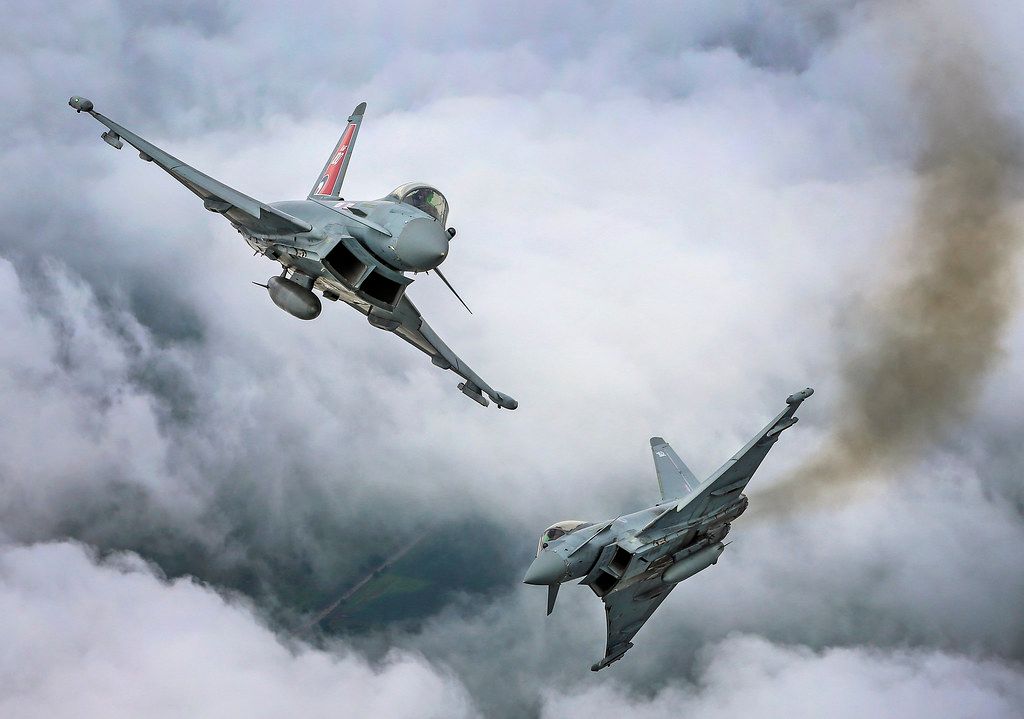
NATO fighter jets shot down a drone that entered Lithuanian airspace from Belarus early on September 15, 2026, destroying it near the village of Pratkūnai after it lingered over populated areas for roughly 30 minutes. It was the first time the alliance has intercepted a drone inside Lithuanian territory, and Lithuania's air force commander said the aircraft likely carried explosives.
Two Italian Eurofighter Typhoons, flying NATO's Baltic Air Policing mission out of Šiauliai, scrambled after radar tracked the drone crossing from Belarus shortly after midnight. No injuries or property damage were reported.
Background: A Year of Baltic Drone Incursions
Lithuania's interception is the latest in a string of drone incidents along NATO's eastern flank in 2026. A Romanian F-16 shot down a drone over Estonia in May — the alliance's first kill over Estonian soil — followed by a French Rafale downing one over Latvia in June and an Italian Eurofighter repeating the operation over Latvia in August. Romania itself downed two suspected Russian drones in under 24 hours in July, an incident PickDrones covered in detail.
Most of these incursions are attributed by Ukraine to its own drones veering off course during strikes on Russian oil terminals along the Baltic Sea, thrown off by Russian electronic jamming that has also disrupted GPS signals for civilian aircraft in the region for months. Lithuanian officials have not confirmed whether Tuesday's drone was Russian or a diverted Ukrainian aircraft.
How the Interception Near Kaunas Unfolded
The drone crossed into Lithuania shortly after midnight, most likely from Belarus, according to Vilmantas Vitkauskas, head of Lithuania's National Crisis Management Centre. It flew for about 30 minutes near populated areas around Kaunas before the Eurofighters intercepted it close to Pratkūnai, roughly 60 miles northwest of the capital, Vilnius. Military teams recovered the wreckage near the Kaunas reservoir.
Lithuanian Air Force Commander Antanas Matutis said the drone "probably" carried explosives. Baltic Air Policing is NATO's standing mission that keeps allied fighters on alert over Lithuania, Latvia, and Estonia — the three Baltic states, none of which operate their own fighter jets capable of interception. Member nations rotate command in tours of several months; Italy held the rotation on Tuesday, flying the same Eurofighter Typhoon that Germany and the United Kingdom have also used on the route this year.
The same day, a Russian frigate fired flares at a Danish military helicopter elsewhere in the Baltic Sea, an incident Denmark's foreign minister called "unacceptable" — another sign of the region's rising tension.
NATO's Response and the Eastern Sentry Buildup
Lithuanian President Gitanas Nausėda thanked the alliance publicly: "A drone that had just entered Lithuanian airspace was destroyed by NATO fighter jets. I thank the allied personnel for their immediate response." NATO Secretary-General Mark Rutte called the alliance's readiness "vital" to regional security and said Russia is "growing increasingly reckless" as its war against Ukraine continues, warning that strikes near NATO territory would only deepen the bloc's support for Kyiv.
The incident adds to the case for Eastern Sentry, the NATO operation launched to reinforce air defenses along the alliance's eastern flank after Russian drones crossed into Poland in September 2025 — the first time NATO engaged Russian military assets over a member state's own soil since the war began. Poland has since kept a rolling restricted airspace zone active along its own border with Ukraine and Belarus, a measure PickDrones covered when it was last renewed.
What This Means for Drone Pilots
The Lithuania incident is a military interception, not a civilian airspace rule change, and it does not alter drone registration or flight requirements anywhere outside the immediate conflict-adjacent zone. But it's a sharp reminder that restricted and contested airspace can appear with little notice near any active conflict, and that unmanned aircraft crossing a border without authorization — regardless of intent — can trigger a military response.
Pilots flying anywhere near Eastern Europe, or any other region with active military tension, should check current airspace restrictions immediately before every flight rather than relying on information that may be weeks old. Our drone no-fly zones guide explains how to check active TFRs, NOTAMs, and restricted zones before takeoff, whether flying under FAA rules in the US, EASA rules in Europe, or elsewhere. The episode also underscores the widening gulf between how consumer drones and military UAS are built, regulated, and operated — a distinction covered in our guide to the different types of drones.
FAQ
Sources: NPR | Al Jazeera | Stars and Stripes
More like this
Related Articles
Zipline Asks FAA for 220,000 Texas Deliveries a Day
Zipline has filed a draft FAA environmental review seeking approval for 220,000 drone deliveries a day across five Texas metros —…
Amazon Seeks CAA Approval for Town-Wide UK Drone Delivery
Amazon has flown 500+ Prime Air deliveries in Darlington and wants CAA approval to cover the whole UK town — a key test case for w…
Wingcopter 262: 6-Hour Tactical eVTOL Debuts for Defense
Wingcopter unveiled the 262, an all-electric eVTOL with 150 km range and 6-hour endurance, built with Ukraine's TAF Industries for…