eVTOL Air Taxis Start Test Flights Across 4 US States
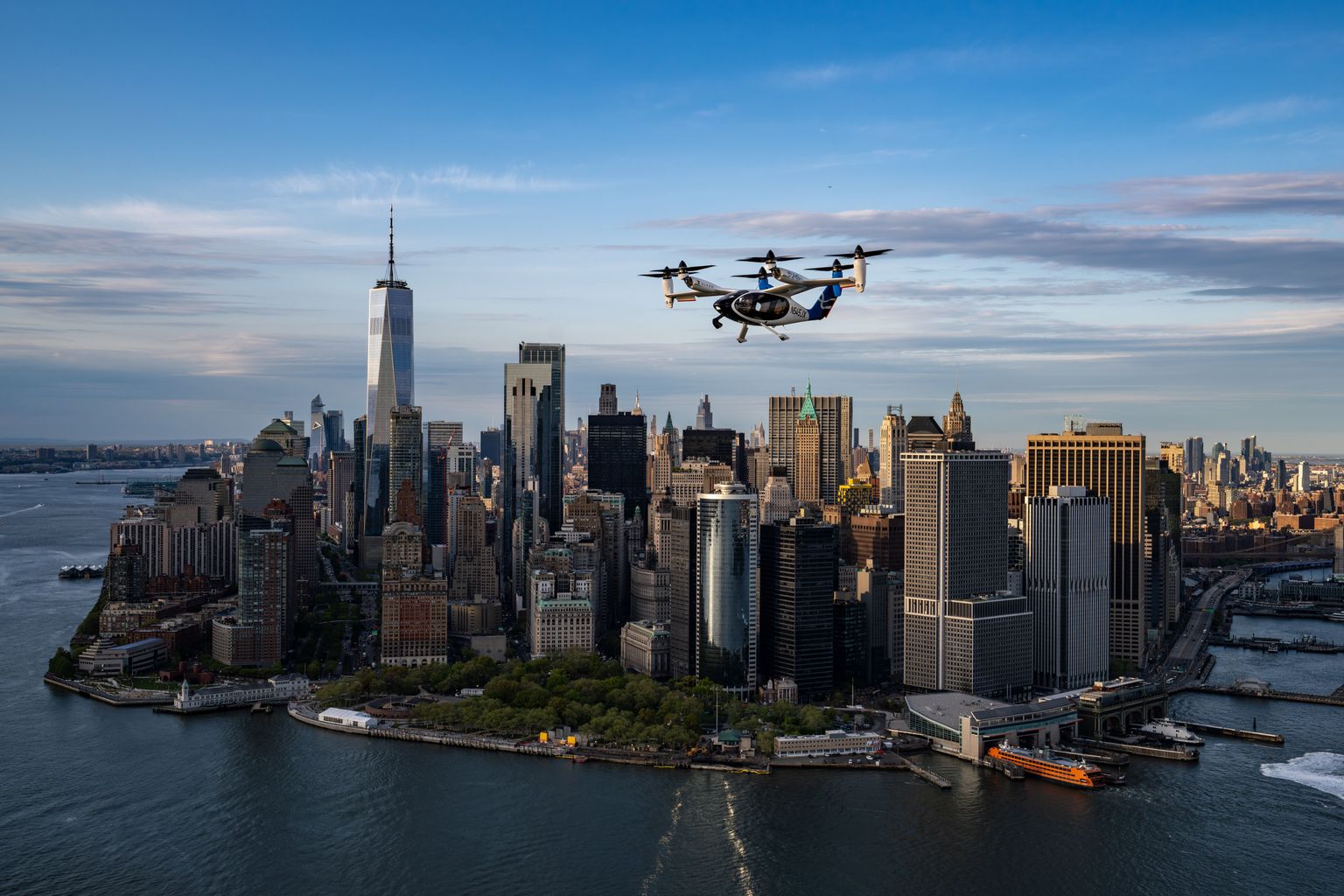
Joby Aviation and Archer Aviation are flying electric air taxis in real US airspace this summer under the FAA's eVTOL Integration Pilot Program (eIPP), with test flights underway in New York, New Jersey, Texas, and Florida and noncommercial passenger trials planned for fall or winter 2026. The milestone marks the first time eVTOL aircraft have operated alongside commercial traffic before receiving full type certification.
Background
eVTOL (electric vertical takeoff and landing) aircraft are battery-powered aircraft that take off and land like a helicopter but fly more like a small plane, using multiple electric rotors instead of a jet engine or a single main rotor. The category — often grouped under AAM (Advanced Air Mobility) or "air taxis" — has spent the past decade in prototype and certification testing, without operating in real national airspace alongside airliners.
That changed in March 2026, when the Department of Transportation and FAA launched the eIPP, selecting eight projects across 26 states. The program lets participants sign Other Transaction Agreements directly with the FAA, spelling out exactly what each aircraft can and cannot do. Crucially, it allows pre-certified aircraft to carry cargo for revenue and interact with air traffic controllers in Class B and C airspace — the tightly controlled airspace around the country's busiest airports — before they hold a full FAA type certificate. The program runs for three years from each project's first flight.
Participants include Joby, Archer, Beta Technologies, Wisk Aero, Electra, Elroy Air, and Reliable Robotics, exploring use cases from urban air taxi service to cargo logistics, emergency medical response, and offshore transport.
Where the Test Flights Are Happening
Joby, backed by Toyota, Uber, and Delta Air Lines, is running eIPP flights in New York, New Jersey, Texas, and Florida. The company has a market cap of roughly $7.6 billion and is flying cargo this summer as a step toward its noncommercial passenger tests planned for fall or winter 2026.
Archer Aviation, backed by United Airlines and valued at around $3.7 billion, is testing in Florida, Texas, and the New York/New Jersey area with its 12-rotor Midnight aircraft. Beta Technologies — backed by Amazon and GE Aerospace — is running seven of the program's eight pilot projects across its 26-state footprint, and completed test flights in Maryland and Virginia on July 10, 2026. Wisk Aero, a Boeing subsidiary, is testing in Texas.
| Company | Backers | Test states (2026) | Passenger timeline |
|---|---|---|---|
| Joby Aviation | Toyota, Uber, Delta | NY, NJ, TX, FL | Noncommercial, fall/winter 2026 |
| Archer Aviation | United Airlines | FL, TX, NY/NJ | Commercial targeted for LA 2028 Olympics |
| Beta Technologies | Amazon, GE Aerospace | 26-state footprint (7 of 8 projects) | Cargo-first |
| Wisk Aero | Boeing | TX | Autonomous, no near-term date given |
All aircraft flying under the eIPP must still be in the final stages of FAA type certification to qualify — the program is a bridge to commercial service, not a substitute for it. "These are generational changes," Joby chairman Paul Sciarra said of the shift from closed-course testing to real airspace operations.
Archer's Bet on the 2028 Los Angeles Olympics
Archer CEO Adam Goldstein has set a public target: commercial passenger service with the Midnight aircraft in time for the Summer Olympics in Los Angeles, which open in July 2028. Goldstein has argued Los Angeles is well-suited to air taxis because so many trips there are under 20 miles but take over an hour by car — a gap Archer believes Midnight can close in a fraction of the time.
Reaching that target still depends on Archer completing FAA type certification, which as of August 2026 remains in its final phase alongside Joby's. Neither company has a certified aircraft yet; the eIPP flights are real-world validation runs, not commercial service.
What This Means for Drone Pilots
The eIPP doesn't change Part 107 rules for hobbyist or commercial small-drone pilots, but it's the clearest signal yet of how the FAA plans to integrate autonomous and remotely piloted aircraft into controlled airspace — the same regulatory groundwork underpinning the FAA's pending Part 108 BVLOS (Beyond Visual Line of Sight) rule for drones. For more on how BVLOS approvals currently work, see our BVLOS explainer; pilots studying for their own certification can check our Part 107 licensing guide.
Drone operators working near any of the eIPP test corridors — particularly the New York/New Jersey, Texas, and Florida airspace named above — should expect additional air traffic coordination requirements as eVTOL test flights ramp up through the rest of 2026.
FAQ
Sources: Fortune | FAA Newsroom
More like this
Related Articles
Drone Halts Flights at Reagan National for 20 Minutes
An unauthorized drone forced a 20-minute halt of all Reagan National Airport flights on Sept. 16, 2026 — here's what happened and…

Joby Completes First 3,199-Mile Autonomous US Flight
Joby's J208 flew 3,199 miles across the US with zero pilot input on September 18, 2026 — the first fully autonomous coast-to-coast…
Zipline Nears $20B Valuation in New $1B Funding Round
Zipline is in talks to raise about $1 billion at a $20 billion valuation, nearly tripling its worth as US drone delivery scales pa…