DoorDash Air's New Drone Lands Chipotle, Popeyes (2026)
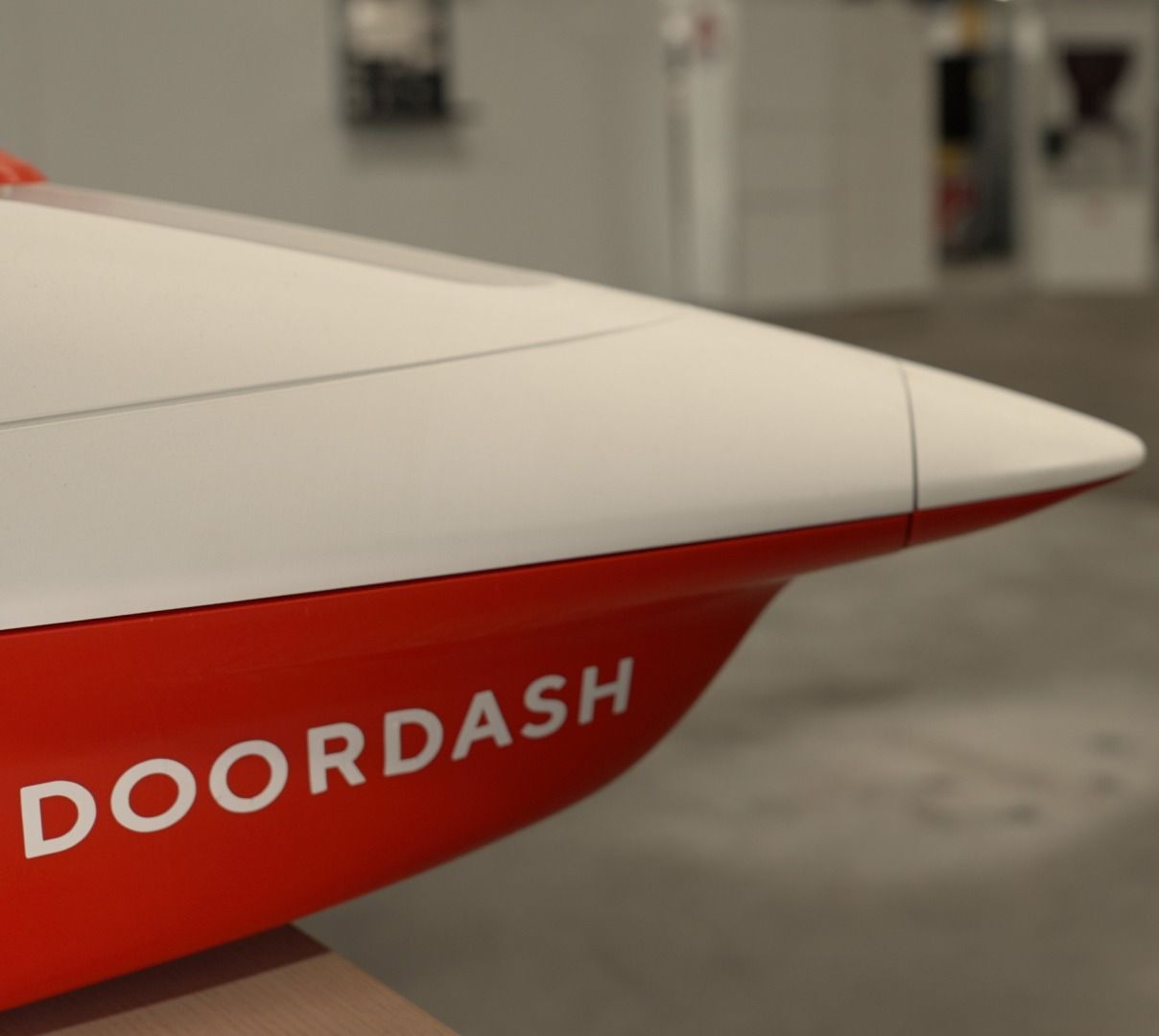
DoorDash unveiled a custom-built, six-propeller delivery drone for its in-house DoorDash Air program at the company's Dash Forward 2026 event on September 30, 2026, and named Chipotle Mexican Grill, Popeyes Louisiana Kitchen, and Bay Area chain Momo N Curry as its first restaurant partners for pilot flights in Northern California.
What DoorDash Announced
DoorDash Air's new aircraft carries six slow-spinning propellers mounted on long, widely spaced arms rather than the four-rotor layout common on most delivery drones. The wider spread lets each propeller turn more slowly to generate the same lift, which DoorDash says keeps cruising noise at delivery altitude comparable to a passing car. Orders are lowered to the ground on a winch instead of the aircraft landing, with failsafe systems built in to stop or slow the descent if something goes wrong.
DoorDash says the aircraft, assembled at a facility in San Francisco, can carry roughly 80% of the typical orders placed on its marketplace. Early test flights averaged under five minutes from restaurant pickup to a customer's door. The company has not published payload capacity in pounds, top speed, maximum range, or takeoff weight — specifications that competitors like Zipline and Wing typically disclose alongside a new aircraft.
Background: From FAA Certificate to Its Own Drone
DoorDash entered the drone business in July 2026, when its in-house robotics division, DoorDash Labs, earned FAA Part 135 air carrier certification — the same category used by commercial helicopter operators and now extended to BVLOS (Beyond Visual Line of Sight) drone flights, meaning the aircraft can fly out of the remote pilot's direct sight. That approval made DoorDash the eighth US company to hold the certificate, following Amazon Prime Air, Wing, Zipline, Matternet, and Flytrex, and the first major food-delivery marketplace to build and certify its own aircraft rather than buy capacity from a partner. Read our earlier coverage of DoorDash Air's FAA certification for how that certificate works.
Until now, DoorDash had shown only glimpses of test aircraft rather than a finished, branded drone. The Dash Forward unveiling is the company's first public look at production hardware and its first named restaurant partners, moving DoorDash Air from a regulatory milestone to an operating pilot program.
The Restaurant Partners and Where It Launches
Pilot deliveries begin in Northern California, DoorDash's home market, with three initial partners:
| Partner | Type |
|---|---|
| Chipotle Mexican Grill | National fast-casual chain |
| Popeyes Louisiana Kitchen | National fast-food chain |
| Momo N Curry | Regional Bay Area restaurant |
DoorDash built the aircraft's carrying capacity around its own order data — the weight, packaging, and typical travel distance of orders already placed through its marketplace — rather than adapting an existing airframe. That approach mirrors how drone delivery has scaled at other carriers: start with a narrow, well-understood order profile, then widen capacity once the operation proves reliable at volume.
What This Means for Drone Pilots
DoorDash Air's rollout adds a ninth major US operator to a market where regulatory approval, not aircraft technology, has long been the bottleneck. For drone professionals, it is another signal that Part 135 certification is becoming a repeatable path rather than a rare achievement — five companies have now cleared it in roughly two years. Commercial drone pilots working in delivery, inspection, or BVLOS operations should expect competition for FAA resources and local siting approvals to intensify as more marketplaces and retailers stand up their own fleets rather than contracting existing operators.
The pilot's limited footprint — one region, three restaurant partners — also confirms that even well-funded operators are still launching cautiously rather than nationwide, consistent with how Amazon, Wing, and Zipline expanded market by market before scaling further.
Why DoorDash Withheld the Specs
DoorDash's announcement left out payload capacity, top speed, maximum range, and takeoff weight — figures most drone manufacturers publish at launch. The company instead emphasized outcomes: 80% order coverage, sub-five-minute delivery times, and car-level cruise noise. That framing suggests DoorDash is positioning DoorDash Air as a consumer delivery service first and an aircraft platform second, the same marketing logic Amazon has used for Prime Air. Whether the missing specifications surface once the FAA publishes operational approvals for the Northern California pilot remains to be seen.
FAQ
Sources: DroneXL | DroneLife | TechCrunch
More like this
Related Articles
FAA Awards $12M for BVLOS Drone Test Research (2026)
The FAA gave $12 million to 19 BVLOS drone research projects on October 5, 2026, as its Part 108 rule sits stalled in White House…
Germany Backs Ukraine With $9.6B Drone Interceptor Deal
Germany and Ukraine signed 15 defense deals worth over $9.6B on Oct. 4, funding mass production of jet-powered interceptor drones…
Wing, Walmart Drone Delivery Hits Denver, Seattle in 2027
Wing and Walmart will launch drone delivery in Denver and Seattle in 2027, expanding toward 270 Walmart stores and 40 million US c…