Drone Delivery in 2026: How It Works, Cost & Coverage
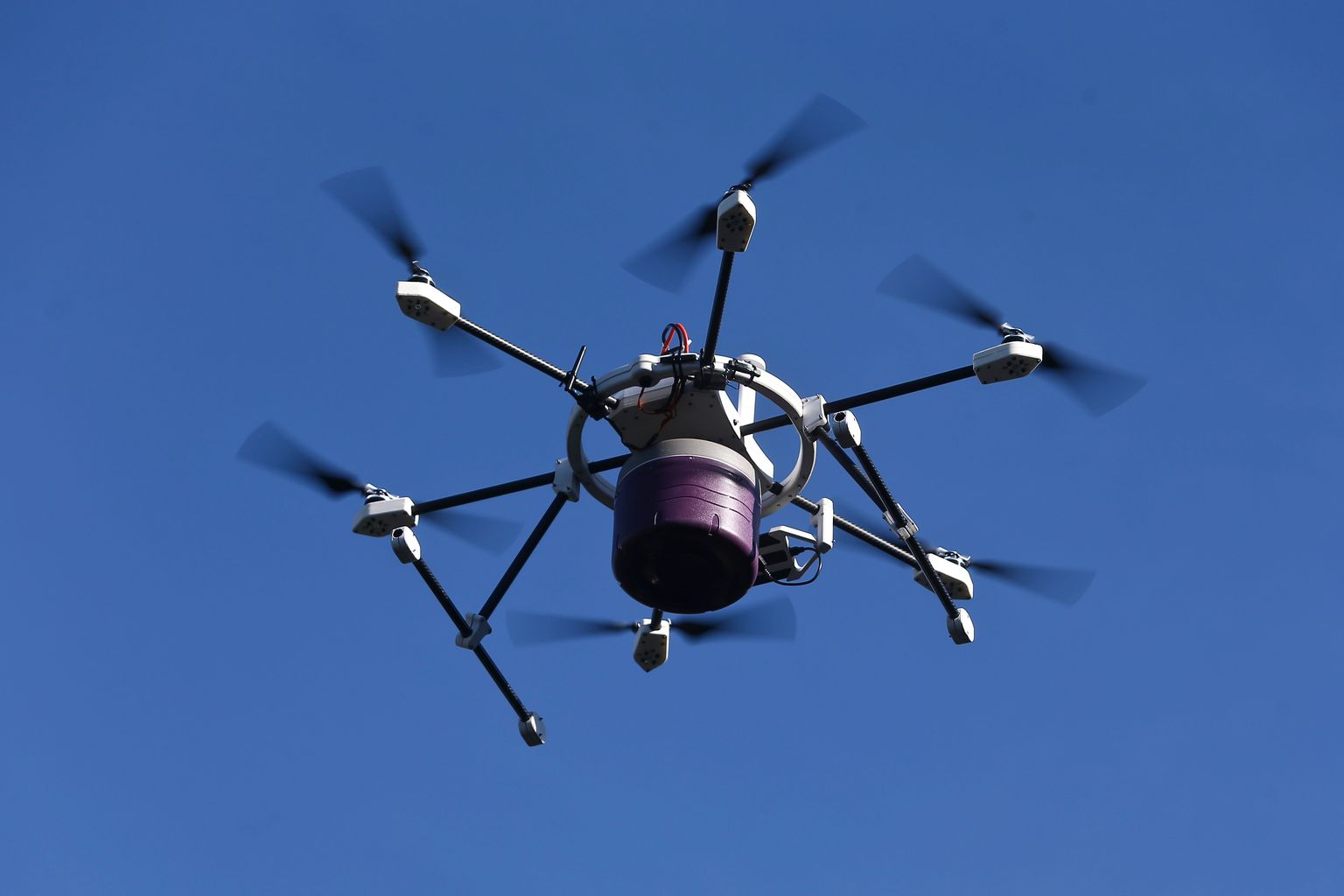
A drone shows up over your backyard, hovers at treetop height, and lowers a small box on a cable before flying off - no knock, no doorbell, no delivery truck. In 2026 this isn't a demo reel anymore. Amazon, Walmart, DoorDash, and Uber Eats are running it in dozens of US metro areas, and Amazon alone says it plans to reach nearly 500 cities and towns by the end of the year.
Drone delivery is still small next to trucks and vans - but it's the fastest-growing last-mile channel in the industry, and it's now a real option for a growing number of households. Here's how it actually works, what it costs, who's flying it, and how to check if it's landed in your neighborhood.
How Does Drone Delivery Work?
Drone delivery uses an autonomous aircraft to fly a small package from a fulfillment hub or store directly to a customer's yard, typically without ever landing. The drone hovers 20-300 feet up and lowers the item on a tether or parachute, drops it from a low hover, or - in a smaller number of programs - lands briefly in a marked zone.
Each company's approach differs mechanically. Zipline's Platform 2 aircraft loiters at roughly 300 feet while a small, thruster-steered "droid" rides a tether down to a 3-foot target, carrying up to 8 pounds. Wing (Alphabet) hovers around 25 feet and lowers a lightweight carton on a line. Amazon Prime Air's MK30 drone descends to about 13 feet and releases the package in freefall onto a marked landing spot, though it is testing a gentler tether-based release with some customers. None of the major US operators land the aircraft itself at the customer's address - that's what keeps the process fast and avoids the drone getting near people, pets, or power lines.
The entire flight is autonomous: a remote operator monitors the mission and can intervene, but no one is manually flying the aircraft stick-and-rudder style. Orders typically arrive in 10-30 minutes from checkout to doorstep, versus hours for standard same-day delivery.
Which Companies Deliver by Drone in 2026?
A handful of operators account for almost all US and global drone delivery volume. Coverage areas, weight limits, and partners vary significantly between them.
| Company | Retail partner(s) | Weight limit | Typical delivery window | US markets (2026) |
|---|---|---|---|---|
| Amazon Prime Air | Amazon | 5 lb (2.3 kg) | Under 30 min | 10 metro areas, expanding toward ~500 cities/towns by year-end |
| Wing (Alphabet) | Walmart, DoorDash | ~2.5 lb (1.1 kg) | 15-30 min | 20+ markets; expanding to 270+ Walmart stores by 2027 |
| Zipline | Walmart, Panera, OpenTable restaurants | 8 lb (3.6 kg) | 10-30 min | Dallas-Fort Worth, Charlotte, Houston area and others; 2M+ deliveries logged worldwide |
| DoorDash Air (with Wing/Flytrex) | DoorDash merchants | ~2.5-6.6 lb | 15-30 min | Select Dallas-Fort Worth and Charlotte zones |
| Manna | Independent retailers | ~4.4 lb (2 kg) | Under 15 min | US pilot bases (Texas, others); paused in Ireland in 2026 |
Uber has also invested directly in Zipline, targeting 1 million Uber Eats drone deliveries per day by 2029 - a sign of how seriously last-mile logistics companies are betting on the category. Outside the US, Speedbird Aero and iFood run one of the world's longest-standing food-delivery drone operations in Brazil, and Meituan operates large-scale drone delivery in parts of China.
How Much Does Drone Delivery Cost?
Drone delivery typically costs the same as, or slightly more than, standard delivery - most operators fold the fee into a flat delivery charge or a membership rather than pricing it as a premium service. Amazon Prime members generally pay no extra fee within eligible zip codes; DoorDash and Uber Eats apply their usual delivery and service fees, occasionally with a drone-specific surcharge during pilot phases; Manna charged as little as $2.10 per delivery in its early Irish market.
For retailers and restaurants, the incentive is operating cost, not just speed: a drone delivery can run several dollars cheaper per trip than a car-based courier once volume scales, because there's no driver wage, fuel, or parking involved. That's why Walmart, DoorDash, and Uber Eats are subsidizing early drone routes even where consumer pricing looks identical to a regular delivery - the payoff is on the merchant side of the ledger.
Is Drone Delivery Available Near Me?
Coverage is checked automatically at checkout, not by browsing a coverage map. On Amazon, Walmart, DoorDash, and Uber Eats apps, a drone-delivery option (often labeled "drone" or shown with a small aircraft icon) only appears if your address sits inside an operator's live delivery radius - typically a few miles around a fulfillment center or partner store.
Direct answer: if your address doesn't show a drone-delivery badge at checkout on Amazon, Walmart, or DoorDash, the service isn't live there yet - there's no separate signup or waitlist to check availability. Amazon's current US hubs include the Phoenix, Tampa, Kansas City, Baton Rouge, Detroit, Omaha, Houston, Dallas, San Antonio, and Waco metro areas, with Chicago, Syracuse, Cleveland, Atlanta, and Boise next on its 2026 rollout list. Coverage typically extends a 4-7.5 mile radius from each hub, so being in the metro area doesn't guarantee your specific address qualifies.
Is Drone Delivery Safe and Legal?
In the US, every commercial drone delivery flight today operates under a Part 107 Remote Pilot Certificate combined with a Beyond Visual Line of Sight (BVLOS) waiver from the FAA - a case-by-case exemption, since BVLOS flight isn't yet covered by standard rules. That's about to change: the FAA's proposed Part 108 rule would replace individual BVLOS waivers with a standardized framework for routine drone delivery and other automated operations. As of September 2026 the final rule is under White House review after a public comment period that drew more than 3,000 responses, with the FAA aiming to publish it by year-end.
On noise and safety, FAA-commissioned testing found Zipline's delivery system to be the quietest of the major operators at roughly 79 decibels measured from 50 feet, followed by Wing at 84 dB and Amazon at 88 dB - all below the noise level of a typical lawnmower up close. Operators are also required to avoid flying over people not involved in the delivery and to maintain geofenced no-fly zones around airports and other sensitive airspace, the same restricted-airspace rules that apply to any drone operator.
Outside the US, the EU's EASA framework and the UK CAA both permit BVLOS delivery operations under their Specific category with an operational authorization, though large-scale consumer rollouts remain more limited in Europe than in the US so far. Ireland's Manna, for example, paused its Dublin and Cork routes in 2026 over local planning disputes even after building one of Europe's most active delivery networks - a reminder that regulatory clearance to fly is only half the battle; local zoning and community pushback can stall a program just as effectively as a missing waiver.
Every delivery flight is also logged and tracked the same way any other drone operation is: registered aircraft, defined operating area, and altitude limits that keep it clear of manned aircraft. None of that changes because the payload is a customer's order instead of a photo or survey pass.
Pros and Cons of Drone Delivery
Advantages:
- Delivery in 10-30 minutes versus hours for standard same-day service
- Lower per-delivery operating cost at scale, since no driver or vehicle is required
- Reduces road congestion and vehicle emissions for small, light packages
- Useful for urgent items: medication, forgotten ingredients, small electronics
Limitations:
- Strict weight and size caps (typically under 5-8 lb) rule out most large purchases
- Coverage is limited to a radius around each operator's hub - most addresses still aren't eligible
- Weather-dependent: high wind, heavy rain, and thunderstorms ground flights
- Noise complaints have slowed rollout in some neighborhoods, prompting quieter aircraft redesigns
- Regulatory approval (BVLOS waivers) is still case-by-case in most countries, capping how fast operators can scale
What's Next for Drone Delivery?
Growth over the next two years hinges heavily on regulation catching up with the technology. If the FAA finalizes Part 108 by the end of 2026 as planned, US operators expect to scale far faster than the current waiver-by-waiver process allows - Amazon's target of nearly 500 US cities and towns and Uber's goal of 1 million Zipline-powered Uber Eats deliveries per day by 2029 both assume a standardized BVLOS framework is in place well before then.
Expect three trends to define the next couple of years: consolidation around a handful of logistics-grade platforms (Zipline, Wing, and Amazon's own fleet) rather than dozens of small operators; deeper retail integration, with drone delivery becoming a checkout option inside existing Amazon, Walmart, and DoorDash apps rather than a separate service; and continued friction over noise and airspace access in denser suburbs, which will likely shape where the fastest growth actually lands.
For now, the realistic takeaway for most shoppers is patience rather than a specific launch date: coverage will keep spreading outward from existing hubs city by city, and the address that doesn't qualify today has a reasonable chance of qualifying within the next year or two as operators add distribution centers and the regulatory bottleneck eases.
FAQ
Sources: Amazon - Prime Air drone delivery expansion | CNBC - Amazon drone delivery expansion to 500 cities | Scientific American - How Zipline's drone delivery system works | Axios - Drone delivery noise | Airdata UAV - FAA Part 108 explained
More like this
Related Articles
Is DJI Banned in the US? 2026 Status, Rules and FAQ
DJI isn't fully banned in the US, but new models can't get FCC approval. Here's exactly what's restricted, what's still legal, and…
Drone Pilot Career: Salary, Jobs & Licensing in 2026
US drone pilots earn $47,000-$137,000 in 2026 depending on sector. See real salary data, the industries hiring, licensing costs, a…

Can You Fly a Drone Over Private Property in 2026?
Flying over a neighbor's yard isn't automatically illegal, but filming their backyard usually is. Here's what US, UK, EU, and Aust…