DJI Wins Partial Reversal of Pentagon Blacklist Case
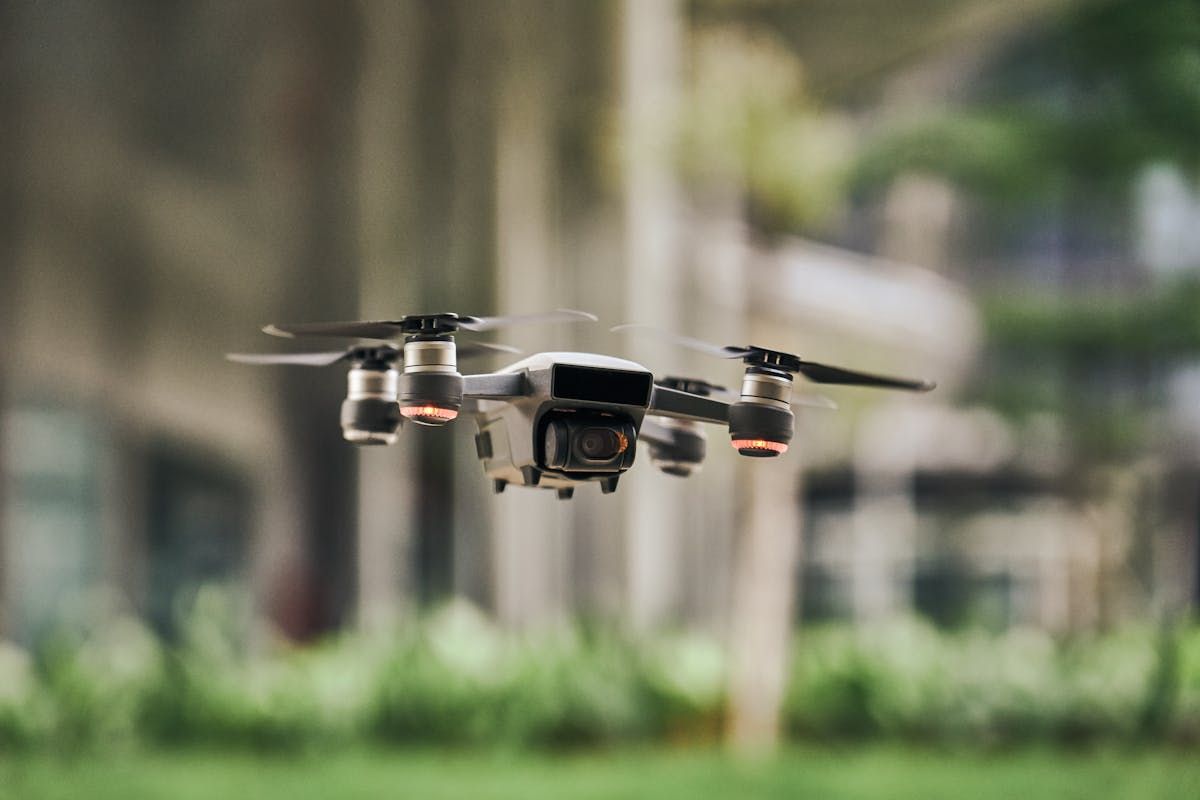
A federal appeals court ruled on August 14, 2026 that DJI is entitled to a fresh review of its placement on the Pentagon's "Chinese military companies" list, finding the government's core justification rests entirely on redacted evidence with no public explanation. DJI stays on the list for now while a lower court reconsiders the classified record.
Background: A List DJI Has Fought Since 2022
The U.S. Department of Defense added DJI to its Section 1260H list — companies the government identifies as "Chinese military companies" operating in the United States — in 2022. Listed firms cannot contract with the Defense Department or Department of Homeland Security and lose access to Energy Department funding; a broader prohibition on third-party purchases of listed companies' products takes effect in 2027.
DJI has challenged the designation in federal court since 2023. In September 2025, U.S. District Judge Paul Friedman upheld the listing but found parts of the Pentagon's original rationale unsupported. The Pentagon responded by republishing the Section 1260H list on June 10, 2026, adding new justifications: alleged ties to China's Ministry of Industry and Information Technology, the People's Armed Police, a "Single Champion" state designation, and involvement in a military-civil fusion enterprise zone. DJI appealed to the U.S. Court of Appeals for the District of Columbia Circuit, arguing the government still hadn't shown its work.
What the D.C. Circuit Decided
A three-judge panel — Chief Judge Srinivasan and Judges Wilkins and Garcia — ruled in SZ DJI Technology Co., Ltd. v. DOD (No. 25-5367) that the district court erred by upholding the Pentagon's central claim, that DJI contributes to China's defense industrial base, without ever examining the classified evidence behind it. The court noted the government's justification section in the public record is entirely redacted except for its heading, writing that there is "no publicly stated" rationale for the finding.
The panel rejected DJI's three other arguments. It found DJI failed to prove the listing broadly blocks its business, since the company retains roughly 90% of the global consumer drone market despite the designation. It also held it was reasonable for the Pentagon to treat DJI's acceptance of tax breaks and subsidies under China's National Enterprise Technology Center program as evidence of state assistance, and rejected DJI's claim of unequal treatment, since the Pentagon has never taken a public position on similarly situated foreign firms DJI cited, including Volkswagen, Nissan, and Nokia Bell.
What Happens Next
The case returns to District Judge Paul Friedman, who must now review the classified evidence in camera and decide whether it actually supports the defense-industrial-base finding. He may also rule on whether DJI's cleared outside counsel can access the classified material directly — a procedural fight that could shape how the remand plays out. DJI remains on the Section 1260H list throughout this process; the ruling does not lift the designation or pause its effects.
This fight is separate from the FCC's "covered list" restrictions on DJI, which block new equipment authorizations and are being litigated in a different case before the Ninth Circuit. A Pentagon win or loss here does not resolve that dispute; DJI is defending its US market access on two independent legal tracks at once.
What This Means for Drone Pilots
For pilots and buyers, nothing changes immediately. DJI drones already on the market remain legal to own and fly in the United States, and this ruling has no effect on FAA registration or Part 107 operating rules. The practical exposure is on the government-contracting side: agencies and contractors barred from buying 1260H-listed equipment still can't purchase DJI hardware, and that restriction stays in place while Judge Friedman reconsiders the record.
The bigger signal is timeline risk. A remand for in-camera review of classified evidence, with potential further appeals afterward, likely pushes final resolution of DJI's Pentagon status well into 2027 — the same year the broader third-party purchase prohibition is scheduled to take effect. Commercial operators who rely on DJI's Matrice and Agras lines for inspection, mapping, or agricultural work should watch both this case and the separate FCC track, since either one hitting first could reshape US procurement options before the other resolves. Buyers outside the US aren't directly affected; the 1260H list only restricts US federal purchasing.
FAQ
Sources: U.S. News & World Report | DroneXL | Justia — SZ DJI Technology Co., Ltd. v. DOD, No. 25-5367
More like this
Related Articles
FAA Awards $12M for BVLOS Drone Test Research (2026)
The FAA gave $12 million to 19 BVLOS drone research projects on October 5, 2026, as its Part 108 rule sits stalled in White House…
Germany Backs Ukraine With $9.6B Drone Interceptor Deal
Germany and Ukraine signed 15 defense deals worth over $9.6B on Oct. 4, funding mass production of jet-powered interceptor drones…

Wing, Walmart Drone Delivery Hits Denver, Seattle in 2027
Wing and Walmart will launch drone delivery in Denver and Seattle in 2027, expanding toward 270 Walmart stores and 40 million US c…