Beijing Bans All Drone Ownership Starting Nov. 15, 2026
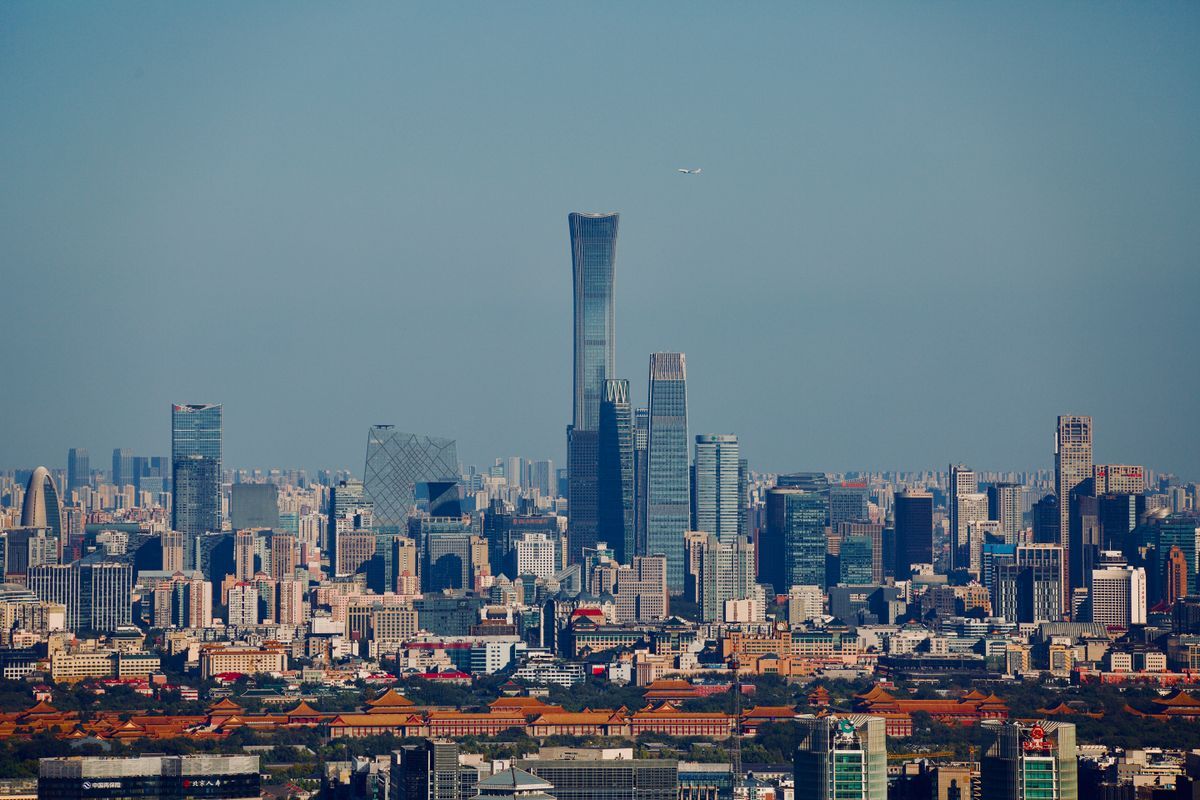
Beijing will ban owning a drone anywhere within city limits starting November 15, 2026, the Associated Press reported on September 13. The rule extends a May 2026 sales ban to cover possession itself, forcing registered owners to sell their aircraft through a government buyback program, scrap them, or ship them outside the capital within roughly two months.
The move makes Beijing — a city of over 20 million people and home to a large base of registered recreational drones — the first major world capital to outlaw personal drone ownership outright. It follows a small manned aircraft crash into the 1,732-foot CITIC Tower in late June 2026, which killed the pilot and injured 13 people on the ground and pushed authorities toward the strictest airspace lockdown of any global city.
Background: How Beijing Got to a Total Ban
Beijing's drone crackdown built up in stages over 2026 rather than arriving all at once. In March, city authorities approved rules requiring real-name registration — tying every drone to a verified identity — for anyone who already owned one. Those rules took effect May 1, alongside a ban on new purchases and rentals that capped existing registered owners at three aircraft per address.
At the time, officials framed the May rules as a middle ground: existing owners could keep flying under tighter conditions, while new demand was cut off at the source. That balance didn't hold. The city's entire administrative area — roughly 883 square miles inside the Sixth Ring Road — was already designated restricted airspace, with unauthorized flights barred and tourists prohibited from bringing drones in at all.
The June 26 CITIC Tower crash, while involving a small manned aircraft rather than a drone, appears to have hardened the government's stance on low-altitude airspace generally. Three months later, Beijing moved from restricting drone use to eliminating drone ownership.
What the New Rule Requires
Under the revision reported by state-owned newspaper Beijing Daily, possessing or storing a drone or its key components — batteries, flight controllers, cameras — becomes illegal citywide once the rule takes effect November 15. Registered owners who complied with the March/May rules are not exempt; the possession ban supersedes the earlier registration framework entirely.
Authorities are offering three ways to comply:
| Option | What it involves |
|---|---|
| Government buyback | Sell the drone at a designated buyback point for a subsidy (amount undisclosed) |
| Scrapping | Turn in the aircraft for recycling in exchange for a smaller token payment |
| Relocation | Ship the drone to an address outside Beijing before the deadline |
Owners who miss the deadline risk confiscation, with fines applying to both individuals and companies. No exemption has been reported for commercial operators, though the AP report does not detail enforcement specifics for industries such as agriculture, inspection, or filming that rely on drones within city limits.
The DJI Paradox: Two Governments, One Target
The policy lands with particular irony given where most of Beijing's drones come from. DJI, the Shenzhen-based manufacturer that supplies the majority of consumer drones sold in China, is simultaneously fighting restrictions on the opposite side of the Pacific. The US FCC's covered-list designation and Section 232 tariffs have already cost DJI an estimated $1.56 billion in blocked 2026 sales across 39 products, largely on data-security grounds.
Beijing's justification is different — public safety and airspace congestion rather than data security — but the practical effect on the company that built China's dominance of the global drone market is the same: shrinking legal access to its own home market while it fights to keep access to the US one. Drone-industry analyst Haye Kesteloo, writing for DroneXL, put it bluntly: Beijing "has written the argument for the American drone ban twice this year" — Washington and Beijing now enforce nearly identical restrictions on the same aircraft, for opposite stated reasons.
For readers comparing the full range of DJI's current lineup against what's actually legal to fly where they live, the gap between "widely sold" and "legal to own" is becoming a recurring theme in 2026, not a one-off.
What This Means for Drone Pilots
Pilots outside mainland China are not directly affected — the ban applies only within Beijing's municipal boundary, and no other Chinese city has announced matching rules. But the policy is a data point in a wider pattern: as low-altitude airspace gets busier, more governments are choosing outright restriction over lighter oversight when a high-profile incident forces the issue, regardless of whether a drone caused it.
Two practical takeaways travel beyond China's borders. First, anyone planning to visit or work in Beijing after November 15 should not bring a drone into the city under any circumstances — possession alone, not just flying, will be illegal, and confiscation and fines apply at the border as much as on the street. Second, operators anywhere should expect airspace rules to keep tightening near symbolic or high-density urban targets; checking current restrictions before flying near any city center, not just relying on last year's map, is now standard practice.
FAQ
Sources: Associated Press via WSLS | DroneXL
More like this
Related Articles
Zipline Asks FAA for 220,000 Texas Deliveries a Day
Zipline has filed a draft FAA environmental review seeking approval for 220,000 drone deliveries a day across five Texas metros —…
Amazon Seeks CAA Approval for Town-Wide UK Drone Delivery
Amazon has flown 500+ Prime Air deliveries in Darlington and wants CAA approval to cover the whole UK town — a key test case for w…
Wingcopter 262: 6-Hour Tactical eVTOL Debuts for Defense
Wingcopter unveiled the 262, an all-electric eVTOL with 150 km range and 6-hour endurance, built with Ukraine's TAF Industries for…