Army Awards $4.15B Counter-Drone Contracts to 10 Firms
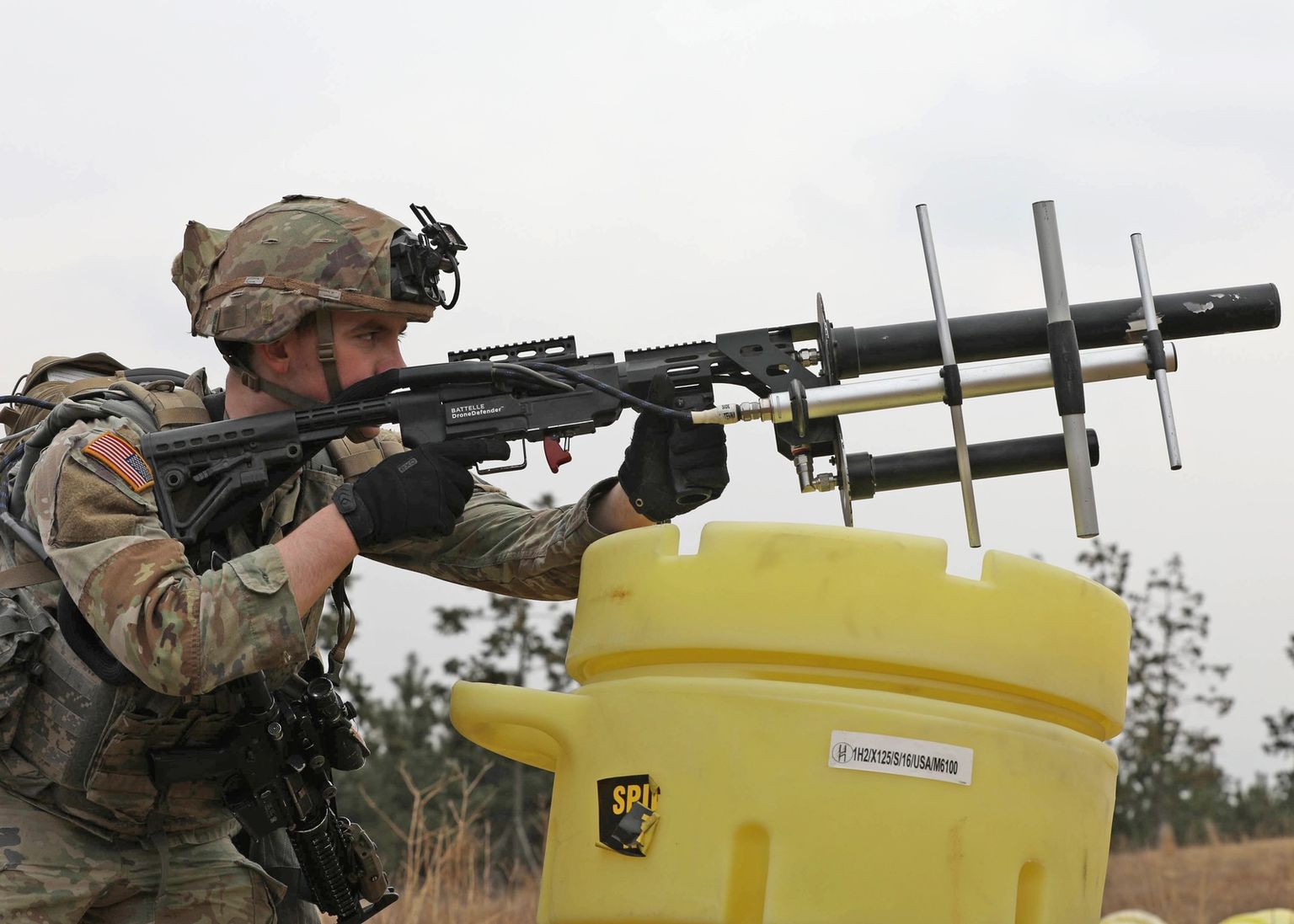
The US Army's Joint Interagency Task Force 401 awarded $4.15 billion in counter-drone contracts to 10 companies on September 29, 2026, under the Domestic Shield program. The indefinite-delivery deals span detection radars, jamming systems, and robotic weapon stations meant to protect US military facilities from drone incursions.
Background
JIATF-401 (Joint Interagency Task Force 401) is the Army-led organization the Department of War (the Pentagon's rebranded name for the Department of Defense) stood up to centralize how it buys counter-unmanned aircraft systems, or c-UAS. Its flagship effort, Domestic Shield, protects risk-prioritized Department of War facilities and assets inside the United States from drone threats — the same category of incursion PickDrones has tracked at bases from NATO airspace in Romania and Lithuania to US installations closer to home.
Rather than negotiate a single contract per vendor, JIATF-401 runs what it calls the C-UAS Marketplace: a pool of multiple-award IDIQ (indefinite-delivery/indefinite-quantity) contracts. An IDIQ sets a ceiling — the most the Army could spend — without guaranteeing any of it gets ordered. That structure lets commanders at individual bases request specific detection, jamming, or defeat systems from an already-vetted vendor list instead of running a new procurement each time a threat changes.
The 10 Awards
The latest round, announced September 29, 2026, split a combined $4.15 billion ceiling across 10 companies, several of them familiar names in counter-drone circles:
| Company | IDIQ ceiling |
|---|---|
| Allen Control Systems | $500 million |
| Digital Force Technologies | $500 million |
| DroneShield | $500 million |
| L3Harris WESCAM | $500 million |
| Napatree Technology | $500 million |
| RADA Technologies | $500 million |
| SRC Inc. | $500 million |
| Echodyne | $250 million |
| PVP Advanced EO Systems | $250 million |
| SmartShooter | $150 million |
Australia's DroneShield and Israel's SmartShooter give the round a global flavor alongside established US defense names like L3Harris and SRC. Combined, the 10 awards cover the full detect-to-defeat chain: compact radars and long-range cameras for detection and tracking, command-and-control software to fuse that data, electronic jammers to sever a drone's link to its operator, and physical effectors — including robotic weapon stations and rifle-mounted optics that let individual soldiers down small drones with standard-issue weapons.
JIATF-401 says the marketplace enforces open architecture standards, so a sensor from one vendor and an effector from another can plug into the same command network instead of locking a base into one company's closed ecosystem. The latest 10 awards build on earlier Domestic Shield IDIQs — including a $500 million contract to CACI — that officials expect will push the total vehicle ceiling toward $7 billion.
Why the Headline Number Overstates Near-Term Spending
An IDIQ ceiling is not a check the Army is writing. Of the newly awarded $4.15 billion, only about $50 million — roughly 1% — had actually been obligated as of the announcement. The rest depends on individual task orders the Army places over the life of the contract, each contingent on funding Congress still has to approve for the fiscal year that began October 1, 2026.
That gap matters for reading any defense contract headline: a $4.15 billion ceiling signals which vendors cleared the Army's technical and pricing bar, not $4.15 billion in guaranteed revenue. Vendors compete for individual task orders against each other within the pool once money is appropriated, which is also why the Army favors multi-award IDIQs over single-vendor deals — it keeps pricing competitive even after the initial award.
What This Means for Drone Pilots
For hobbyist and commercial Part 107 pilots, this round of contracts changes nothing about where or how you can fly today — Domestic Shield targets unauthorized incursions near military installations, not civilian airspace generally. But it is a concrete signal that the facilities on your no-fly-zone map are getting materially better equipped to detect and respond to any drone, authorized or not, that strays too close. Pilots operating near military installations, even inadvertently under FAA-authorized routes, should expect faster detection and a lower tolerance for unexplained flights as these systems come online over the next year. The contracts also reflect how fast the military drone category defined in PickDrones' guide to types of drones has expanded to include the systems built specifically to stop other drones — a sub-sector that barely existed a decade ago and now commands multibillion-dollar federal budgets.
FAQ
Sources: DefenseScoop | U.S. Army
More like this
Related Articles
FAA Awards $12M for BVLOS Drone Test Research (2026)
The FAA gave $12 million to 19 BVLOS drone research projects on October 5, 2026, as its Part 108 rule sits stalled in White House…
Germany Backs Ukraine With $9.6B Drone Interceptor Deal
Germany and Ukraine signed 15 defense deals worth over $9.6B on Oct. 4, funding mass production of jet-powered interceptor drones…

Wing, Walmart Drone Delivery Hits Denver, Seattle in 2027
Wing and Walmart will launch drone delivery in Denver and Seattle in 2027, expanding toward 270 Walmart stores and 40 million US c…