Drones to Deliver Blood to Trauma Scenes in 3 Minutes
Archer First Response Systems (ArcherFRS) is preparing to launch the first EMS-driven pre-hospital whole blood drone delivery program in the United States, in partnership with Hillsborough County Fire Rescue (HCFR) and Tampa General Hospital (TGH). Pending County Commission approval on September 2, drones will carry whole blood to the scene of severe hemorrhagic trauma across roughly 70 square miles around Tampa, Florida, arriving in under three minutes on average, with service targeted to begin in October 2026.
The program targets the single leading cause of preventable death after traumatic injury: uncontrolled bleeding. Once live, paramedics responding to a 9-1-1 call involving major blood loss will be able to request a drone carrying whole blood while still en route, so the unit is often waiting when the ambulance crew arrives.
Background
Hemorrhagic shock kills faster than almost any other trauma complication — patients can lose a fatal volume of blood within minutes, long before most ambulances reach a hospital with a full blood bank on hand. Trauma medicine calls the first hour after severe injury the "golden hour," and every minute a patient goes without blood replacement inside that window measurably worsens their odds of survival.
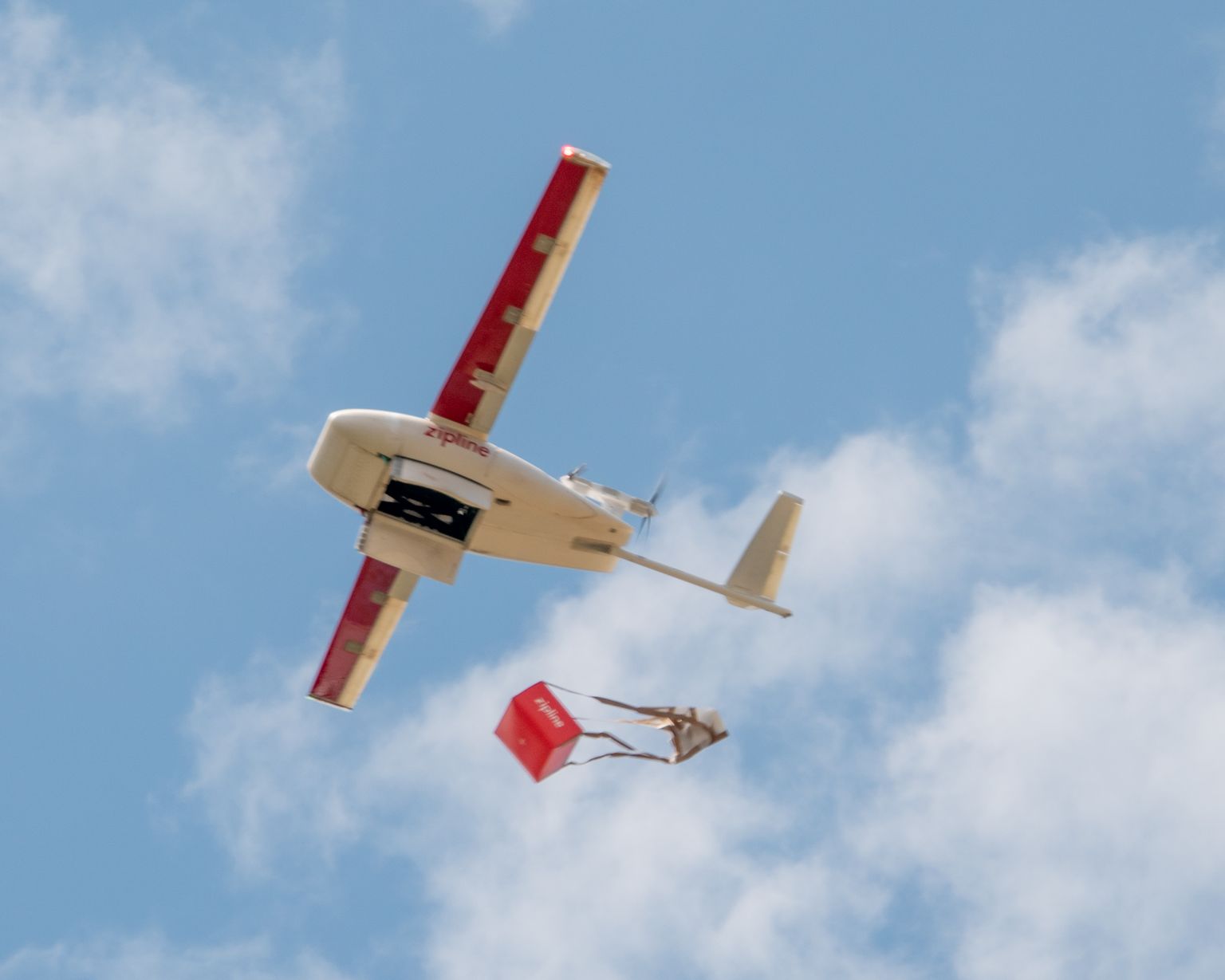
ArcherFRS built its case on smaller-scale programs first. The company already operates drone delivery for automated external defibrillators (AEDs) and Narcan with Manatee County EMS in Florida, proving out the ground-control-hub model before scaling to a blood product that requires cold-chain handling and stricter clinical protocols. The Hillsborough County launch is its most ambitious deployment yet, and it builds on a broader trend of medical drone logistics that companies like Zipline pioneered in Rwanda and have since brought to US health systems.
How the Whole Blood Delivery System Works
ArcherFRS will install and operate Ground Control Hubs at two HCFR locations: Station 9, covering the Faulkenburg/Sabal Park area, and Station 37 in Riverview. Each hub is designed to run 24/7, with remote pilots overseeing every flight and automated checks confirming weather, airspace, and system health before a drone launches.
The workflow is built to run in parallel with, not after, standard dispatch:
- A paramedic responding to a call involving major blood loss requests a delivery from a mobile device.
- The Ground Control Hub verifies conditions and launches the drone automatically toward the scene.
- The drone descends near the incident location, delivering whole blood the crew can begin transfusing on-site, ahead of hospital arrival.
- HCFR retains full operational control of the incident under its own FAA Certificate of Waiver.
Each hub carries a payload of 6.5 to 7 pounds and can reach roughly 35 to 50 square miles under favorable conditions, according to ArcherFRS. Beyond whole blood, the same drones are equipped to carry EpiPens and other time-critical emergency supplies.
| Detail | Figure |
|---|---|
| Stations | HCFR Station 9 and Station 37 |
| Initial coverage area | ~70 sq mi (Tampa, FL) |
| Average delivery time | Under 3 minutes |
| Payload capacity | 6.5–7 lbs per hub |
| Per-hub range | 35–50 sq mi |
Why This Program Is a First for US Emergency Medicine
The initiative brings together Hillsborough County Fire Rescue, Tampa General Hospital, blood supplier OneBlood, the University of South Florida Health Morsani College of Medicine, and the Florida Center for Emergency Medical Services — a coalition built specifically to move a controlled blood product from a hospital's supply chain into an EMS drone network without breaking chain-of-custody or cold-storage requirements.
"Whole blood at the scene in under three minutes changes the equation for hemorrhagic trauma," said Gordon Folkes III, ArcherFRS Founder and CEO. HCFR Division Chief Todd Carnell called it "a true force multiplier in the hands of our crews," while Tampa General's chief of emergency medicine, Dr. Jason Wilson, put it more bluntly: "In traumas with hemorrhaging, every minute matters," according to FireRescue1.
Other US drone-medicine programs, including Zipline's hospital-to-hospital blood runs, move supplies between fixed medical facilities. ArcherFRS's model is built specifically for the scene of the emergency itself — putting a blood product in a paramedic's hands before the patient is even loaded into the ambulance. Hillsborough County's Board of County Commissioners is set to vote on the partnership September 2, with service targeted to begin the following month.
What This Means for Drone Pilots
For remote pilots and public-safety drone operators, the Hillsborough County program is a concrete example of BVLOS (Beyond Visual Line of Sight — flight where the pilot cannot see the drone directly) operations planned under an existing FAA Certificate of Waiver rather than waiting on the still-pending Part 108 rulemaking. That matters for any agency weighing whether to invest in drone-based EMS logistics now versus waiting for broader federal rules.
The model is also a signal to other US fire and EMS departments: a scene-delivery blood program doesn't require a hospital-to-hospital drone corridor, just a Ground Control Hub, a waiver, and a supply agreement with a regional blood bank. Expect other counties to evaluate similar partnerships if Hillsborough's outcome data holds up, and expect remote-pilot demand from public-safety agencies to keep growing alongside it.
FAQ
Sources: DroneLife | FireRescue1
More like this
Related Articles

Drone Pilot Guilty in CLT Runway Case: Up to 1 Year Jail
A Charlotte man faces up to a year in prison for flying a drone between two live runways at CLT — here's the federal law he broke…
Amazon Drone Noise Sparks Revolt Before 500-City Rollout
Texas residents describe Amazon delivery drones as a flying beehive as noise complaints mount ahead of its planned 500-city US exp…

Elroy Air Boosts Funding to $175M, Lockheed Backs It
Elroy Air raised its PIPE funding to $175 million on Sept. 24, 2026, with Lockheed Martin Ventures backing the Chaparral cargo dro…