Ukraine Unveils MV11: A 2,200kg Drone Aircraft Carrier
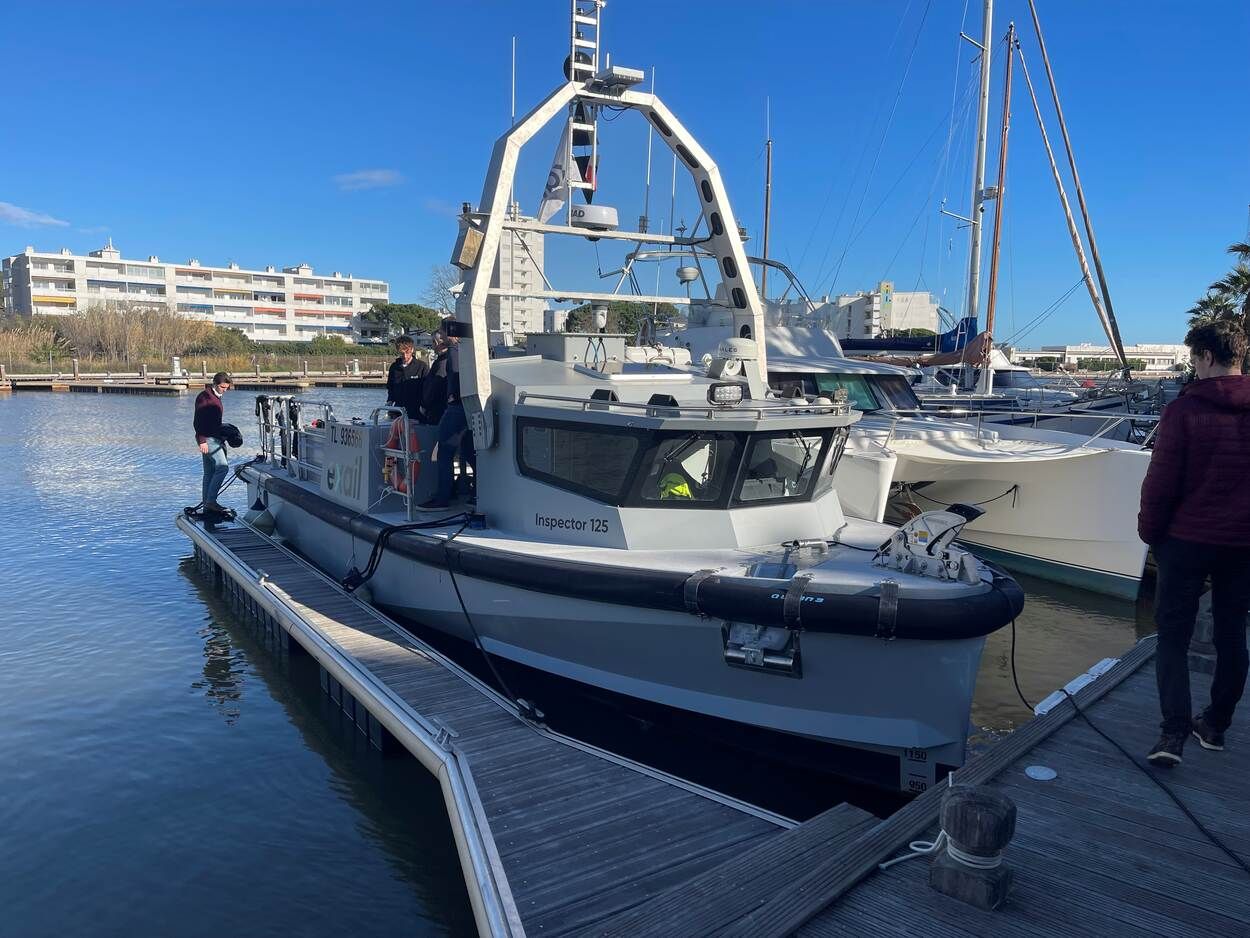
Ukraine unveiled the Magura MV11 on August 24, 2026, the largest vessel yet in its MAGURA family of naval drones and the first built specifically as a mothership for smaller unmanned systems. Built by Ukrainian defense company UFORCE, the uncrewed vessel carries up to 2,200 kilograms (4,850 pounds) of cargo — drones, missiles, sensors, or fuel — and can patrol at sea for up to seven days.
The MV11 debuted during Ukraine's 35th Independence Day unmanned-systems parade, sailing past crowds on Kyiv's Dnipro River alongside the country's other combat-proven drone families. Unlike earlier MAGURA boats, which are essentially uncrewed attack craft, the MV11 is designed as a floating base: a single hull that carries, launches, and recovers a fleet of smaller aerial and surface drones far from shore.
Background
The MAGURA line first drew global attention for a very different reason: sinking Russian Black Sea Fleet warships. Since 2022, Ukraine's uncrewed surface vessels (USVs) — remote-controlled, explosive-laden speedboats — have damaged or destroyed more than a dozen Russian vessels without risking a single Ukrainian sailor. A Magura USV reportedly shot down a Russian Su-30 fighter jet in May 2025, described at the time as the first aerial kill credited to an unmanned naval platform.
USV (uncrewed surface vessel) is a boat that operates on the water's surface without a crew aboard, controlled remotely or autonomously. The MV11 pushes that concept further: instead of being the weapon itself, it functions as a carrier that deploys other unmanned systems, extending their range and endurance well beyond what a single small drone could manage on its own.
UFORCE, the London-headquartered Ukrainian company behind the MAGURA family, designed the MV11 through its research bureau in Portugal, drawing on operational data from the smaller MV7 predecessor's Atlantic Ocean trials. The company was formed by consolidating nine Ukrainian unmanned-systems developers and now employs more than 1,000 people across a supply chain spanning six allied countries, according to The War Zone.
Specs: A Floating Drone Garage
At up to 12 meters (39 feet) long and 3.5 meters wide, the MV11 is built for open-ocean conditions rather than coastal raids. It carries 10 cubic meters of free payload space inside its hull, on top of the 2,200 kg weight allowance.
| Spec | MV11 |
|---|---|
| Length | Up to 12 m (39 ft) |
| Width | 3.5 m |
| Payload capacity | 2,200 kg (4,850 lb) |
| Free payload space | 10 cubic meters |
| Endurance | Up to 7 days at sea |
| Operating range | 2,000+ nautical miles |
The configuration shown at the parade carried 18 Sting interceptor drones — small, electrically powered quadcopters built to shoot down other drones rather than strike ground targets.
| Spec | Sting interceptor |
|---|---|
| Weight | ~9 lb (4 kg) |
| Type | Quad-rotor, small explosive warhead |
| Max altitude | ~23,000 ft (7,000 m) |
| Max range | ~23 mi (37 km) |
| Unit cost | ~$2,100 |
| Control | Wireless link, up to 2,000 km from launch point |
Each Sting is manually flown via a wireless data link and can be recovered and reused if it doesn't intercept a target, according to UFORCE's official announcement. UFORCE says the MV11 can also be configured with a gyro-stabilized 12.7 mm turret, a radar surveillance suite, and target-tracking sensors for an autonomous air-defense role.
Why a Naval Drone Mothership Matters
A single small drone is limited by its own battery and radio range — it has to launch near the area it defends and comes home when its battery runs low. A mothership changes that math. "It allows Ukraine to hang around in an area a long way from base and for far longer than a solo drone could manage," drone expert Steve Wright told Newsweek, describing how the MV11 turns reactive point defense into proactive area denial across large stretches of the Black Sea.
UFORCE CEO Oleh Rohynskyy called the MV11 "a single carrier capable of transporting and launching other unmanned systems far from shore for operations across all domains," adding: "We are confident that the MV11 will become the backbone of many successful missions and contribute to further pushing back the enemy."
The MAGURA family is already moving beyond Ukraine's own arsenal. In July 2026, UFORCE signed a manufacturing agreement with Oregon-based shipbuilder ReconCraft to build MAGURA-family boats in the United States, part of a broader US-Ukraine drone cooperation pact signed the same month that lets combat-tested Ukrainian aerial, ground, and maritime drones enter America for evaluation. If the MV11 concept scales the way its smaller siblings have, it points toward NATO navies fielding their own drone-carrier USVs to counter the kind of low-cost drone swarms already seen threatening ships and coastal infrastructure worldwide.
What This Means for Drone Pilots
The MV11 has no direct bearing on FAA Part 107 rules, EASA operator categories, or any other civilian licensing regime — it's a foreign military platform operating in a war zone. Its relevance to the wider drone community is upstream, in the technology itself.
The mothership concept — one large, long-endurance carrier deploying and recovering swarms of small, disposable drones — is a pattern spreading well beyond naval warfare. Commercial operators building BVLOS logistics networks, infrastructure-inspection fleets, and disaster-response swarms face the same core problem the MV11 solves: how to extend a small drone's limited range and endurance without making every unit larger and more expensive. Expect variations on this idea — fixed ground stations, mobile vehicle-based launchers, and now uncrewed ships — to keep showing up across the different types of drones built for both military and civilian missions, alongside growing onboard autonomy that lets these systems operate with less constant human control.
For counter-UAS and defense-adjacent manufacturers, the MV11's reusable, sub-$2,200 interceptor drones also reinforce a trend already visible in Ukraine's aerial arsenal: cheap, mass-producible hardware is increasingly favored over expensive, exquisite systems for countering drone threats.
FAQ
Sources: The War Zone | UFORCE | Newsweek
More like this
Related Articles
DJI Phantom 4 Pro V2 Service Ends Oct. 31: Owner Guide
DJI ends Phantom 4 Pro V2 repairs and support on Oct. 31, 2026. Here is what stops, what still works, and what owners should do be…
Zipline Drone Delivery Live in Round Rock, 5,000 Spots
Zipline drone delivery began in Round Rock, Texas on Oct. 9, 2026, with 5,000 early-access spots. Here's who can order, what it co…
FCC Vote on China Test Labs: 82% of Devices (Oct. 29)
The FCC votes Oct. 29 to end recognition of mainland China test labs on Dec. 1, 2028. Here's what the draft order says and what it…