US, Ukraine Sign First Military Drone Pact (2026)
The United States and Ukraine signed a bilateral statement of intent on July 21, 2026, creating the first formal framework for military drone cooperation between the two countries. The deal lets Ukrainian combat-tested unmanned systems ship to the US for evaluation, and it comes as Kyiv's drone industry has more than doubled its contract value in a single year.
Background
Two officials confirmed the signing to Radio Free Europe/Radio Liberty, which first reported the story. The statement of intent is not itself a procurement contract — it does not commit the Pentagon to buying anything. Instead, it establishes a legal pathway for Ukrainian aerial, ground, and maritime unmanned systems to enter the United States for testing and assessment, something that was not previously formalized despite more than four years of Ukrainian battlefield innovation against Russia.
The timing matters. Ukraine has become the world's fastest-moving drone laboratory by necessity, iterating hardware and software under live combat conditions that no peacetime test range can replicate. American officials have spent months trying to find a structured way to tap into that experience without violating export-control law or getting ahead of formal defense-cooperation agreements. This statement of intent is that structure.
What the Agreement Covers
The framework spans three domains: aerial drones, ground robots, and maritime unmanned systems — a scope that mirrors how Ukraine itself has diversified its unmanned arsenal since 2022. It gives the US military a pathway to request specific Ukrainian platforms for hands-on evaluation rather than relying on video footage, specification sheets, or secondhand battlefield reports.
Dan Rice, an adviser affiliated with American University Kyiv, called it "a giant leap forward for American defense." Daniel Balson of the advocacy group Razom for Ukraine put it more bluntly: "Ukrainian drones are among the best in the world." Both comments reflect a growing consensus in Washington that Ukraine's rapid-iteration drone development has outpaced traditional US defense-procurement cycles, which typically take years to move a system from concept to fielded unit.
The MAGURA Maritime Drone Is Already Moving
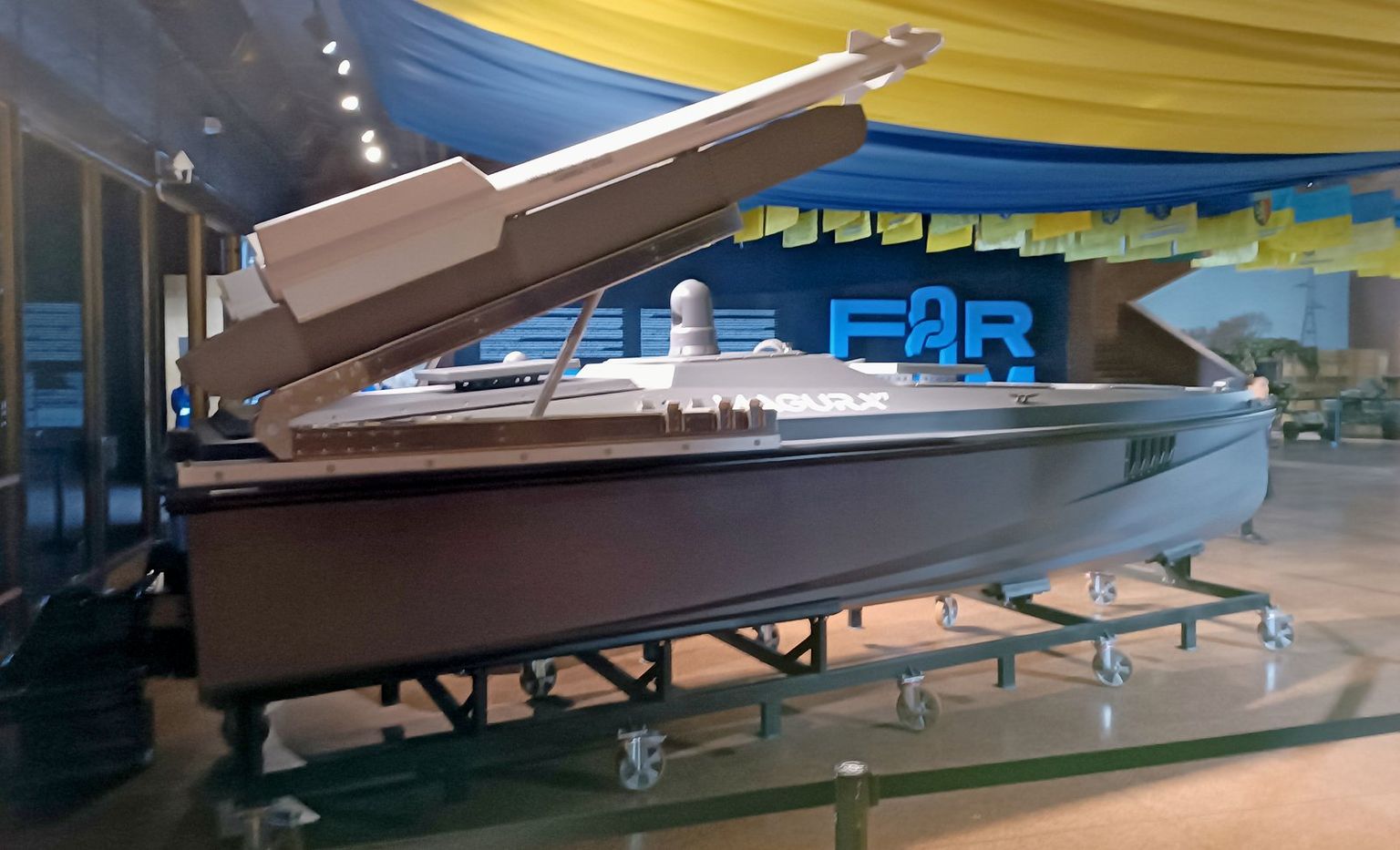
One piece of the cooperation is already in motion outside the government-to-government statement. Ukrainian developer UFORCE signed a memorandum of understanding on July 21 with ReconCraft, an Oregon-based shipbuilder, to manufacture the MAGURA family of unmanned surface vessels (USVs) in the United States. The MAGURA — a roughly 24-foot (7.3 m) explosive-laden attack boat — became globally known after Ukraine used earlier variants to sink or damage multiple Russian Black Sea Fleet vessels without risking a single sailor. ReconCraft's production plans reportedly scale from an initial batch toward "hundreds, and ultimately thousands" of units over time.
That single deal illustrates why the broader statement of intent matters: it is less about one contract and more about opening a channel through which specific, battle-proven Ukrainian designs — like MAGURA — can move toward US-based manufacturing.
A Drone Industry Scaling Fast
The cooperation agreement lands against the backdrop of a Ukrainian drone sector that has grown explosively. Kyiv signed contracts worth 333.6 billion hryvnia (about $7.6 billion) for drones in the first half of 2026 alone, more than double the value recorded over the same period in 2025, according to The Defense Post. Ukraine's Defence Procurement Agency reports an average delivery time of just nine days from contract to battlefield, a pace that stands in sharp contrast to how slowly most NATO militaries field new hardware.
That scale is a big part of why Washington wants a formal testing pathway. Ukrainian manufacturers are approving new types of drones — from FPV strike quadcopters to long-range one-way attack systems to maritime and ground platforms — faster than any other country's defense-industrial base, and increasingly with onboard autonomy and AI-assisted targeting built in to counter jamming on the electronic-warfare-saturated front line.
What This Means for Drone Pilots
For US commercial and hobbyist pilots, this agreement changes nothing about day-to-day Part 107 operations, airspace rules, or the FAA's ongoing rulemaking on critical-infrastructure restrictions. Its impact is upstream: it signals where US defense investment and manufacturing capacity are heading over the next few years.
Drone professionals working in defense-adjacent fields — component manufacturing, counter-UAS, autonomy software, or naval robotics — should watch this space closely. If the ReconCraft-UFORCE MAGURA line scales as planned, it would represent one of the first instances of a foreign combat-drone design going into serial US production, potentially reshaping domestic supply chains for motors, batteries, flight controllers, and composite hulls.
For allied nations watching the deal, it also sets a template: battlefield-proven, rapidly iterated hardware can now move toward formal testing relationships with the US military faster than the traditional foreign military sales process typically allows. Analysts tracking the Pentagon's broader push to scale unmanned-systems production expect other NATO members to seek similar bilateral testing arrangements with Ukraine, both to access combat-validated designs and to help fund Kyiv's wartime drone industry through direct manufacturing partnerships rather than aid alone.
FAQ
Sources: Radio Free Europe/Radio Liberty | United24 Media | The Defense Post
More like this
Related Articles

Spray Drone Sales Fell 59% as FCC Ban Looms (2026)
US spray drone sales fell 59% in 2025, the American Spray Drone Coalition says, and it wants the FCC to exempt Part 137 drones fro…
Massachusetts Drone Delivery Freeze: 16 Lawmakers Ask Healey
16 Massachusetts lawmakers asked Gov. Healey on Oct. 19, 2026 to freeze drone delivery certificates. MassDOT told Amazon it needs…

Amazon Drone Delivery Tallahassee: Mid-November Launch
Amazon Prime Air aims to start MK30 drone delivery in Tallahassee by mid-November, with up to 21 drones and a 7.5-mile range. Here…