Saab A3-001: Supersonic Loyal Wingman Drone (2026)
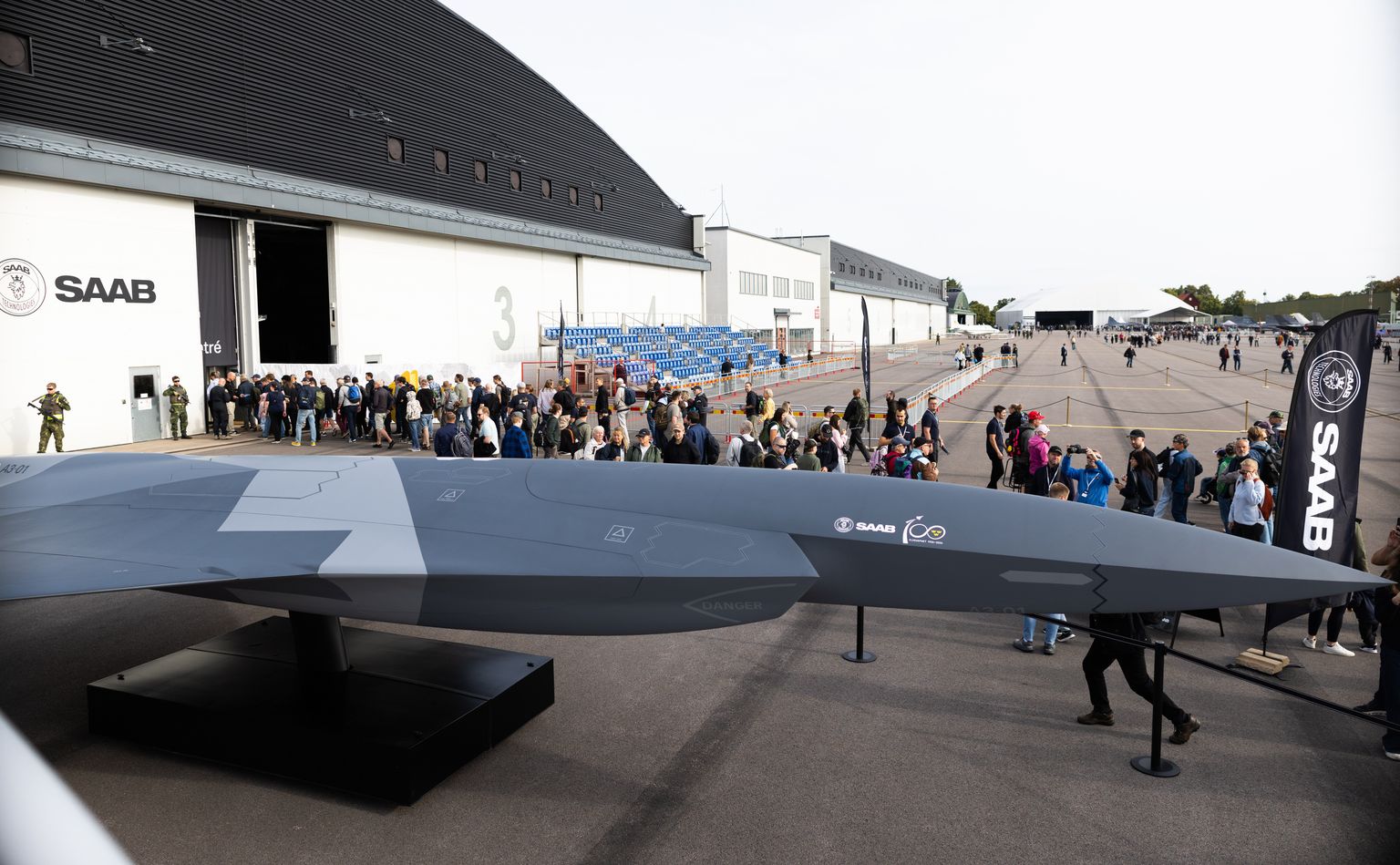
Saab unveiled a full-scale mock-up of the A3-001 on August 22, 2026, a supersonic, stealth, uncrewed combat aircraft designed to fly alongside the JAS 39 Gripen E. The reveal took place at the Jubilee Air Show at Malmen Air Base in Linköping, Sweden, marking 100 years of the Swedish Air Force. Saab plans to fly a demonstrator with fighter-like characteristics before 2030.
Background
The A3-001 belongs to a class of unmanned aircraft known as collaborative combat aircraft (CCA), sometimes called "loyal wingmen" — drones that fly ahead of or alongside crewed fighters to take on the riskiest parts of a mission, from jamming enemy radar to absorbing the first shots in contested airspace. The United States, Australia, and the United Kingdom already run comparable programs, including General Atomics' and Anduril's CCA prototypes for the US Air Force.
Saab's version is notable because it targets supersonic speed and a tailless stealth airframe rather than the slower, cheaper attritable drones some rivals favor. The company is showing the concept now as Sweden weighs whether to fund a full development program, and as European air forces reassess autonomous systems following years of drone warfare in Ukraine.
A3-001 Design and Capabilities
The A3-001 mock-up is roughly the size of a JAS 39 Gripen E and is designed around a single General Electric F414 turbofan — the same engine family used on Boeing's F/A-18 Super Hornet — to reach supersonic speed. Its tailless, blended-wing shape, cropped compound-delta wings, chined nose, side air intakes, serrated exhaust nozzle, and internal weapons bay are all standard low-observable (stealth) design features meant to minimize its radar signature.
Saab estimates the aircraft's weight at under one tonne, putting it in the same class as other loyal-wingman drones despite its supersonic ambitions. According to The Aviationist, the design is built for a high degree of autonomy, letting it operate as part of an integrated system with crewed Gripen fighters rather than under constant manual control.
Saab says the aircraft is intended for three mission types: electronic warfare, suppression of enemy air defenses (SEAD), and precision strikes in heavily contested airspace — the same high-risk roles CCA programs elsewhere are designed to take on so human pilots don't have to.
Development Timeline and Sweden's Decision
Saab has not yet committed to full-scale production. Peter Nilsson, head of Saab's Advanced Programs business unit, said in the company's official announcement: "We are currently in an intensive development phase where, together with Sweden, we are exploring technologies that will lay the foundation for the next generation of combat air systems."
Saab intends to fly an uncrewed demonstrator with fighter-like characteristics before 2030, with three prototypes planned as the design matures, according to TWZ. Actual deployment alongside the Gripen E would not arrive until the mid-2030s at the earliest, and only if the Swedish government moves forward with funding.
What This Means for Drone Pilots
The A3-001 is a defense concept, not a product any civilian or commercial operator will fly — but it signals where autonomous flight technology is heading, and that trajectory eventually reaches the commercial side. Military investment in autonomy (the ability of an aircraft to sense, decide, and act with reduced human input) and low-observable airframe design has historically filtered down into civilian sense-and-avoid systems, materials, and flight-control software over the following decade.
For drone professionals watching the defense-adjacent side of the industry, the bigger signal is competitive: Sweden joins the US, Australia, and the UK in racing to field CCA-type systems, which keeps pressure on export-control policy and dual-use technology rules that already shape which drone components and software are available commercially. Pilots and operators outside the defense sector won't see direct regulatory impact from this announcement, but the broader autonomy race is worth tracking — it's the same technology base underpinning the shift toward more autonomous drones generally, a trend covered in our guide to drones and artificial intelligence. Readers wanting the full picture of how military drones fit alongside consumer, agricultural, and commercial types can see our complete breakdown of drone categories.
FAQ
Sources: The Aviationist | Saab Newsroom | TWZ
More like this
Related Articles
Amazon Prime Air Eyes Australia, Posts CASA Approvals Job
Amazon Prime Air is hiring a Head of Regulatory Approvals in Australia to win CASA sign-off for its MK30 drone. Here's what the jo…
Dronus K500L Drone Gets FCC Ban Exemption (Oct 2026)
The FCC granted the Italian Dronus K500L drone a Covered List exemption on Oct. 2, 2026. Here's what the Conditional Approval requ…
Germany's Army Drone Regiment: 600 Soldiers, 500 km Reach
Germany will build its first Army drone regiment in 2027, with up to 600 soldiers and 500 km reach, as the US Army ends its drone…