
Romania F-16 Destroys Drone Near Black Sea Gas Rig
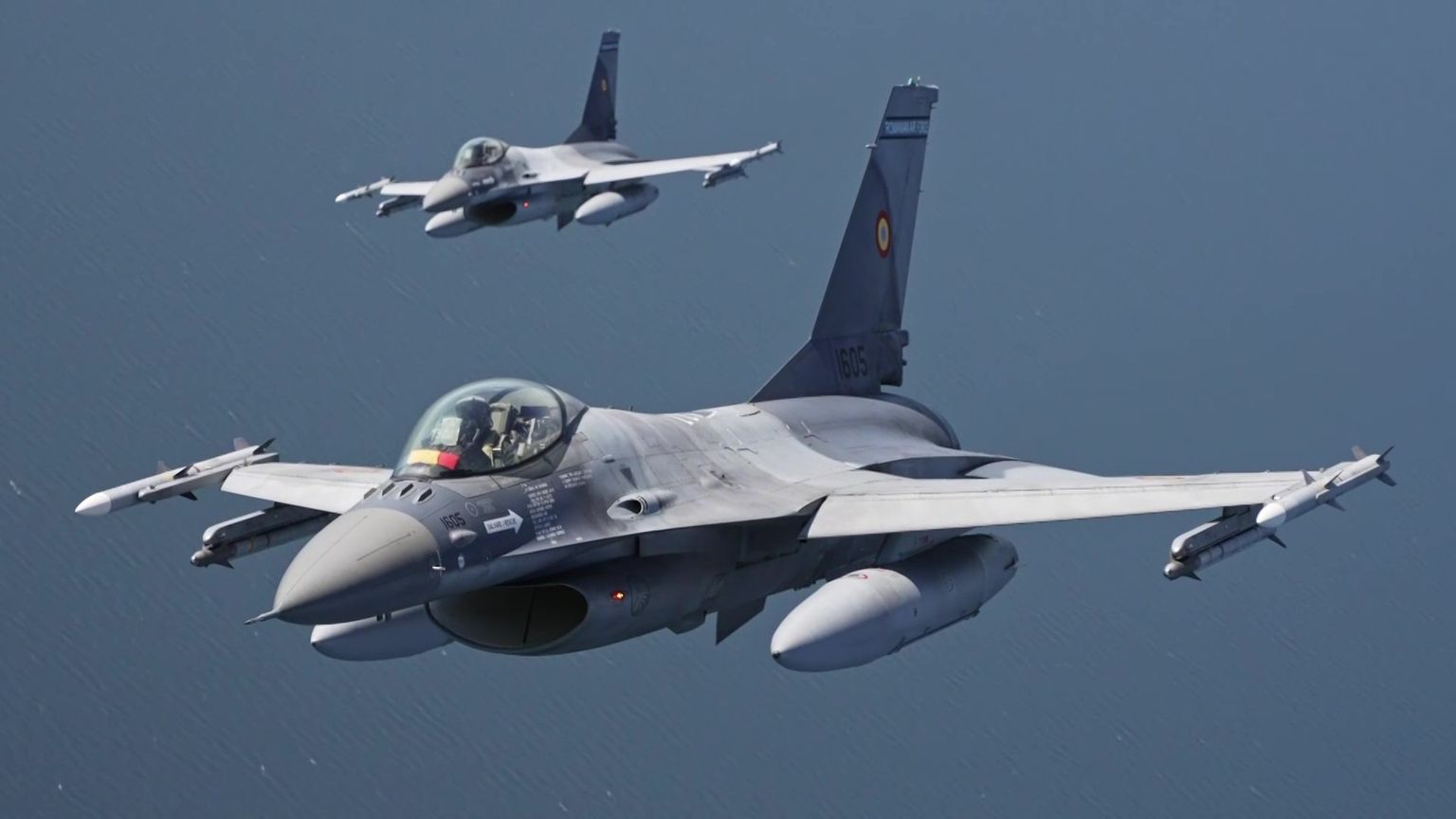
A Romanian F-16 fighter jet used its onboard cannon to destroy an explosive-laden drone near the Neptun Deep gas platform in the Black Sea on August 20, 2026, Defense Minister Radu Miruță confirmed. The drone was loitering roughly 80 nautical miles east of Constanța when a merchant ship reported it, prompting Romania to scramble two jets in response.
Background: A Drone War Reaching Offshore Energy Infrastructure
Romania shares roughly 614 kilometers (382 miles) of border with Ukraine and has tracked dozens of suspected drone incursions since Russia's full-scale invasion began in 2022. Until this year, Romanian and allied jets mostly monitored and escorted intruding aircraft rather than firing on them. That shifted in July 2026, when Romanian F-16 pilots shot down three suspected Russian drones in under 48 hours — the first time a NATO member destroyed an intruding drone since the war began.
The August 20 incident marks a new phase in that pattern: instead of an aircraft crossing into national airspace from Moldova or Ukraine, this was a maritime attack drone — an uncrewed surface or aerial vehicle carrying explosives — operating in Romania's exclusive economic zone and threatening a critical infrastructure site rather than a populated area. Neptun Deep, a joint offshore gas project roughly 100 miles off Romania's coast, is expected to make the country one of Europe's largest natural gas producers once production begins in 2027.
How the August 20 Incident Unfolded
At approximately 6:28 a.m. local time, a merchant ship operating near the Neptun Deep platform radioed Romanian authorities to report a drone loitering a few hundred meters from the site, according to the defense ministry. Romania scrambled two F-16 fighter jets, which located the target and, after receiving authorization, destroyed it using onboard cannon fire rather than a missile — a method typically chosen to minimize the risk to nearby personnel and equipment.
Minister Miruță said the drone was carrying explosives and posed a direct threat to the hundreds of workers stationed at the platform, as well as to the surrounding energy infrastructure. He added that Ukrainian officials confirmed the drone was not one of theirs, implicitly pointing to Russia as the likely origin, though Romania has not issued a formal attribution. President Nicușor Dan called the incident an "intensification of these types of irresponsible incidents on the part of the Russian Federation."
Part of an Escalating Pattern on NATO's Eastern Flank
The Neptun Deep incident follows a Spanish F/A-18 shooting down a drone that crossed into Romanian airspace from Moldova on August 16 — the fourth such interception Romania recorded in 2026. Poland, Lithuania, and Latvia have also reported suspected Russian drone violations since 2022, but Romania's willingness to open fire, first demonstrated in July, has made it the most active NATO member in directly engaging intruding drones.
Targeting a maritime energy platform rather than an inland area raises the stakes further: Neptun Deep sits inside Romania's exclusive economic zone, an area NATO treats as part of the alliance's collective security perimeter even though it is not sovereign airspace in the traditional sense. Analysts tracking the Black Sea theater note that critical infrastructure — ports, pipelines, and offshore platforms — has become a more frequent target for long-range drones on both sides of the Russia-Ukraine war as the conflict grinds on with the front line largely static.
What This Means for Drone Pilots
This was a military interception involving a state-linked attack drone, not an enforcement action against a civilian operator — it does not change flight rules for recreational or commercial pilots. But it reinforces a trend commercial operators should track: governments worldwide are tightening no-fly restrictions and increasing scrutiny of any drone activity near energy infrastructure, ports, and other critical sites, regardless of whether the operator is a hobbyist or a licensed professional. Pilots planning missions near power plants, refineries, pipelines, or offshore platforms should expect stricter permitting and check current no-fly zones before flying, as security-driven restrictions can appear with little notice following incidents like this one.
FAQ
More like this
Related Articles

FAA Order 7200.23E: Tower Drones Fly Above LAANC Grids
FAA Order 7200.23E lets Part 107 pilots inspect towers above LAANC grid altitudes without a tower call. Here are the new limits an…

Amazon Prime Air Eyes Australia, Posts CASA Approvals Job
Amazon Prime Air is hiring a Head of Regulatory Approvals in Australia to win CASA sign-off for its MK30 drone. Here's what the jo…
FCC Drone Spectrum Vote: 50 MHz at Stake on Oct. 29
The FCC will vote Oct. 29 on opening 50 MHz of 800 MHz spectrum to drones. Here's what the proposal changes, what it doesn't, and…