Pentagon Drone Gauntlet II Results: Neros Tops Both Boards
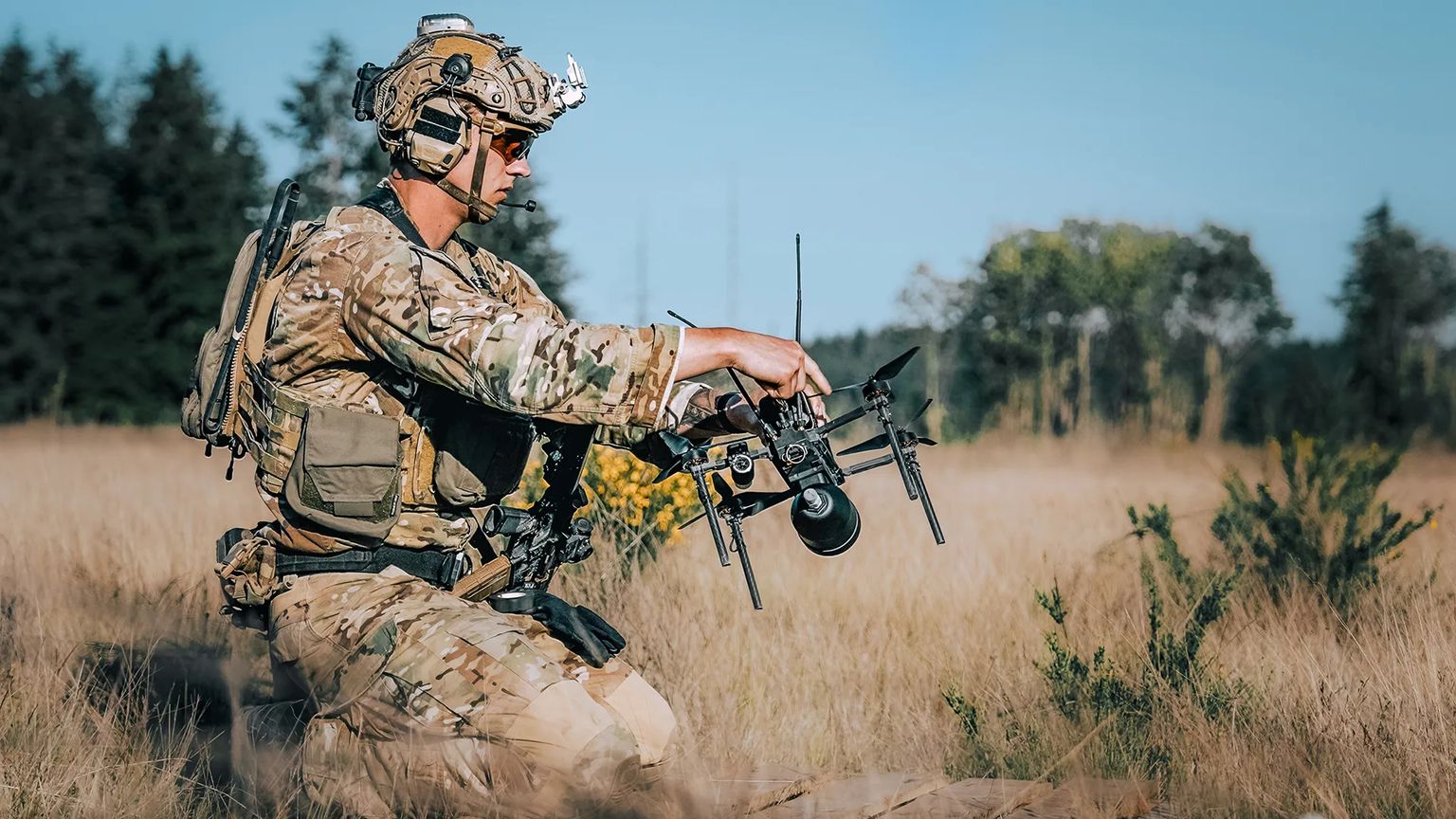
Neros Technologies swept both leaderboards of the Pentagon's Drone Dominance Program Gauntlet II, results the Defense Innovation Unit posted September 15, 2026. The California startup won close-quarters battle outright with 88.1 points and placed third in deep strike, while Skycutter — Gauntlet I's UK winner — fell to fourth as the Pentagon moves to buy 60,000 attack drones from the top finishers.
The evaluation ran across two days at Fort Carson, Colorado in August 2026, putting 23 drone platforms from 19 companies through 1,858 flight sorties, including tests under electronic jamming that Gauntlet I had not fully replicated.
Background
Gauntlet II is the qualifying tournament for the Pentagon's Drone Dominance Program, the initiative Defense Secretary Pete Hegseth launched in July 2025 to close a battlefield drone gap exposed by the wars in Ukraine and the Middle East. The Defense Innovation Unit (DIU) runs the competitions to select vendors for a rolling procurement of low-cost, one-way attack drones, part of a broader plan to field more than 200,000 small unmanned systems by 2027.
FPV (first-person view) drones are flown by a pilot watching a live video feed through goggles rather than by direct line of sight — the same control scheme Neros used to build its reputation supplying Archer strike drones to Ukraine before raising $250 million at a $2.5 billion valuation in August 2026. That track record made Neros the only company to place on both Gauntlet II boards.
Gauntlet I, held in March 2026, was won by Skycutter with 99.3 points, 12 points ahead of Neros, but only 24% of entrants managed to fly 10 kilometers that round. Gauntlet II raised the bar: DIU said all 11 platforms tested at long range reached 15 kilometers under jamming, and Skycutter's score in deep strike dropped to 66.6, well off its March pace.
Gauntlet II Results: Two Leaderboards, Two Winners
The Pentagon scores drones separately for close-quarters battle (short-range, urban-style engagements) and deep strike (long-range missions), and it plans to buy from the top five finishers in each category.
| Rank | Close quarters battle | Points | Deep strike | Points |
|---|---|---|---|---|
| 1 | Neros | 88.1 | Perennial Autonomy | 80.1 |
| 2 | ORQA US | — | Hyperscale | 70.9 |
| 3 | XTEND Reality | — | Neros | 69.8 |
| 4 | Vector | — | Skycutter | 66.6 |
| 5 | ModalAI | — | Swarm Defense Technologies | 66.0 |
Perennial Autonomy, the deep-strike winner, was founded as White Stork by former Google CEO Eric Schmidt to build drone interceptors and has since been renamed twice; it also holds a separate $500 million counter-drone contract awarded in May 2026. Hyperscale, the deep-strike runner-up, remains in stealth mode with no publicly disclosed founders, headquarters, or airframe details. None of the four Ukrainian entrants — UDD, Stellarion, Grim Tech, and Wilcox Cherry Defense — placed in the top five of either board.
What's Next: More Drones, More Orders
The Pentagon plans to distribute roughly $300 million in near-term orders across the ten combined winners, tiered by finishing position: about 8,000 drones for first place down to 4,000 for fifth, for a total of approximately 60,000 units. DIU said the Gauntlet II fleet is "cheaper, more capable, and sourced from a supply chain more closely tied to the American industrial base" than the drones ordered after Gauntlet I.
Three more rounds are scheduled. Gauntlet 2.5, focused on larger "bomber" drones, starts next month. Gauntlet 3 follows roughly six months after Gauntlet 2, with a final Gauntlet 4 about six months after that — part of the push toward the program's 200,000-drone target by 2027.
What This Means for Drone Pilots
Gauntlet II is a reminder of how directly consumer FPV skills now feed the defense industry: Neros's founders, Soren Monroe-Anderson and Olaf Hichwa, are former teenage FPV racers, and the piloting techniques rewarded in the competition — precise manual control under jamming and signal loss — are the same ones taught in hobbyist FPV racing and freestyle flying. For pilots and builders, the results signal sustained demand for FPV airframes, goggles, and video links as the Pentagon scales toward tens of thousands of units per vendor, and they underline how quickly leaderboard positions can flip: Skycutter's fall from first to fourth in one cycle shows this market rewards continuous iteration, not a single winning design.
The program is US-run, but the field is international — Skycutter is British, and Ukrainian entrants competed directly for American contracts — so pilots and manufacturers outside the US should expect Gauntlet-style qualifying tournaments to keep shaping which FPV designs get scaled globally.
FAQ
Sources: DroneXL | DefenseScoop
More like this
Related Articles
EASA Proposes Cutting Drone Registration to 100g in 2026
EASA's new Opinion 06/2026 would drop the EU drone registration and Remote ID threshold from 250g to 100g, matching the UK. Here's…
Flytrex Drones Now Predict Your Order Before You Do
Flytrex's rooftop drone docks and AI positioning system now predict food orders before they're placed, cutting delivery costs 60%…
Drone Halts Flights at Reagan National for 20 Minutes
An unauthorized drone forced a 20-minute halt of all Reagan National Airport flights on Sept. 16, 2026 — here's what happened and…