Hydrogen Drone Engine Flies 5x Longer, Lands Record Order
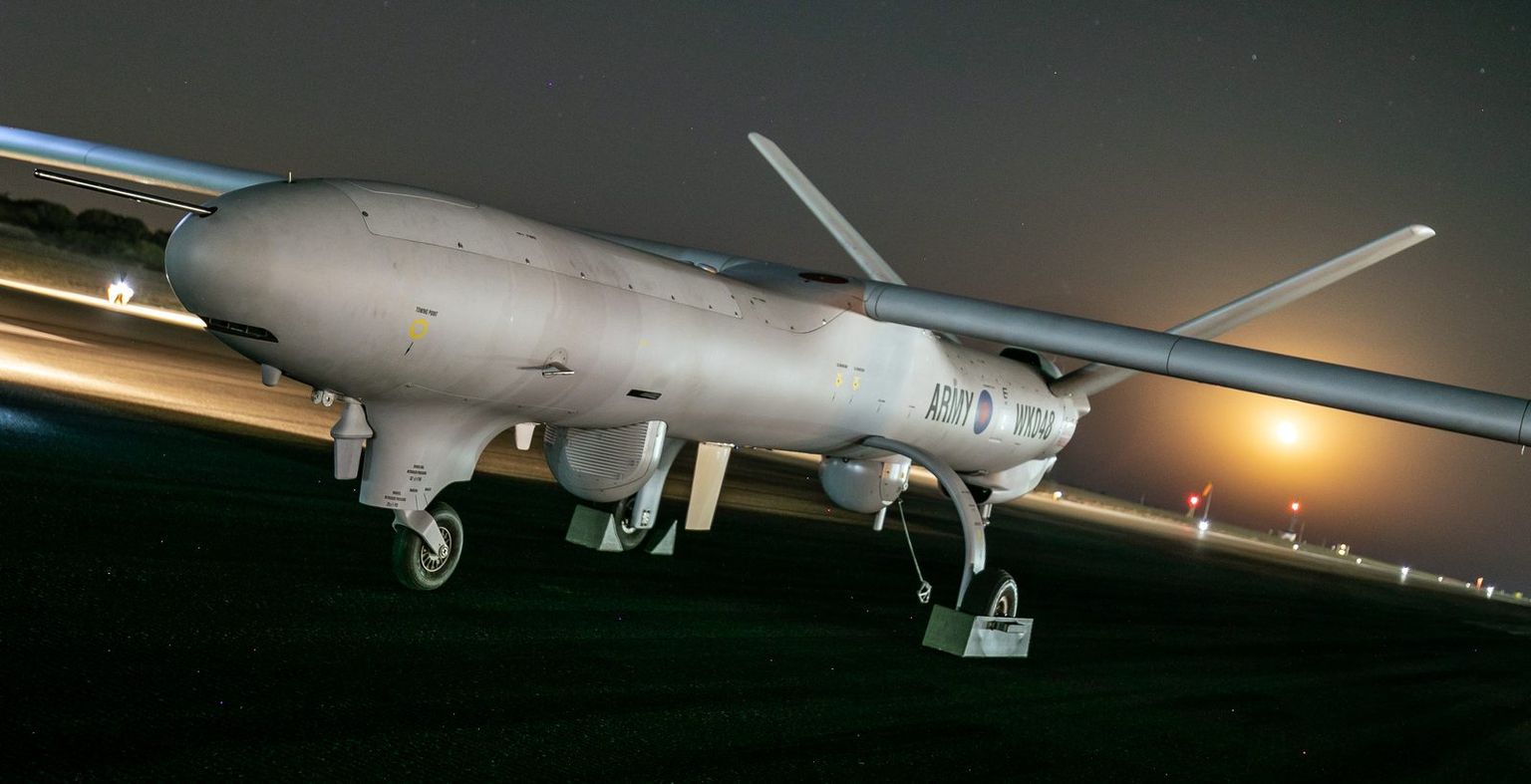
British fuel-cell manufacturer Intelligent Energy unveiled the IE-FLIGHT 120, a 120kW hydrogen powertrain for heavy-lift fixed-wing drones, on July 15, 2026, and paired the launch with its largest-ever commercial order for hydrogen UAV propulsion. The system targets aircraft carrying 331 to 1,653 pounds (150-750 kg) on surveillance, defense, security, and logistics missions, promising three to five times the flight endurance of comparable battery-electric drones while emitting only water vapor.
The launch lands at a moment when militaries and logistics operators alike are pushing for uncrewed aircraft that can stay airborne for hours rather than minutes — a range and endurance gap that battery chemistry alone has struggled to close.
Background
Most drones today fly on lithium-polymer batteries, which are cheap, well understood, and fine for missions measured in tens of minutes. Endurance drops off fast as payload grows, because every extra pound of battery adds weight without adding proportional energy density.
A hydrogen fuel cell converts compressed hydrogen gas into electricity through an electrochemical reaction with oxygen, producing only water vapor as a byproduct. Unlike a battery, a fuel cell doesn't store its own energy — it converts fuel carried in a separate tank, so range scales with tank size rather than battery mass. That's why fuel-cell aircraft can fly for hours where battery-electric equivalents are limited to well under an hour at the same payload.
Intelligent Energy has worked on this problem since 2001, when it was spun out of Loughborough University in the UK. Over 25 years, the company has built roughly 500 patents and shipped fuel cell systems from 1kW to 1MW across automotive, aerospace, data center backup, and drone applications. Its existing IE-SOAR line already powers smaller UAVs used in defense and industrial inspection work; the IE-FLIGHT 120 scales that technology up for aircraft an order of magnitude heavier.
What Is the IE-FLIGHT 120 Hydrogen Powertrain?
The IE-FLIGHT 120 is a 120kW (about 161 horsepower) hydrogen fuel cell power system built for long-range, fixed-wing UAVs carrying 150 to 750 kg of payload — a class that includes many military ISR platforms, cargo drones, and large agricultural or infrastructure-inspection aircraft. Intelligent Energy says it delivers three to five times longer flight duration than a battery-powered aircraft of equivalent size, while producing only water vapor as exhaust.
"The UAV market is moving rapidly towards larger aircraft that need to fly further, carry heavier payloads and stay airborne for much longer," said Greg Harris, Chief Commercial Officer at Intelligent Energy. He added that operators are increasingly turning to hydrogen propulsion "to achieve longer endurance, greater payload capacity and improved mission capability."
Beyond raw endurance, Intelligent Energy points to secondary advantages over both batteries and small internal combustion engines: lower noise, reduced vibration, less maintenance, and a smaller thermal signature — a meaningful detail for defense and security customers operating aircraft designed to avoid infrared detection.
The IE-FLIGHT 120 sits above the company's existing IE-SOAR modules, which already fly on smaller UAVs, and below the higher-power fuel cell technology Intelligent Energy is developing for eVTOL air taxis and regional aviation. In effect, it's the middle rung of a ladder the company is building from small tactical drones up toward crewed electric aircraft.
A Record Order and UK Government Backing
Alongside the product launch, Intelligent Energy announced what it called the largest commercial order in its history for hydrogen UAV propulsion — specifically for its existing IE-SOAR fuel cell systems. The company did not disclose the customer's identity, the number of units, or the contract's value, but described it as a "landmark order" reflecting accelerating demand for fuel-cell-powered flight.
The announcement also ties into broader UK government investment in uncrewed systems. Intelligent Energy previously received £17 million ($21.6 million) through the Aerospace Technology Institute's HEIGHTS programme, and the company has opened a new high-power fuel cell test facility in Chelveston, Northamptonshire. The push aligns with the UK's Defence Investment Plan, which commits roughly £5 billion ($6.3 billion) to drones and autonomous systems over the coming years — part of a wider trend of Western governments funding domestic UAV supply chains rather than relying on imported hardware.
| Metric | IE-FLIGHT 120 | Typical Li-Po battery (equivalent weight) |
|---|---|---|
| Power output | 120 kW (161 hp) | Varies with cell count |
| Payload range | 150-750 kg (331-1,653 lb) | Same aircraft class |
| Flight endurance | 3-5x longer | Baseline |
| Emissions | Water vapor only | None (but limited range) |
| Refuel/recharge | Hydrogen tank swap or refill | Battery swap or slow recharge |
What This Means for Drone Pilots
For most hobbyist and small commercial pilots, the IE-FLIGHT 120 changes nothing immediately — it's built for aircraft far larger and more expensive than a consumer quadcopter or a mapping drone. But it signals where the heavy end of the industry is heading. Operators running long-endurance missions — pipeline and powerline inspection, border and coastal surveillance, disaster-zone logistics — are the near-term buyers, and fuel-cell propulsion could eventually filter down into mid-size commercial platforms as costs fall.
It's also a reminder that battery limitations remain the single biggest constraint on what drones can do. Every gain in flight time from an alternative power source — hydrogen, solar-assisted hybrid, or otherwise — expands the mission types operators can realistically fly, from BVLOS delivery to multi-hour surveillance patrols. Pilots working in defense, infrastructure, or heavy-cargo applications should expect hydrogen-electric hybrid platforms, distinct from the consumer and light-commercial categories covered in our guide to types of drones, to become a more common option over the next few years.
FAQ
Sources: Intelligent Energy — Heavy-lift drone powertrain debuts as hydrogen UAV orders hit record high | sUAS News | UAS Vision
More like this
Related Articles
Ukraine 1,000-Drone Attack on Russia: What We Know
Russia says it downed 1,015 Ukrainian drones in one night as St. Petersburg's oil terminal burned. Here is what happened and what…
Jovistar FCC Drone Approval Dismissed: DJI Shell Exits
Jovistar, a suspected DJI front company, asked TÜV to dismiss its own FCC drone approval on Oct. 8, 2026. Here's what happened and…
Portland Drone Hub Moratorium: 11-0 Vote Targets Amazon
Portland's council voted 11-0 on Oct. 14, 2026 to start a possible moratorium on drone delivery hubs. Here is what it changes for…