Flytrex Drones Now Predict Your Order Before You Do
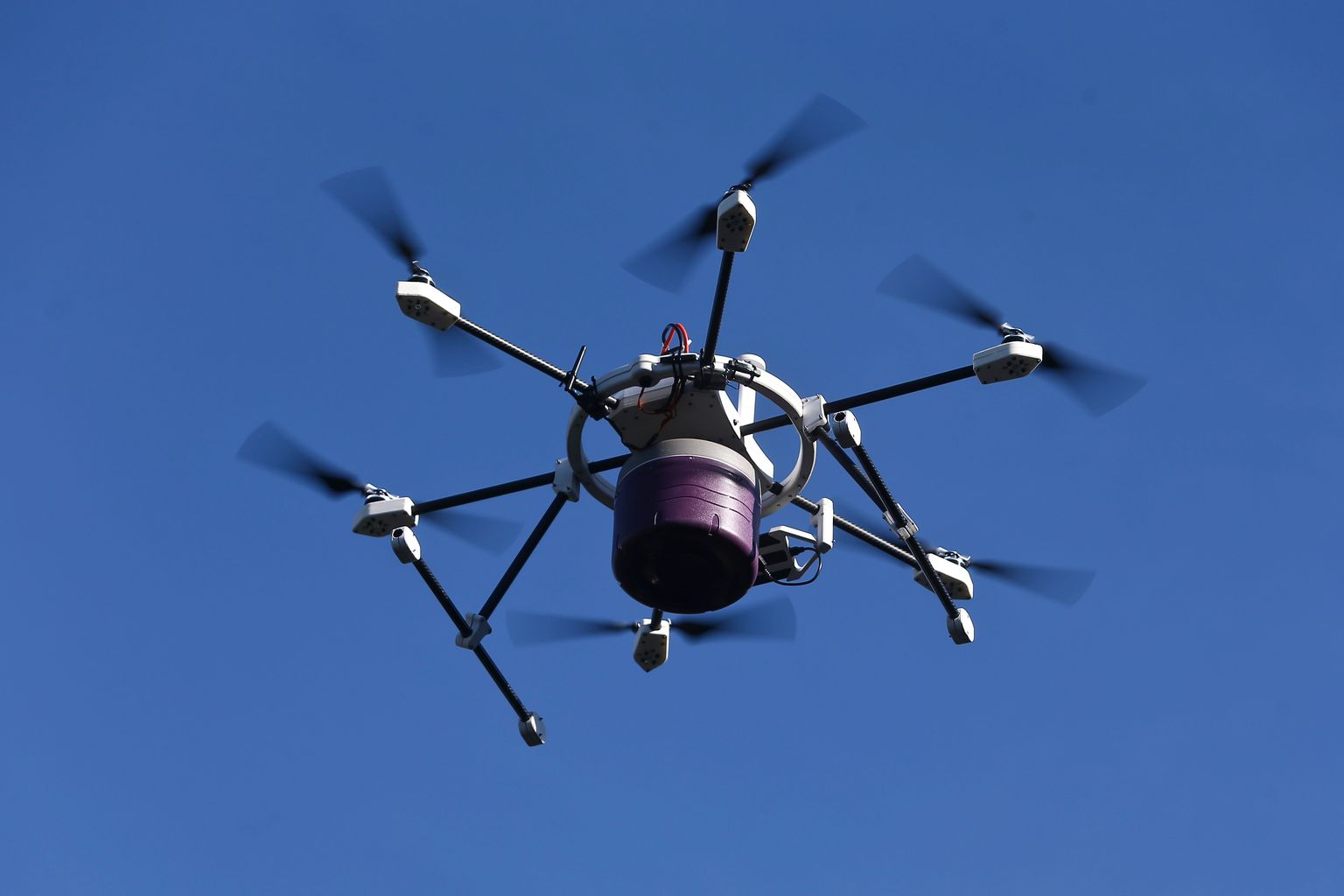
Flytrex announced on September 16, 2026 a rooftop drone docking station paired with a machine-learning system that positions idle aircraft at restaurants before customers place an order. The company says the combination cuts delivery costs by 60% and delivery time in half across its Dallas-Fort Worth network, which has completed more than 250,000 lifetime deliveries.
Background
Flytrex is a drone delivery operator that flies food and small retail orders from restaurants and stores to nearby homes, mainly across the Dallas-Fort Worth metro. Like competitors Zipline and Wing, it operates under FAA approval for BVLOS (Beyond Visual Line of Sight) flight, letting a small remote team run multiple drones simultaneously without a pilot keeping each aircraft in direct sight — the regulatory foundation that makes routine, scheduled delivery viable at commercial scale rather than a one-off demo.
The company logged roughly 50,000 deliveries between May and September 2026 alone, a pace it credits partly to the DoorDash and Uber Eats partnerships it runs in the region. That growth rate is the problem the rooftop dock is meant to solve: Flytrex's earlier model relied on dedicated launch pads at a limited number of restaurant partners, each requiring its own installation and staff training. A dock that fits on an existing roof removes that bottleneck, letting the company add partner locations faster than it can build new ground infrastructure.
How the Rooftop Dock Works
The Flytrex Dock mounts directly on a restaurant's existing roof without structural modification. A drone lands on the dock with its motors off and stays staged there until an order comes in. When it does, restaurant staff clip the food onto a hook that descends from the aircraft — no one needs rooftop access, and there's no curbside handoff to coordinate.
That design differs from how Flytrex's two biggest US rivals load aircraft:
| Company | Loading method | Requires staff on roof? | Pre-positions before order? |
|---|---|---|---|
| Flytrex | Rooftop dock, hook descends to staff | No | Yes, via AI prediction |
| Zipline | Staged at merchant "Zipping Points" | No | No |
| Wing | AutoLoader — staff place package curbside | No | No |
Zipline already stages aircraft at merchant partner sites, including a Chipotle pilot in Rowlett, Texas, and Wing's AutoLoader lets staff set packages down for autonomous pickup. Neither uses demand forecasting to move drones into position before an order exists — that piece is what Flytrex is betting on as its differentiator.
The Predictive AI Positioning System
Flytrex's second piece of the announcement is a machine-learning model that analyzes historical order patterns, time of day, and location-level demand signals across its network to move idle drones to the restaurants most likely to get an order next — before that order is placed. "Our system knows where the next order is coming from before it's placed," Flytrex CEO Amit Regev said.
The company argues the prediction model, not the dock hardware, is the durable competitive advantage: a rooftop dock is a relatively simple mechanical design that a rival could copy within a year, but a demand model trained on months of network-specific ordering data is much harder to replicate quickly. Flytrex has not published the model's accuracy rate or disclosed how it handles demand spikes the model doesn't anticipate, such as a sudden weather event or a local sports game driving unusual order volume.
Scale and Rollout
Flytrex says installation is underway at more than 100 dock locations across Dallas-Fort Worth, with a target of 60 active delivery sites in the metro by mid-2027. The company did not disclose a baseline delivery cost or time against which the 60% cost cut and 50% time reduction are measured, so the figures should be read as company-reported improvements over its own prior rooftop-free process rather than an audited, third-party benchmark.
Flytrex has not said whether the dock design will expand to markets beyond Texas. The company ran an earlier drone delivery service in Holly Springs, North Carolina, from 2021 until it wound the program down in July 2025 over local airspace limits — a reminder that scaling a delivery network depends as much on airspace access as on the hardware itself.
What This Means for Drone Pilots
For remote pilots and drone operations staff, Flytrex's dock network points to where delivery jobs are headed: less time flying individual missions manually and more time managing fleets of pre-positioned aircraft through software, with the FAA's BVLOS waiver structure as the operating constraint that determines how many drones one remote pilot can supervise. Restaurant and retail partners considering a drone delivery contract should ask providers directly what "cost reduction" and "delivery time" claims are benchmarked against, since none of the three major US operators — Flytrex, Zipline, or Wing — has published independently audited figures. Outside the US, operators watching this space should note that a rooftop-dock model depends on dense partner networks and predictable order patterns, so it likely spreads first to other dense-suburban metros before smaller markets.
FAQ
More like this
Related Articles
Drone Halts Flights at Reagan National for 20 Minutes
An unauthorized drone forced a 20-minute halt of all Reagan National Airport flights on Sept. 16, 2026 — here's what happened and…
Vantis BVLOS Network Tests Medical Drone Delivery
CVS and Thales flew live BVLOS drone demos on Vantis, North Dakota's statewide network, testing medical delivery and crop-spraying…
Joby Completes First 3,199-Mile Autonomous US Flight
Joby's J208 flew 3,199 miles across the US with zero pilot input on September 18, 2026 — the first fully autonomous coast-to-coast…