EU Drone Strategy Only 20% Done, 10 States Tell Council
Ten EU member states have told the bloc's transport ministers that only about 20% of the EU Drone Strategy 2.0 has been delivered and that U-space, the planned European drone traffic system, has not materialized since 2021. Their joint paper, dated November 24, goes to the EU Transport Council on Monday, November 30, and asks for dated fixes through September 2027.
The paper is led by the Netherlands, with Belgium, Denmark, Estonia, Greece, Latvia, Luxembourg, Malta, Poland and Spain, according to DroneXL. It sits on the agenda as an any-other-business item, so ministers will discuss it but not vote.
Background: What Is the EU Drone Strategy 2.0?
The EU Drone Strategy 2.0 is the European Commission's policy framework for scaling drones and eVTOL aircraft. The Commission adopted it in November 2022 with 19 flagship actions covering airspace, regulation, and market growth.
U-space is the planned digital traffic-management layer for low-altitude drone flights. It rests on three implementing regulations from 2021 (2021/664, 2021/665 and 2021/666). According to the ten-country paper, no U-space has been established under them and there is no clear timeline for a scaled rollout.
How Much of the EU Drone Strategy Is Actually Done?
About 20% of the strategy's 19 flagship actions are complete, based on a member-state analysis cited in Council document 16177/26. Around 40% are underway and the rest have not started. The Commission's own EU Drone Summit summary, held November 9-10, did not give a completion figure.
| Status of 19 flagship actions | Share |
|---|---|
| Completed | About 20% |
| Underway | About 40% |
| Not started | About 40% |
The Commission told the summit the strategy's vision remains valid and that it will adopt an Implementation Roadmap in 2027. Transport Commissioner Apostolos Tzitzikostas said the roadmap would "address the obstacles that prevent European drone operations from reaching scale."
What Do the Ten Countries Want by 2027?
The paper asks the Commission and EASA (the European Union Aviation Safety Agency) for specific deliverables, each qualified with the word "ideally":
| Deadline | Request |
|---|---|
| February 1, 2027 | A joint Commission and member-state team to run the strategy |
| April 1, 2027 | A new, more flexible, phased U-space proposal sent to the EASA Committee |
| July 1, 2027 | An e-conspicuity strategy and a European low-altitude economy strategy |
| September 1, 2027 | Subcategories for the specific category, a more pragmatic SORA, and simpler Standard Scenarios and Pre-Defined Risk Assessments |
The specific category is the middle tier of EU drone rules, for operations that carry more risk than the open category and need an authorization. SORA (Specific Operations Risk Assessment) is the method operators use to justify those operations. The paper also asks for EASA staffing to match industry demand.
The countries note that 17 states asked the EU to reform drone rules last year without result.
Where EASA Rules Stand Now
The reform push lands while EASA is already changing the rulebook. According to DroneXL, EASA is retiring SORA 2.0 from January 1, 2027, and cutting predefined risk assessments from five to three. Its June proposal, NPA 2026-103, also includes registration from 100 grams, which we covered in EASA's proposal to cut the drone registration threshold to 100g.
What This Means for Drone Pilots
Nothing changes on the ground on November 30. The Council discussion is non-binding, so current open and specific category rules stay in force. For a refresher, see our guide to EASA drone categories.
Pilots and operators flying beyond visual line of sight in Europe are most exposed to the delay. Without U-space, BVLOS and drone delivery in the EU still depend on case-by-case authorizations, which is the gap highlighted in our FAA vs EASA BVLOS comparison.
Watch two dates. The Council discussion on November 30 shows how much support the paper has. The Commission's 2027 Implementation Roadmap is where the paper's deadlines will either appear or quietly disappear. DroneXL's analysis argues that without them there, the outcome will likely repeat last year's.
FAQ
Sources: DroneXL | European Commission | Eurocontrol U-ELCOME
More like this
Related Articles

DJI Drone Tariffs: USTR Proposes 10% More, 60% Total
USTR's Section 301 plan would add up to 10% on Chinese drones, lifting DJI duties to 60%. Here's who pays, what's still unclear, a…

Pentagon Offers $500M for Strike Drones Under $250K
The Pentagon's DIU opened a $500M prize challenge for one-way attack drones under $250,000 with 600+ nm range. Here is what bidder…
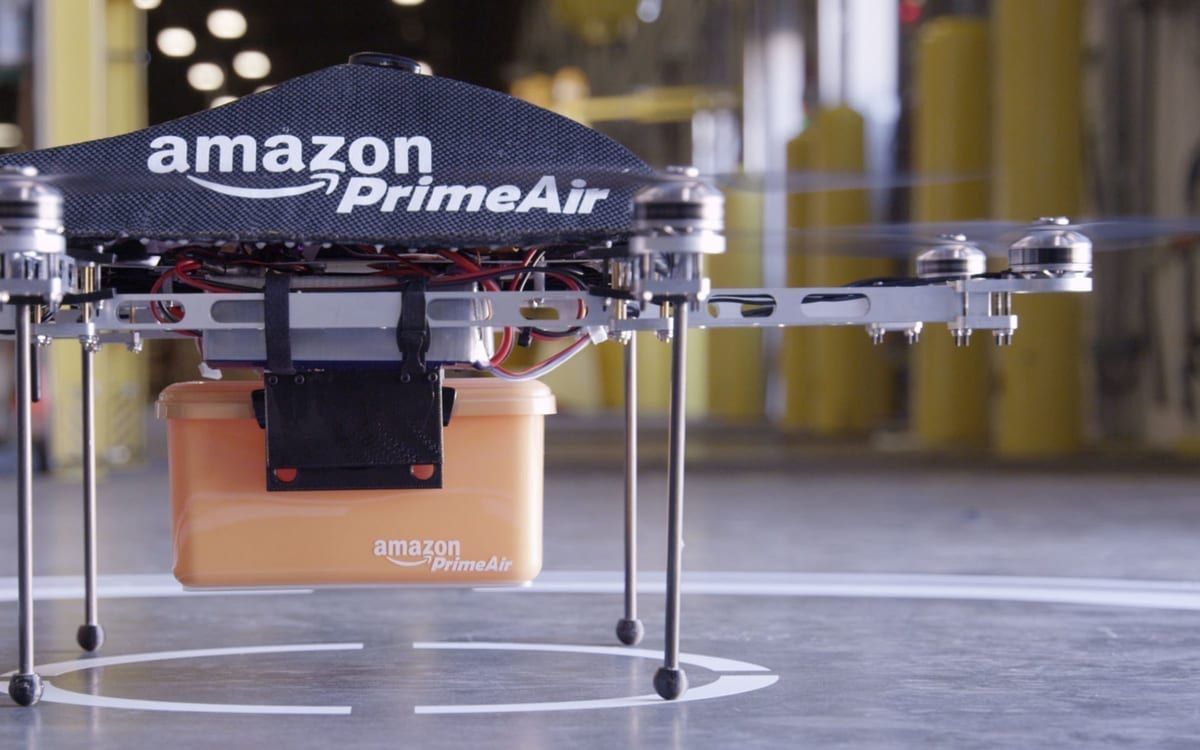
Amazon Drone Crash in Michigan: FAA Probes MK30 Incident
Amazon's MK30 delivery drone hit a fiber cable and a garage near Detroit on Nov. 20. The FAA is investigating. Here's what we know…