Elroy Air Wins $46M Army Deal for Chaparral Cargo Drone
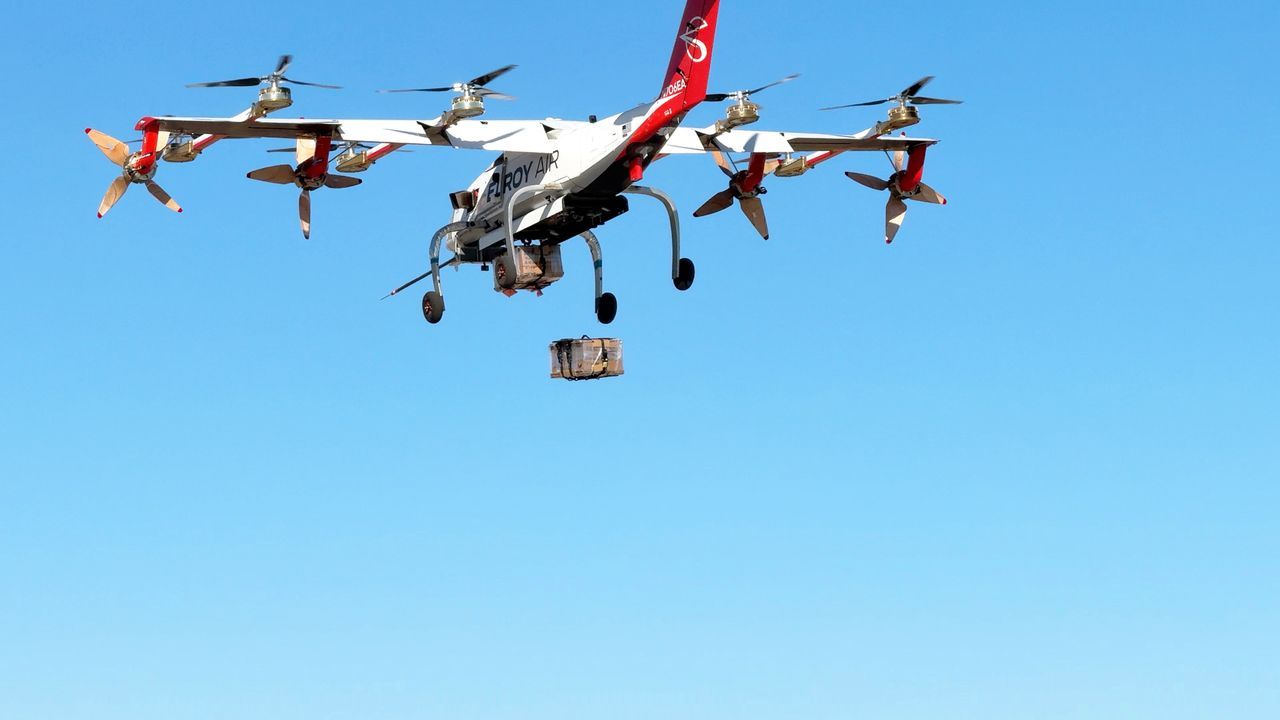
Elroy Air won a $46 million multi-year contract from the US Army on August 18, 2026, to advance its autonomous, hybrid-electric Chaparral cargo aircraft — a runway-free VTOL drone that carries 500+ pounds up to 450 miles — for "contested logistics" resupply missions, according to the company's official announcement.
Background: Why the Army Wants Runway-Free Cargo Drones
Contested logistics is military shorthand for the challenge of resupplying troops when an adversary can target roads, ports, and airfields — the kind of environment US planners have studied closely since Russia's invasion of Ukraine exposed how vulnerable traditional supply convoys are to drones, artillery, and jamming. A VTOL cargo aircraft that needs no runway or fixed infrastructure can reach small, dispersed units that trucks and cargo planes cannot.
This is not the Army's first look at Elroy Air. The new award builds on contracts the company has received over the past two years, and the Chaparral has already been demonstrated at the Army's T-REX military technology event earlier in 2026. Elroy Air is also preparing to go public via a SPAC merger with Columbus Circle Capital Corp II, backed by venture investors including DiamondStream Partners, Catapult Ventures, and Lockheed Martin Ventures — a sign the Pentagon's contested-logistics push is drawing serious private capital, not just research grants.
Inside the Chaparral: Specs and Design
The Chaparral is an uncrewed, autonomous VTOL aircraft built around a hybrid-electric powertrain — electric propulsion for reliability and control, paired with a combustion range-extender so the aircraft isn't tied to a charging station in the field.
| Spec | Chaparral |
|---|---|
| Payload capacity | 500+ lbs |
| Max range | Up to 450 miles |
| Takeoff/landing | Vertical, no runway required |
| Propulsion | Hybrid-electric |
| Payload system | Modular, interchangeable mission pods |
| Operating environment | Austere, degraded, GPS-denied |
The modular pod system lets the same airframe swap between cargo types — from resupply pallets to other mission equipment — without reconfiguring the aircraft itself, a design choice aimed squarely at the unpredictability of front-line logistics rather than a fixed delivery route.
What the New Contract Funds
According to Elroy Air, the $46 million award covers several specific upgrades to the Chaparral platform:
- Unattended delivery modes — letting the aircraft drop cargo without ground personnel present at the landing zone
- Expeditionary mobile mission planning — portable tools for planning flights in the field rather than at a fixed base
- Cyber-protected communication links — hardened data connections resistant to interception or jamming
- GPS-denied navigation — the ability to fly accurately when satellite positioning is jammed or unavailable, a capability drawn directly from lessons in electronic-warfare-heavy conflicts
- Greater onboard autonomy and field reliability — reducing the operator workload needed to run missions in harsh conditions
Manufacturing is set to begin later in 2026 through an exclusive domestic partnership with Kratos Defense & Security Solutions, giving Elroy Air a path to scale production beyond its South San Francisco flight-test operation. "This contract reinforces the critical role that heavy-lift autonomous hybrid VTOL drones will play in modern defense operations," Elroy Air CEO Dr. Andrew Clare said in the announcement.
What This Means for the Drone Industry
The Chaparral deal lands in the same window as other recent US military drone spending — including the Army's P550 reconnaissance drone contract with AeroVironment — reinforcing that procurement dollars for uncrewed systems keep flowing even as the Army rethinks how it organizes drone expertise at the unit level. For manufacturers, the specific capabilities the Army is funding here — GPS-denied navigation, cyber-hardened links, and higher onboard autonomy — signal where defense buyers expect the next generation of cargo and logistics drones to differentiate, and they typically filter down into civilian heavy-lift and delivery platforms within a few product cycles. A domestic manufacturing partner like Kratos also matters for the industry watching Washington's push toward US-built drone supply chains rather than reliance on foreign components.
FAQ
More like this
Related Articles
FAA Awards $12M for BVLOS Drone Test Research (2026)
The FAA gave $12 million to 19 BVLOS drone research projects on October 5, 2026, as its Part 108 rule sits stalled in White House…
Germany Backs Ukraine With $9.6B Drone Interceptor Deal
Germany and Ukraine signed 15 defense deals worth over $9.6B on Oct. 4, funding mass production of jet-powered interceptor drones…

Wing, Walmart Drone Delivery Hits Denver, Seattle in 2027
Wing and Walmart will launch drone delivery in Denver and Seattle in 2027, expanding toward 270 Walmart stores and 40 million US c…