AeroVironment's P550 Wins $117M Army Deal for 82 Drones
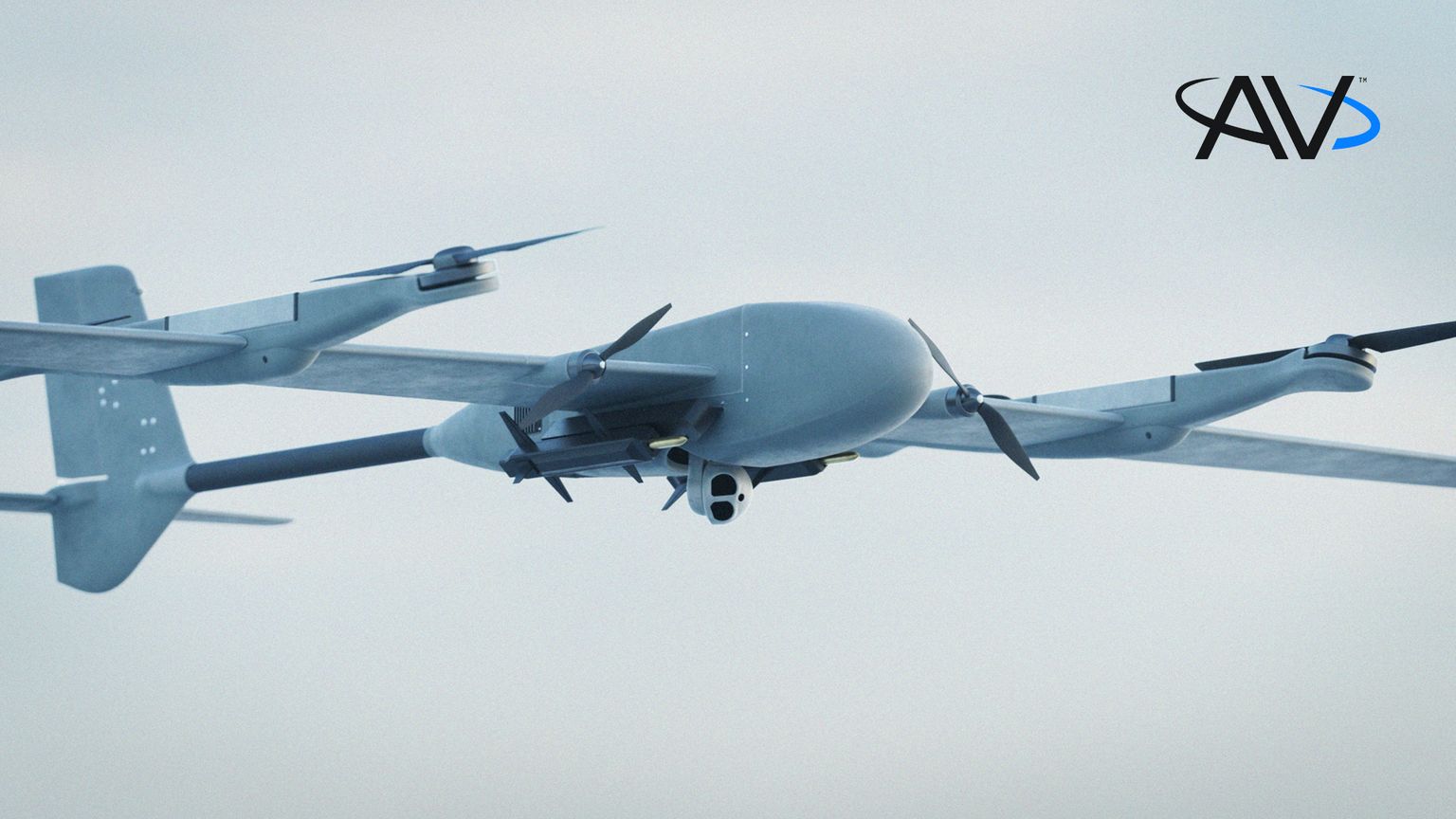
AeroVironment won a $117.3 million U.S. Army contract on July 20, 2026, to produce 82 P550 electric vertical takeoff and landing (eVTOL) drones for the service's Battalion Reconnaissance effort. The award is the P550's first full-rate production contract, deepening the Army's shift toward autonomous, battery-powered aircraft for unit-level intelligence, surveillance, and reconnaissance (ISR).
The deal was issued under a Basic Ordering Agreement (BOA) through a competitive Call for Solutions on the Army's Unmanned Aircraft Systems (UAS) Marketplace, a digital procurement platform built to speed up how the service buys vetted drone technology. AeroVironment CEO Wahid Nawabi said the award reflects a broader shift in Army buying priorities: "The P550 gives maneuver forces the ability to rapidly reconfigure, extend their reach, and deliver effects across domains."
Background
The Army has spent the past three years restructuring how infantry and reconnaissance units get their own organic drones, rather than relying on aircraft controlled at brigade or division level. At the platoon tier, the service's Short Range Reconnaissance (SRR) Program of Record already fields Skydio's X10D quadcopter, with an order for more than 2,500 units placed earlier in 2026.
The P550 targets the tier above that. Battalion Reconnaissance calls for an aircraft with longer endurance, heavier payload, and multi-mission flexibility that a small quadcopter can't match — the gap AeroVironment's Long Range Reconnaissance (LRR) submission was built to fill. The P550 is classified as a Group 2 unmanned aircraft system, the Department of Defense category covering drones between 21 and 55 pounds that fly up to 3,500 feet above ground level, one tier heavier than the Group 1 sUAS class SRR quadcopters occupy.
AeroVironment further extended the aircraft's autonomy in January 2026 through a partnership with Parry Labs, integrating the STRATIA platform to add command-and-control, autonomy, and AI-assisted mission planning to the P550's software stack.
Inside the P550: Specs and Mission Role
The P550 is built around modularity: the Army says operators can swap payloads, batteries, and mission kits in the field without tools, reconfiguring the aircraft for a different job in under five minutes.
| Spec | P550 |
|---|---|
| Classification | Group 2 autonomous eVTOL |
| Endurance | Up to 5 hours (all-battery) |
| Payload capacity | Up to 15 lb (6.8 kg), multi-sensor |
| Reconfiguration time | Under 5 minutes, tool-free |
| Missions | ISR, precision strike, electronic warfare, comms relay |
| Contract value | $117.3 million for 82 units |
| Program | Army Battalion Reconnaissance / Long Range Reconnaissance |
| Procurement route | BOA via Competitive Call for Solutions, UAS Marketplace |
Trace Stevenson, AeroVironment's president of Autonomous Systems, framed the design around unpredictable battlefield conditions: "They need systems that can adapt at the speed of the mission, not hours or days later." The 15-pound payload bay is rated for a mix of electro-optical/infrared sensors, electronic-warfare modules, and strike payloads, letting a single airframe cover roles that used to require separate aircraft.
How the Army Bought It: The UAS Marketplace
The contract mechanism matters as much as the aircraft. Rather than a traditional single-vendor acquisition program, the Army ran this award through its UAS Marketplace, a centralized platform where vetted manufacturers compete for individual task orders under a shared Basic Ordering Agreement. The Army has used the same model to rapidly field Skydio's SRR drones, and it's designed to compress procurement timelines that historically took years down to months.
For AeroVironment, the July 20 award is the P550's graduation from evaluation to full-rate production — the point where a system moves from limited testing quantities to the volume needed to actually equip battalions.
What This Means for Drone Pilots
This is a defense-acquisition story, not a Part 107 or airspace-rules story, so it changes nothing about where or how civilian and commercial pilots fly today. But it's a useful signal for anyone tracking where drone technology and investment are headed. The P550 award confirms that Group 2 autonomous eVTOL platforms — an aircraft class that blends fixed-wing endurance with quadcopter-style vertical takeoff — are moving from prototype to program-of-record status faster than in previous procurement cycles, a pattern also visible across the broader convergence of drones and artificial intelligence in both military and civilian types of drones.
Commercial eVTOL delivery and inspection platforms often inherit design lessons — battery management, tool-free payload swaps, autonomous flight software — from military programs funded at this scale. Watch whether AeroVironment or its Army customer publish more detail on the P550's autonomy stack once STRATIA integration matures; that's usually where dual-use technology starts trickling into commercial products.
FAQ
Sources: AeroVironment | GovConWire
More like this
Related Articles
Ghost Shark Sea Mines and Altius Drone Swarms Unveiled
Australia revealed Ghost Shark payloads on Oct. 19: 12 sea mines, Altius loitering-drone swarms and seabed caches. Here's what the…

China Drone Export Controls: Motors, Props From Nov 18
China will require export licenses for heavy-lift drone motors, propellers, autopilots and long-range drones from Nov 18. See what…
Ukraine 1,000-Drone Attack on Russia: What We Know
Russia says it downed 1,015 Ukrainian drones in one night as St. Petersburg's oil terminal burned. Here is what happened and what…