US Army Disbands 600-Soldier Ukraine-Style Drone Unit
The US Army is shutting down the Unmanned Assault Battalion, a 600-soldier experimental unit within the 173rd Airborne Brigade in Europe built specifically to absorb drone-warfare lessons from Ukraine. Acting Army Chief of Staff Gen. Christopher LaNeve ordered the battalion to finish a live-fire exercise in Germany this September and then revert to a standard airborne infantry role, according to CBS News.
Background
The battalion was stood up in November 2025 as one of the Army's most closely watched experiments in modern combat. For nearly a year, its paratroopers built and flew their own FPV (First Person View) drones — small, camera-equipped aircraft a pilot controls in real time through video goggles, the same low-cost weapon Ukrainian and Russian forces have used to destroy tanks, trucks and trenches by the thousands since 2022.
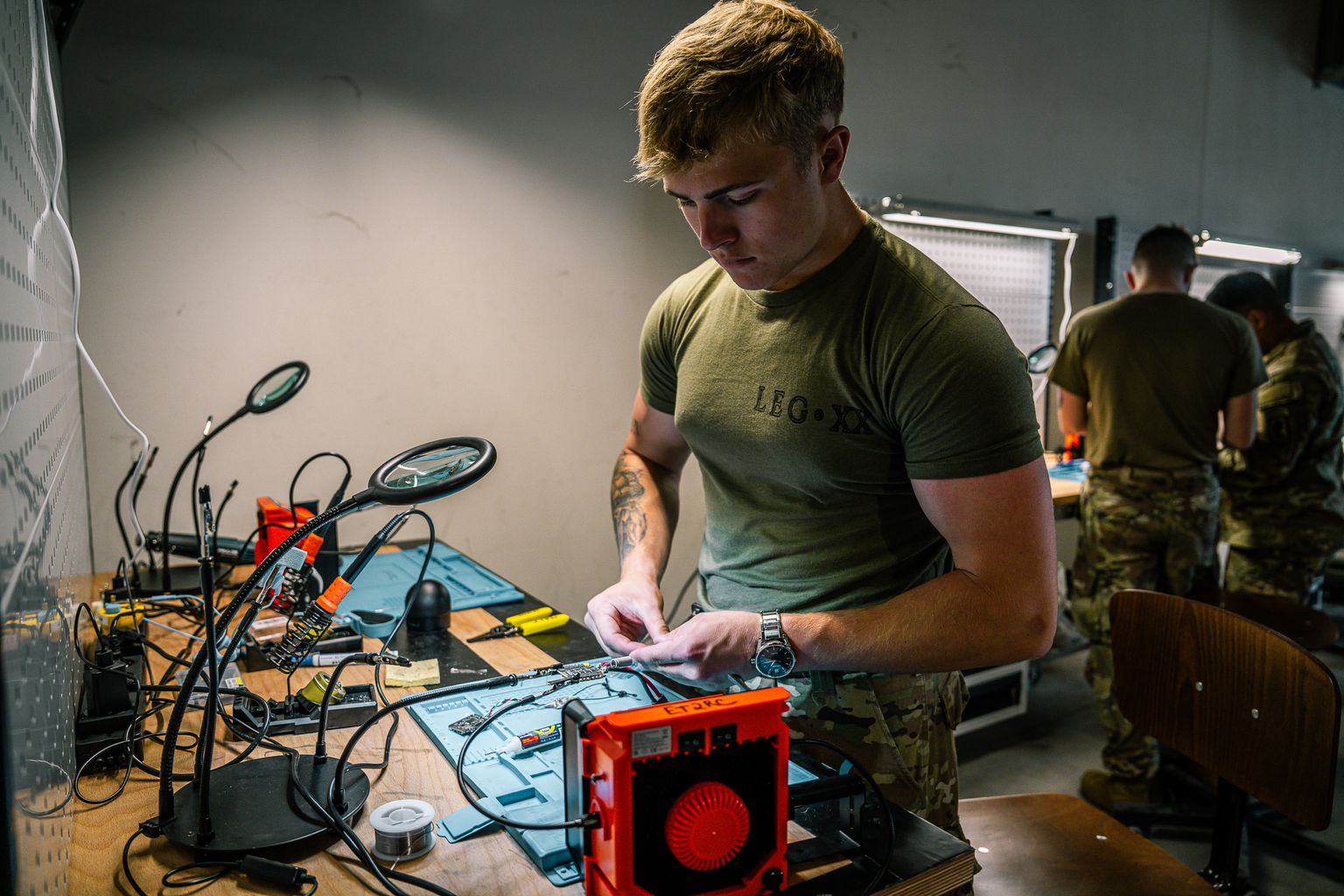
The unit's mission was to work out how a conventional US Army formation could fight with drones the way Ukraine's front-line units do: fast, cheap and improvised, rather than through the Pentagon's traditional multi-year procurement process. Soldiers built an internal FPV lab inside their barracks — soldering flight controllers, batteries and cameras onto racing-drone frames on folding tables, the kind of workshop more familiar to hobbyist FPV pilots than to a conventional airborne unit. They trained on drone recovery alongside Romanian forces, practiced countering enemy UAS in dedicated classes, and fielded a team in the US Army Europe and Africa "Best Drone Warfighter" competition earlier this year.
That hands-on, unit-level approach mirrors how Ukrainian brigades actually source and modify drones: small workshops near the front line churning out and repairing FPV airframes faster than any centralized defense contractor could. Replicating it inside a NATO-aligned US formation was seen as a live test of whether that improvisational model could be grafted onto a much larger, more bureaucratic military.
Why the Army Is Pulling the Plug
The decision traces to a leadership change rather than a verdict on drone warfare itself. The battalion was championed by former Army Chief of Staff Gen. Randy George and former US Army Europe and Africa commander Gen. Christopher Donahue — both of whom have since left their posts, with Defense Secretary Pete Hegseth firing George in April 2026. LaNeve, who succeeded George, has pushed a "back to basics" agenda for the Army built around core warfighting tasks like parachute assaults, rather than standalone specialty units.
"This Army must fight and win today," LaNeve said, explaining the shift. Once the September exercise wraps up, the 173rd's soldiers hand their findings up the chain of command for future experimentation, then return full-time to their original mission as airborne infantry.
Retired Gen. David Petraeus offered a sharply different view of where the Army should be headed, arguing the service's overall force structure — not this single battalion — is the real mismatch with modern battlefields: "What we should do is scrap the armored battalions and replace them with a drone battalion." Army Capt. Ronan Sefton, who served in the unit, put the operator's-eye case more simply: "There needs to be more drones... they need to be everywhere involved."
What This Means for the Drone Industry
Disbanding one battalion does not mean the Army is abandoning unmanned systems — officials say counter-drone testing and Ukraine-focused study continue elsewhere in the force. But it does undercut the idea that drone expertise is best organized as a dedicated specialty unit, at least for now. That has direct implications for defense drone manufacturers betting on standing military demand: the Army's own contract with AeroVironment for the P550 reconnaissance drone shows procurement dollars are still flowing, even as the Army rethinks how drone skills get distributed across its infantry rather than concentrated in one unit.
For an institution that has studied drone-saturated battlefields in Ukraine since the earliest days of that war — a conflict widely seen as the point at which small UAVs became a decisive infantry weapon rather than a niche reconnaissance tool — folding the experiment back into a conventional battalion is a notable reversal, and one likely to draw scrutiny from allied militaries watching how the US adapts its own force structure. Drone pilots and manufacturers who track the commercial spillover of military UAV research — faster autopilots, cheaper FPV components, better jam-resistant links — should expect that pipeline to slow at the unit level even if top-line defense contracts keep growing.
FAQ
Sources: CBS News | AOL/Reuters
More like this
Related Articles
FAA Awards $12M for BVLOS Drone Test Research (2026)
The FAA gave $12 million to 19 BVLOS drone research projects on October 5, 2026, as its Part 108 rule sits stalled in White House…
Germany Backs Ukraine With $9.6B Drone Interceptor Deal
Germany and Ukraine signed 15 defense deals worth over $9.6B on Oct. 4, funding mass production of jet-powered interceptor drones…

Wing, Walmart Drone Delivery Hits Denver, Seattle in 2027
Wing and Walmart will launch drone delivery in Denver and Seattle in 2027, expanding toward 270 Walmart stores and 40 million US c…