Airbility Raises $4.7M to Build Cheap Drone Interceptors
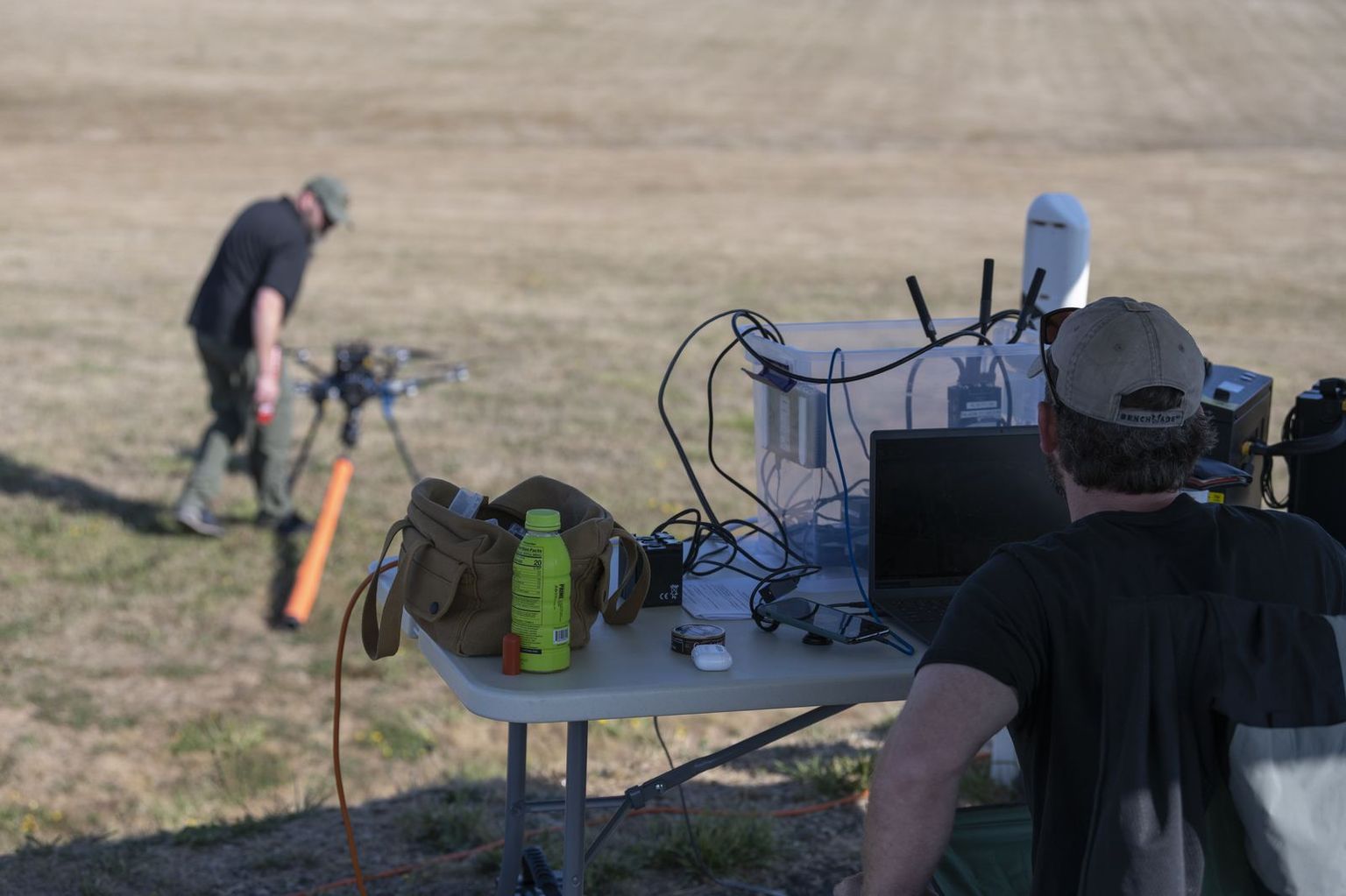
South Korean startup Airbility closed a $4.7 million Series A on September 1, 2026, led by Silicon Valley's Sazze Partners, to scale production of interceptor drones designed to shoot down hostile UAVs for a fraction of the cost of traditional air defense. The round brings Airbility's total funding to $7.6 million and arrives as militaries worldwide scramble for cheaper answers to the cheap-drone threat exposed by recent conflicts.
Background: The Economics That Started a Startup
Airbility was founded in November 2023 by a team of former engineers from South Korea's Agency for Defense Development (ADD), Hyundai Motor, and LG Electronics. Three of the company's senior technical leads each spent 25 to 31 years at ADD, where they worked on the KT-1 trainer, T-50 supersonic jet, and KF-21 fighter programs before turning to small, fast, disposable aircraft instead.
The pitch is built on a math problem that has become impossible for militaries to ignore. A hostile attack drone typically costs around $35,000 to build. A single Patriot interceptor missile used to shoot one down costs roughly $4 million — more than 100 times as much. That imbalance was on display during the 2026 Iran conflict, when air defenses on both sides burned through expensive interceptors against swarms of low-cost drones, a mismatch defense planners now call the "cost-per-kill" problem.
Airbility's answer is to fight small, cheap drones with other small, cheap drones. The company says its interceptor engagements run $50 to $3,000 depending on configuration — roughly one-tenth the price of comparable systems sold by Western competitors.
The Interceptor Fleet
Airbility's roadmap moves from simpler, already-flying hardware toward faster, more autonomous interceptors:
| Model | Type | Speed | Status |
|---|---|---|---|
| AB-U4 | 4 kg-class interceptor | — | Commercialized in 2025 |
| AB-U10 | Net-gun interceptor | ~180 km/h | Commercialization targeted late 2026 |
| AB-U60 | eVTOL "mothership" (3 m wingspan, 10 kg payload) | 200+ km/h | Launching 2027 |
| AB-U2 | Compact kinetic interceptor, deployed from AB-U60 | — | Planned H1 2027 |
| AB-U4L | Fixed-wing, launcher-deployed interceptor | ~300 km/h | Planned H1 2027 |
The AB-U60 mothership can also double as a cargo or surveillance platform, and Airbility says it flies at roughly 2.5 times the speed of typical attack drones, giving it enough of a speed margin to run down and disable a target before it reaches its objective. The system pairs the aircraft with radar, electro-optical, and infrared sensor feeds fused into a single detection-to-engagement workflow, rather than treating detection and interception as separate systems bought from separate vendors.
Series A proceeds will fund AI upgrades that let the interceptors operate autonomously in communication-denied environments — airspace where a jammed or spoofed radio link would otherwise ground a remotely piloted response — plus new production lines using in-house 3D printing and composite manufacturing.
Who's Backing It, and Where It's Headed
Sazze Partners' first defense-sector investment was in Airbility; partner Kiha Lee said the firm was drawn to "the team's experience leading indigenous aircraft programs in Korea and by the speed with which it has moved from development to flight validation." The round also drew Stonebridge Ventures, the Industrial Bank of Korea, and returning backers Samho Green Investment, Mashup Ventures, BASS Ventures, and 500 Global.
Airbility is now in discussions with counterparts in more than nine countries across the Middle East, Southeast Asia, and Latin America, including four active memoranda of understanding and partnerships underway with Thailand's NT Group and Saudi Arabia's SANAD Industrial Company. Co-CEO Jinmo Lee has said the company's status as "a Korean company with fewer geopolitical constraints" lets it sell into markets that face restrictions buying from US suppliers. The company is targeting 50 billion won (about $36 million) in cumulative revenue by 2028 and an IPO by 2029.
What This Means for Drone Pilots
None of Airbility's hardware is aimed at hobbyists, but the funding underlines a trend every drone operator should track: interceptor and detection technology aimed at small UAVs is getting cheaper and more widely deployed, not less. As airports, stadiums, and critical infrastructure sites install cheaper counter-drone systems, the practical cost of straying into restricted airspace — even accidentally — keeps rising. A drone that triggers an automated detection system near a military installation or a newly protected venue is now more likely to draw an active response, not just a fine.
Recreational and commercial pilots flying anywhere near designated no-fly zones should treat this as one more reason to check airspace restrictions before every flight, particularly in regions — Eastern Europe, the Middle East, parts of Southeast Asia — where governments are actively fielding interceptor systems in response to real incursions.
FAQ
Sources: PR Newswire | Korea Times
More like this
Related Articles
Jovistar FCC Drone Approval Dismissed: DJI Shell Exits
Jovistar, a suspected DJI front company, asked TÜV to dismiss its own FCC drone approval on Oct. 8, 2026. Here's what happened and…
Dominion Energy Adds 100 Skydio Docked Drones (2026)
Dominion Energy is adding 100 Skydio docked drones to its fleet, per CEO Adam Bry. See what the utility says it saves, how pilots…
FAA Drone Ban Along US-Mexico Border Starts Oct 2026
The FAA has banned unauthorized drones within 1 nautical mile of the entire US-Mexico border, up to 400 feet. Here is who is affec…