A2Z's Longtail Dual: BVLOS Drone Survives Battery Loss
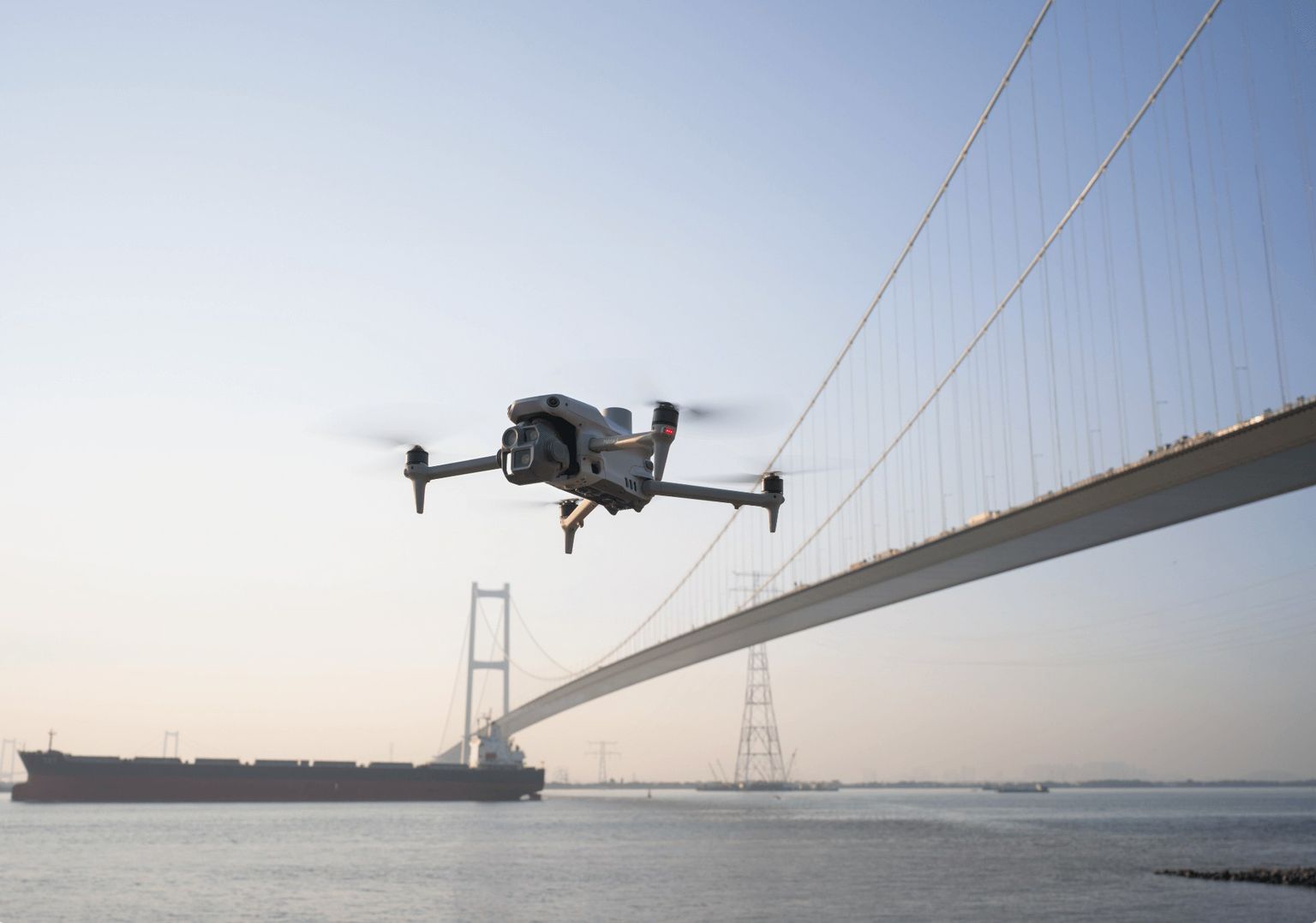
A2Z Drone Delivery unveiled the Longtail Dual on August 31, 2026, a commercial drone built around a true dual-battery system that keeps the aircraft fully controllable even if one battery fails mid-flight. The California-based company designed the redundancy specifically for BVLOS (Beyond Visual Line of Sight) missions over cities, where a single point of failure can mean a drone falling on people or property below.
The Longtail Dual ships in three configurations — a base platform, a Cargo variant for last-mile delivery, and a Patrol variant for surveillance and drone-as-first-responder (DFR) work — all built on the same hexacopter airframe with independently redundant power.
Background
BVLOS flight lets a remote pilot operate a drone beyond the point where they can see it with the naked eye, unlocking longer delivery routes, wider-area inspections, and city-scale drone networks. Regulators have historically restricted BVLOS because a lost link or a mechanical failure over a populated area carries real risk, which is why the FAA has required individual waivers for most BVLOS flights rather than a blanket rule.
That is starting to change. The FAA's proposed Part 108 rule, currently in final review at the Office of Information and Regulatory Affairs, would replace the waiver-by-waiver system with standardized BVLOS authorizations. Hardware reliability is a core part of that shift: regulators want proof that a drone can survive a single-point failure before they open urban airspace to routine BVLOS traffic. A2Z's timing lines up directly with that pressure.
For readers new to the concept, our complete guide to BVLOS flight covers how the FAA's waiver system works today and what Part 108 is expected to change.
Inside the Redundant Battery System
Most delivery drones fly on a single battery pack — if it fails, the aircraft loses power outright. The Longtail Dual instead runs two independent battery packs wired so that either one alone can keep the drone flying, landing, or returning to base if the other drops out.
| Spec | Detail |
|---|---|
| Airframe | Hexacopter, single-motor-failure tolerant |
| Max takeoff weight | Under 55 lb (25 kg) |
| Battery system | True dual-battery redundancy |
| Flight-to-charge ratio | 1:1 on A2Z AirDock (30-min flight ≈ 30-min charge) |
| Connectivity | Dual-redundant cellular links with automatic carrier switching |
| Weather rating | IPX4 (moderate rain) |
| Cargo payload | Up to 11 lb (5 kg); 5.84 lb (2.65 kg) with parachute |
| Patrol range | Up to 12 miles (19 km) per mission |
The Cargo variant adds an RDS2 winch for delivery and retrieval, downward-facing LiDAR for precision drops, and dual FPV cameras. The Patrol variant swaps the winch for a four-sensor gimbal — a 48MP camera with 11x optical zoom, a 48MP wide-angle camera, a 1,200-meter laser rangefinder, and a 640×512 thermal sensor — plus a spotlight and megaphone for public-safety use.
An onboard strobe, standby power mode, and CAN-bus motors that report real-time performance data round out the safety case A2Z is building for regulators and insurers alike.
"This new dual battery design makes a minimal tradeoff of payload capacity for added operational capability," A2Z CEO Aaron Zhang said, noting that roughly 85% of drone delivery missions carry payloads under 6 lb — comfortably within the Longtail Dual Cargo's redundant-power envelope.
Built for Waivers, Not Just Specs
A2Z designed the Longtail Dual to fit directly into existing regulatory pathways rather than wait for new ones. The company points to FAA Part 107 waivers and Part 135 air-carrier certification in the US, and to EASA SORA (Specific Operations Risk Assessment) — the European framework that scores a drone operation's risk to decide what safety case it must clear — in Europe. Redundant power is exactly the kind of mitigation SORA assessors and FAA waiver reviewers ask for when a flight path crosses over people.
Operators pair the Longtail Dual with A2Z's AirDock charging network and CloudOS fleet software, which let drones land, recharge, and relaunch without a technician on site. Multiple docks can link into a regional network, so an aircraft can hop station to station on longer routes while a remote operator supervises several missions at once — the same dock-to-dock model FAA and EASA rulemaking increasingly assumes for scaled BVLOS operations. For the certification path operators still need to fly BVLOS today, see our guide to the FAA Part 107 license.
What This Means for Drone Pilots
For commercial operators pursuing BVLOS waivers, the Longtail Dual is a signal of where hardware requirements are heading: redundancy is becoming table stakes, not a premium option. Public-safety agencies running drone-as-first-responder programs get a purpose-built Patrol variant with thermal and long-range optics rather than a repurposed inspection drone. Delivery operators get a path to insurable, over-people flight without waiting on Part 108's final text.
The launch also matters for pilots outside the US. Because A2Z built the Longtail Dual against EASA SORA from the start, European operators evaluating specific-category BVLOS operations gain a redundant-power option without needing a US waiver history first. Operators in other markets with SORA-aligned frameworks, including the UK and parts of Asia-Pacific, should expect the same documentation to transfer.
FAQ
More like this
Related Articles
FCC Files Sealed Pentagon DJI Letters in Ban Fight
The FCC filed eight Pentagon letters on DJI under seal and says its ban did not rely on them. Here is what Section 1709 means and…
Skydio ISR Command Lets 1 Soldier Fly 2 X10D Drones
Skydio ISR Command lets one soldier fly two X10D drones and pass target grids to strike platforms up to F-16s. See what launched a…
DJI Dock 4 Launch: 25-Second Battery Swap, No FCC Grant
DJI Dock 4 launched Oct. 14, 2026 with a 25-second battery swap and the 59-minute Matrice 5TD. Here are the specs, the missing FCC…