Skydio ISR Command Lets 1 Soldier Fly 2 X10D Drones
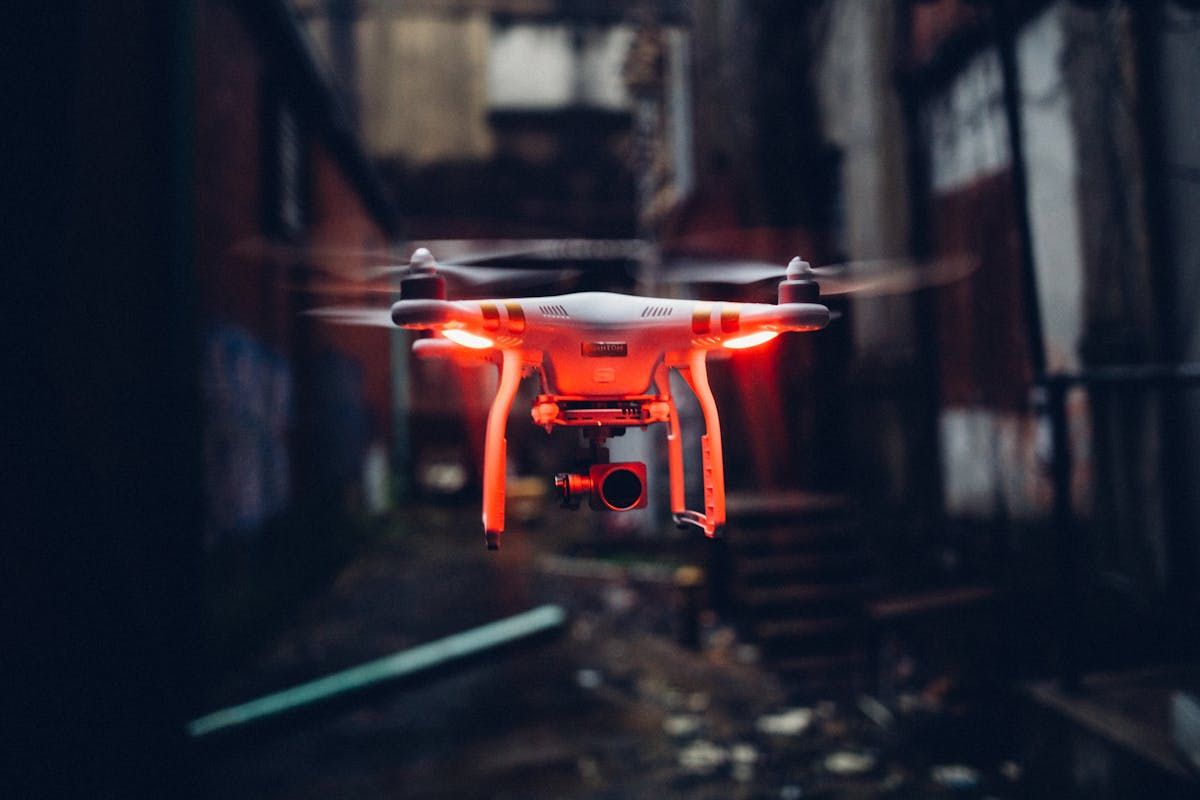
Skydio ISR Command is new software, launched October 13, 2026, that lets one soldier fly two X10D drones from a single controller and share target tracks across Army tactical networks. Skydio says the X10D can hand target locations to platforms ranging from one-way attack drones to F-16s. It is available now, with no price published.
Skydio introduced the product during a livestream from the Association of the U.S. Army (AUSA) 2026 meeting in Washington, according to DroneXL.
What Is Skydio ISR Command?
Skydio ISR Command is a TAK-native software layer for the X10D, the company's military reconnaissance drone. ISR (Intelligence, Surveillance and Reconnaissance) means collecting information on targets and terrain. TAK (Team Awareness Kit) is the map-and-chat system U.S. forces use to share positions and markers.
The software runs on the Skydio Controller, so markers and chat sync with other TAK users without a second device. Skydio's launch post and product page describe the goal as moving from one pilot per drone to one operator managing several aircraft.
CEO Adam Bry wrote on X on October 14 that the software "breaks the 1:1 pilot:drone ratio to enable scalable 1:many operations."
How Does the Two-Drone Battery Relay Work?
When the first X10D runs low on battery, ISR Command prompts the operator to ready a second drone. The second aircraft flies itself out and takes over once both drones see the target. The operator confirms the handoff with one tap, and the first X10D returns home.
Other workflow features reported at launch:
- Objectives arrive as TAK markers before the drone is powered on.
- The X10D launches in under 40 seconds.
- Onboard cameras let it navigate when GNSS (satellite navigation) is jammed or spoofed.
- Subject tracking locks onto vehicles or people, and a feature called Shadow follows a moving vehicle.
Skydio's launch post specifies two aircraft per operator. The product page says autonomy lets each operator fly more aircraft but gives no number.
Can the X10D Pass Target Grids to F-16s?
Skydio says yes. Target locations are embedded in live video using MISB ST 0601 (STANAG 4609) for static targets and MISB ST 0903 for moving targets, which are standard military video-metadata formats. After a target is confirmed, the operator passes the grid, and the camera stays on it for battle damage assessment.
| Spec | Detail (per Skydio) |
|---|---|
| Aircraft | X10D, 4.72 lb (2.14 kg) |
| Operators per launch post | 1 operator, 2 drones |
| Target-location range | Out to 3.1 miles (5 km) on live video |
| Launch time | Under 40 seconds |
| Network integration | TAK, Army NGC2 track sharing |
| Price | Not published |
Skydio claims the X10D is the smallest unmanned aircraft system on the market capable of delivering precise target locations to strike platforms. The company says it shares tracks with the Army's Next Generation Command and Control system (NGC2). In June, the Army picked Anduril to lead the NGC2 common data layer baseline, which runs on Anduril's Lattice and Palantir's Foundry, per Breaking Defense.
Background: Why the Army Wants 1:Many Drone Control
In March, the Army ordered more than 2,500 X10Ds in an order worth more than $52 million, which Skydio called the largest single-vendor tactical small-drone order in Army history. Army Secretary Daniel Driscoll told senators in May that Ukraine's Delta system puts every drone and shooting platform on one network, and the Army's does not.
In September, Col. Gregory Merkl, the Army's Drone Dominance director, said trained pilots, not hardware, are now the gap. ISR Command targets that gap by letting fewer pilots cover more airspace.
ISR Command is the fourth product in Skydio's Command software line, after DFR Command and the Asset and Security Commands launched at Ascend on September 23, the same event that introduced the F10 Lightrunner fixed-wing drone.
Skydio's Weapons Policy Question
Nothing in the ISR Command materials puts a weapon on the X10D. Skydio's Engagement and Responsible Use Principles, dated July 13, 2020, still state the company will not put weapons on its drones and pledge opposition to fully autonomous lethal weapons.
DroneXL notes that Army soldiers dropped live grenades from an X10D in 2025 tests, and that Bry told The Verge in June he had gotten some things wrong on weapons. The outlet argues Skydio should update the 2020 page.
What This Means for Drone Pilots
ISR Command is a military product and is not aimed at hobbyists or most commercial operators. The trend matters beyond defense, though: autonomy that lets one operator supervise several aircraft is the same capability public safety and enterprise teams want for dock-based programs, as seen in Skydio's 1,070-dock deployment milestone.
Pilots comparing platforms can see where Skydio fits in our guide to the best professional drones. Operators interested in how autonomy and GPS-free navigation work can start with how a drone works.
FAQ
Sources: DroneXL | Skydio | Breaking Defense
More like this
Related Articles
DJI Dock 4 Launch: 25-Second Battery Swap, No FCC Grant
DJI Dock 4 launched Oct. 14, 2026 with a 25-second battery swap and the 59-minute Matrice 5TD. Here are the specs, the missing FCC…
DJI Phantom 4 Pro V2 Service Ends Oct. 31: Owner Guide
DJI ends Phantom 4 Pro V2 repairs and support on Oct. 31, 2026. Here is what stops, what still works, and what owners should do be…
Zipline Drone Delivery Live in Round Rock, 5,000 Spots
Zipline drone delivery began in Round Rock, Texas on Oct. 9, 2026, with 5,000 early-access spots. Here's who can order, what it co…