SkyDrive's eVTOL Air Ambulance Aims for 10-Min India Runs
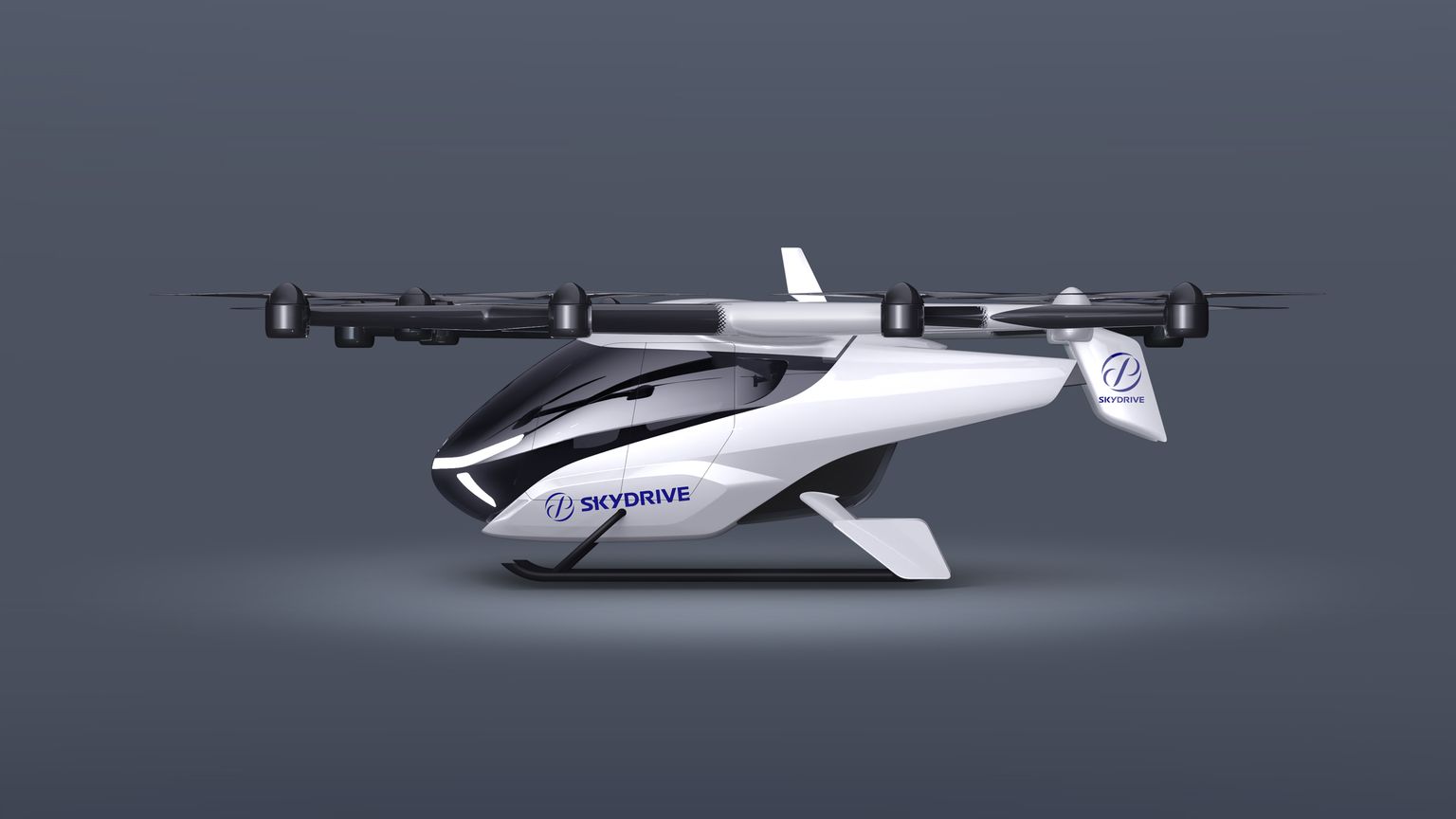
Japanese eVTOL developer SkyDrive, Air India, and Suzuki Motor Corporation announced on August 25, 2026, that their joint feasibility study for medical air logistics in India has advanced to a route-evaluation phase, targeting Mumbai and Delhi flights that could cut emergency organ and radioisotope transport times from up to 90 minutes by ground to as little as 10.
Background
The route evaluation builds on a memorandum of understanding the three companies signed on July 31, 2026, to jointly study whether eVTOL (electric vertical takeoff and landing) aircraft can move time-critical medical cargo faster than ambulances stuck in India's notoriously congested city traffic. SkyDrive is the aircraft developer behind the SD-05, a compact two-seat eVTOL that flew publicly at Expo 2025 Osaka and is also being developed as a piloted air taxi for Japan. Air India, the flag carrier owned by the Tata Group, and Suzuki, the Japanese automaker with one of the largest manufacturing footprints in India through Maruti Suzuki, bring local infrastructure and regulatory relationships to the project.
India has been steadily opening its airspace to new aerial-logistics use cases: the country's civil aviation authority, the DGCA (Directorate General of Civil Aviation), has already approved BVLOS drone delivery corridors in states including Telangana, Uttarakhand, and Gujarat. The SkyDrive study extends that momentum from small unmanned drones to a larger, potentially piloted eVTOL platform built for higher-value, time-sensitive medical cargo rather than routine parcels.
What Was Announced
The three partners identified three priority routes and use cases for their evaluation, each targeting a specific failure point in India's current ground-based medical logistics:
| Route | Use case | Ground time | Projected eVTOL time |
|---|---|---|---|
| Mumbai manufacturing plant → hospitals | Radioisotope delivery for cancer diagnostics/therapy | Hours-sensitive, short half-life | Not yet specified |
| Delhi NCR, inter-hospital | Organ and emergency medical transport | 30–90 min | 10–15 min |
| Delhi (near Indira Gandhi Int'l Airport) | Aircraft parts logistics (AOG response) | Delayed by traffic congestion | Not yet specified |
The first route addresses one of the most time-sensitive problems in oncology logistics: radioisotopes used for cancer diagnosis and treatment decay quickly and must reach hospitals from a Mumbai manufacturing site before they lose therapeutic value. The second route targets Delhi's chronic traffic, which the companies say pushes inter-hospital ambulance transport for transplant organs and emergency cases to 30–90 minutes — a window an eVTOL could compress to 10–15 minutes. The third focuses on aircraft-on-ground (AOG) situations, using an eVTOL to move replacement parts between collection hubs and maintenance bases near Delhi's Indira Gandhi International Airport faster than a delivery van can navigate the surrounding traffic.
No commercial launch date, aircraft configuration, or pricing has been announced. The companies said the work now requires closer coordination with Indian government and regulatory authorities before any of the three routes can move from feasibility study to real flights.
Why This Isn't Just Another Delivery-Drone Story
Unlike the small delivery drones covered elsewhere on this site, SkyDrive's SD-05 sits in the same aircraft class as Archer's Midnight and Joby's aircraft — a full-scale, VTOL platform originally designed to carry people, not a multirotor package drone. Repurposing a passenger-capable eVTOL for medical cargo suggests SkyDrive sees a faster regulatory and commercial path through logistics missions than through crewed passenger air taxi service, where certification timelines in most countries still stretch years out.
It also signals that India — a market usually associated with small BVLOS drone corridors for rural delivery — is emerging as a serious testbed for higher-capacity eVTOL logistics, backed by a flag carrier and a major industrial manufacturer rather than a startup alone. If Mumbai or Delhi routes reach operational status, India would join a small group of markets, alongside the US and Rwanda's Zipline network, running dedicated aerial medical-logistics service at scale.
What This Means for Drone Pilots
SkyDrive's SD-05 falls outside the small unmanned aircraft category that most Part 107-style commercial drone pilots operate under — it's a larger, potentially piloted eVTOL requiring its own certification track through Indian aviation authorities. But the underlying trend matters to anyone flying medical or logistics missions: regulators worldwide are increasingly comfortable carving out dedicated low-altitude corridors for time-critical aerial cargo, whether that's a small quadcopter moving blood samples or a passenger-scale eVTOL moving organs. Operators working in medical drone delivery, infrastructure inspection, or BVLOS logistics in any market should expect more of this kind of airspace-sharing precedent as aviation authorities get more comfortable separating cargo aircraft from passenger traffic. For background on how the broader eVTOL category works and how it compares to conventional drones, see PickDrones' guide to eVTOL air taxis; for more on how aerial platforms are already saving lives in healthcare settings, see Drones in Medicine.
FAQ
Sources: DRONELIFE | Urban Air Mobility News
More like this
Related Articles
FCC Vote on China Test Labs: 82% of Devices (Oct. 29)
The FCC votes Oct. 29 to end recognition of mainland China test labs on Dec. 1, 2028. Here's what the draft order says and what it…

FAA Order 7200.23E: Tower Drones Fly Above LAANC Grids
FAA Order 7200.23E lets Part 107 pilots inspect towers above LAANC grid altitudes without a tower call. Here are the new limits an…
FAA Part 107 Test Adds Chart Questions Oct. 26 (2026)
The FAA Part 107 knowledge test adds image-based chart questions on October 26, 2026, and they are not in the supplement. Here is…