CENTCOM Launches Falcon Strike Attack Drone Task Force
U.S. Central Command announced Task Force Falcon Strike on August 13, 2026, the first multinational, multi-domain attack drone unit in the Middle East. Led by CENTCOM commander Adm. Brad Cooper, the task force fuses air, sea-surface, and undersea one-way attack drones operated jointly by U.S. forces and regional partners, expanding on the smaller Task Force Scorpion Strike created in December 2025.
Background
Falcon Strike arrives during the sixth month of a regional war involving Iran, allied militias, the United States, Israel, and Arab Gulf states — a conflict that has pushed cheap, mass-produced drones to the center of combat operations. One-way attack drones, also called loitering munitions or kamikaze drones, are uncrewed aircraft or vessels that fly or sail to a target and detonate on impact, rather than returning to base like a reconnaissance drone.
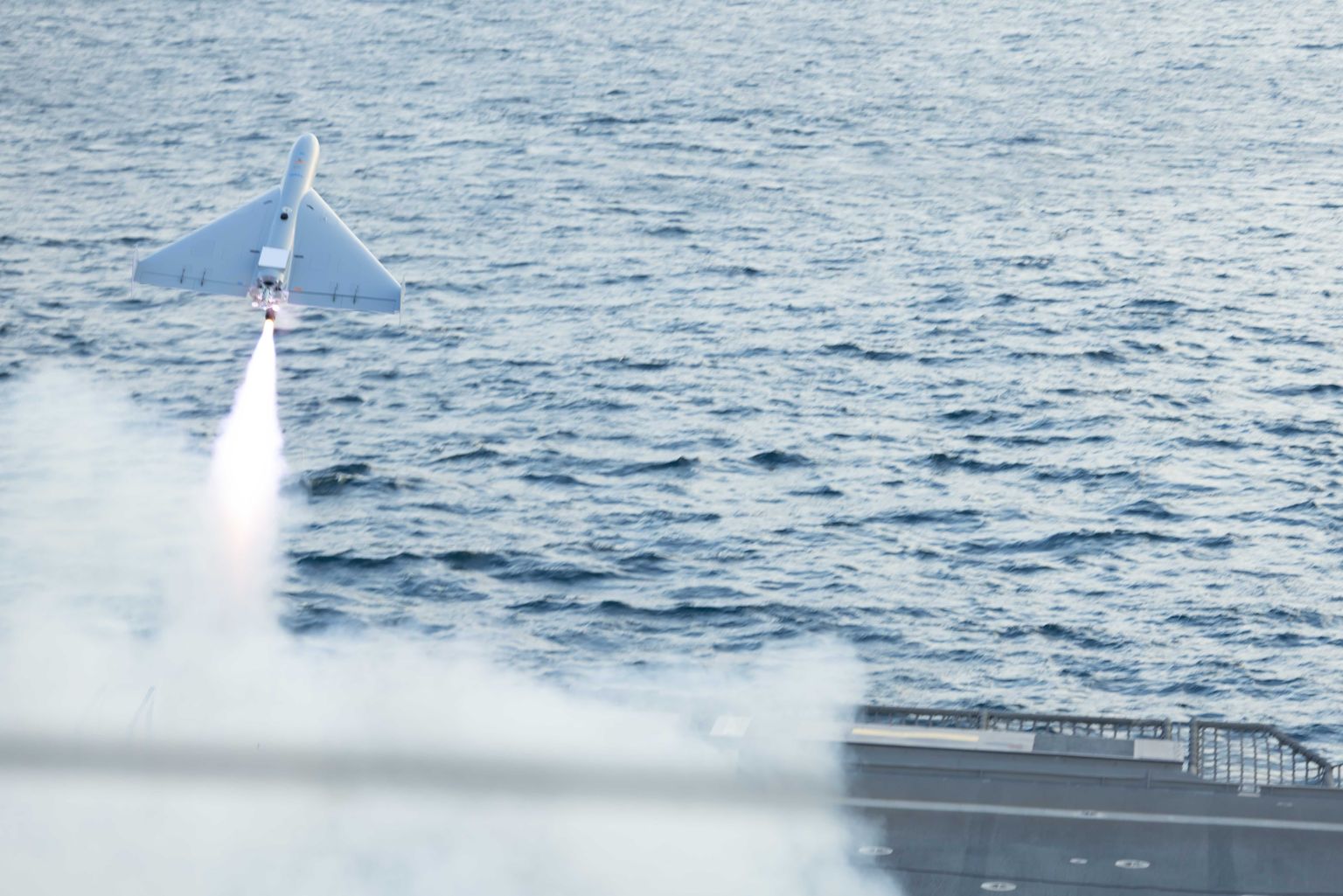
CENTCOM built its first dedicated one-way attack squadron, Task Force Scorpion Strike, in December 2025. That unit's signature weapon is LUCAS (Low-Cost Uncrewed Combat Attack System), a U.S. reverse-engineered version of Iran's Shahed-136 FPV-style strike drone. On December 16, 2025, a LUCAS drone launched from the flight deck of the littoral combat ship USS Santa Barbara in the Arabian Gulf — the same platform pictured launching in this article's cover photo.
What Falcon Strike Adds
Falcon Strike extends Scorpion Strike's single-domain playbook into three domains at once: air, sea surface, and sub-sea. Confirmed platforms operating under the CENTCOM drone umbrella include:
| System | Domain | Role |
|---|---|---|
| LUCAS | Air | One-way attack drone, reverse-engineered from the Shahed-136 |
| GARC | Sea surface | 16-foot unmanned surface vessel |
| Corsair | Sea surface | Unmanned surface vessel used in the July 2026 strike on Iran's Bandar Abbas port |
U.S. Special Operations Command Central (SOCCENT), based at MacDill Air Force Base, Florida, leads the task force's staff and helped stand up Scorpion Strike before it. "Integrating and deploying our new capabilities together will help us rapidly realize the new possibilities that are on the horizon," Cooper said in the CENTCOM announcement.
CENTCOM said it is "still in the process of consulting and officially inviting" regional partners to join Falcon Strike and declined to name which nations have signed on or are expected to. The goal, according to the command, is a "unified multi-domain, multinational deterrent" that lets allied forces contribute their own drone innovations rather than relying solely on U.S. hardware.
Why Now
The timing tracks a broader pattern in 2026 defense spending: militaries are converting wartime drone lessons into standing budget lines rather than one-off purchases. The U.S. Department of War folded nearly all its drone programs into a single $75 billion acquisition office in July 2026, and the United Kingdom committed $6.6 billion to military drones the same month. CENTCOM's own justification is munitions economics: a Shahed-136-style airframe costs a fraction of a cruise missile, letting the command sustain a higher operational tempo against Iranian-linked targets without depleting more expensive stockpiles as quickly.
Falcon Strike also signals that the "one-way attack drone" concept — long associated with lower-cost adversary systems like the Shahed-136 — has become a standard U.S. and allied capability rather than a niche response. Pairing air, surface, and sub-sea drones under one command lets CENTCOM strike the same target set from multiple directions simultaneously, complicating enemy air-defense and detection efforts.
What This Means for Drone Pilots
Falcon Strike is a military task force, not a change to civilian airspace rules — it does not alter FAA, EASA, CAA, or CASA regulations, and no recreational or commercial drone pilot needs to do anything differently. The task force operates in Middle East combat zones under military authority, entirely separate from the civilian drone regulatory system that governs Part 107 pilots, hobbyists, and commercial operators worldwide.
The indirect effect runs through the supply chain. Standing military drone task forces like Falcon Strike create sustained demand for airframes, guidance electronics, and autonomy software, and the same underlying technology increasingly crosses over into civilian mapping, inspection, and delivery drones — a dynamic covered in our guide to how artificial intelligence is reshaping autonomous flight. Readers who want the broader context on how military drones differ from consumer and commercial airframes can see our guide to the different types of drones on the market today.
FAQ
Sources: DefenseScoop | Military Times
More like this
Related Articles

Australia's New CASA Rules Ease Large Drone Certification
From September 29, CASA lets large drones over 150kg use any airworthiness certificate or fly without one, opening new paths for c…
Lowe's Launches Drone Delivery: Tools in 20 Minutes
Lowe's is now the first US home improvement chain offering drone delivery, using Wing and DoorDash to get tools and paint to your…
Matternet Unveils M3: 11-lb Drone, 10-Mile Range
Matternet unveiled the M3 autonomous drone delivery platform on Sept. 28, 2026: 11-pound payload, 10-mile range, new dock, and a 2…