BRINC Raises $125M to Put a 911 Drone on 80K Roofs
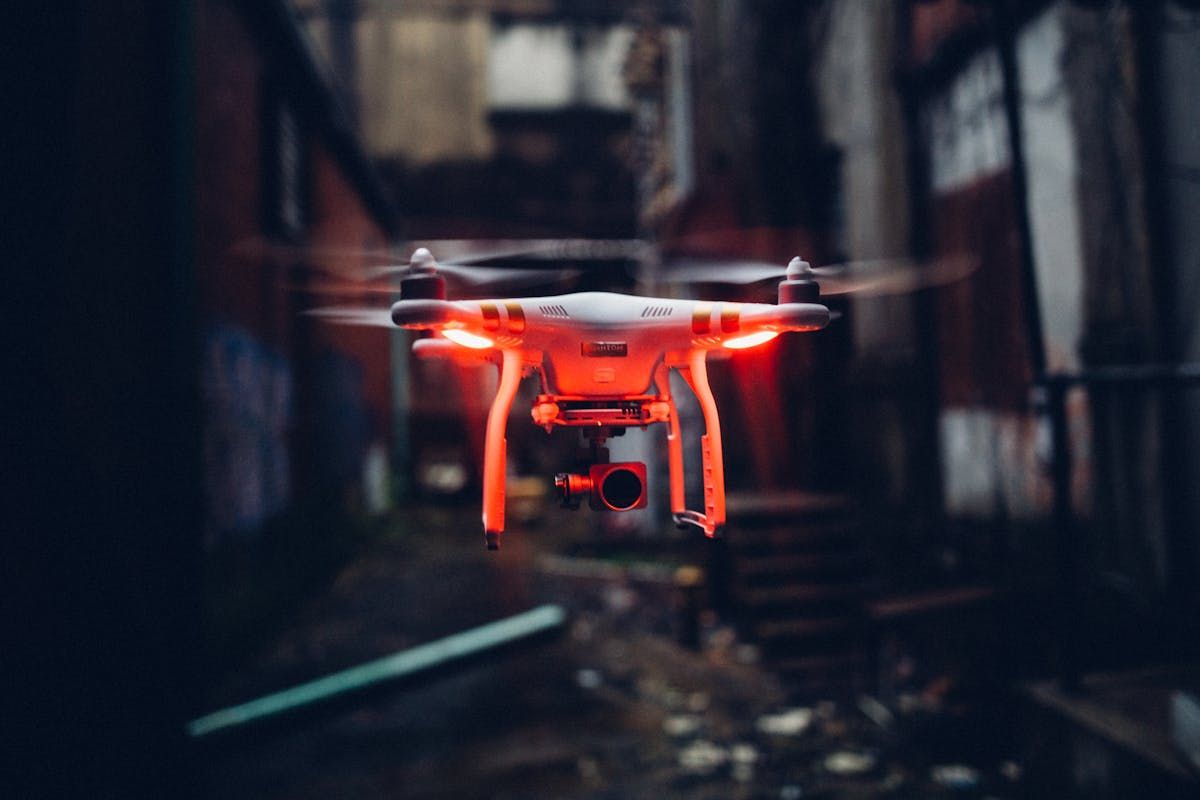
BRINC Drones closed a $125 million funding round led by Motorola Solutions on July 14, 2026, pushing its total capital raised past $250 million. The Seattle-based startup builds 911 response drones that launch automatically from rooftop docks, and it plans to use the new capital to reach all 80,000 US police and fire stations.
Background: What Drone as First Responder Means
DFR (Drone as First Responder) is the practice of launching a docked drone the instant a 911 call comes in, so it reaches the scene and streams live video before officers or firefighters arrive on foot or by car. A remote operator authorizes each flight from an operations center, and the drone returns to its dock on its own to recharge.
BRINC, founded by CEO Blake Resnick, has built its business almost entirely around this model. According to DroneLife, the company now serves more than 900 public safety agencies and equips over 20% of SWAT teams nationwide, with recent contracts signed by the Los Angeles Fire Department and the St. Louis Police Department. BRINC says its Responder drone reaches an active scene in roughly 70 seconds.
This new round follows a $75 million raise roughly a year ago that established what BRINC called a "strategic alliance" with Motorola Solutions — the maker of most US police radio and dispatch systems. Motorola's decision to lead this second round, rather than just partner commercially, signals it now sees drone dispatch as core infrastructure alongside radios and 911 call handling.
Where the $125 Million Goes
BRINC says the capital will fund three things: expanding US-based manufacturing, launching new products, and scaling sales and deployment operations. The company plans to move into a new factory by the end of 2026 that will be three times larger than its current facility, increasing production capacity to meet demand from public safety agencies.
The investment follows a year of rapid growth. BRINC tripled its revenue in 2025 and quintupled its monthly production capacity over the same period, according to DroneLife. In 2026, the company has signed nearly four times as many contracts as in the same period the previous year.
Other participants in the round include venture firm Index Ventures and Figma founder and CEO Dylan Field, according to DroneXL.
Guardian and BRINC's Product Lineup
BRINC sells three main drone platforms, each aimed at a different part of a 911 response. Guardian, unveiled on March 24, 2026 with Motorola Solutions, is pitched as a helicopter replacement: it carries Starlink connectivity for beyond-line-of-sight links and roughly 8 miles (13 km) of operational range.
| Drone | Role | Key spec |
|---|---|---|
| Responder | Fastest time on scene | ~70 seconds to arrival |
| Lemur 2 | Indoor/structure entry | Built for confined spaces |
| Guardian | Helicopter replacement | ~8 mi (13 km) range, Starlink-linked |
"Every second matters in an emergency," Resnick said, describing the drones as a way to put eyes on a scene before first responders physically arrive.
Why Now: DJI Restrictions Reshape the Market
The timing is not incidental. The FCC added foreign-made drones, including new DJI models, to its Covered List in December 2025, effectively blocking newly authorized DJI hardware from entering the US market. That decision, roughly seven months before this round closed, has given American manufacturers like BRINC and Skydio a procurement advantage with public agencies that previously bought Chinese-made drones by default.
Skydio, BRINC's closest competitor in the DFR-dock market, separately announced in July 2026 that its own autonomous Dock system had passed 1,070 installations across three countries. Motorola's bet on BRINC suggests the DFR market is now large enough, and politically favored enough, for a legacy public-safety vendor to back a single supplier at scale rather than stay neutral between rivals.
What This Means for Drone Pilots
For remote pilots and public-safety drone operators, BRINC's expansion points toward more paid DFR positions inside police and fire departments — typically remote operators monitoring multiple docks rather than line-of-sight visual observers. Programs like these increasingly rely on FAA BVLOS waivers, since BVLOS (Beyond Visual Line of Sight) authority is what lets one operator legally launch and monitor a drone from a dock miles away.
Agencies evaluating a DFR purchase now face a market with at least two well-funded, US-based suppliers — BRINC and Skydio — competing on autonomy and fleet management software rather than just hardware. That software increasingly leans on AI-driven autonomy to handle obstacle avoidance and flight planning without a pilot manually flying the aircraft. Pilots building a public-safety drone career should expect DFR operator certifications and dock-management skills to matter as much as traditional stick-and-rudder flying.
FAQ
Sources: DroneLife | DroneXL | Motorola Solutions Newsroom
More like this
Related Articles
DJI Phantom 4 Pro V2 Service Ends Oct. 31: Owner Guide
DJI ends Phantom 4 Pro V2 repairs and support on Oct. 31, 2026. Here is what stops, what still works, and what owners should do be…
Zipline Drone Delivery Live in Round Rock, 5,000 Spots
Zipline drone delivery began in Round Rock, Texas on Oct. 9, 2026, with 5,000 early-access spots. Here's who can order, what it co…
FCC Vote on China Test Labs: 82% of Devices (Oct. 29)
The FCC votes Oct. 29 to end recognition of mainland China test labs on Dec. 1, 2028. Here's what the draft order says and what it…