Drones Deliver Ford Parts in Michigan: First US Program
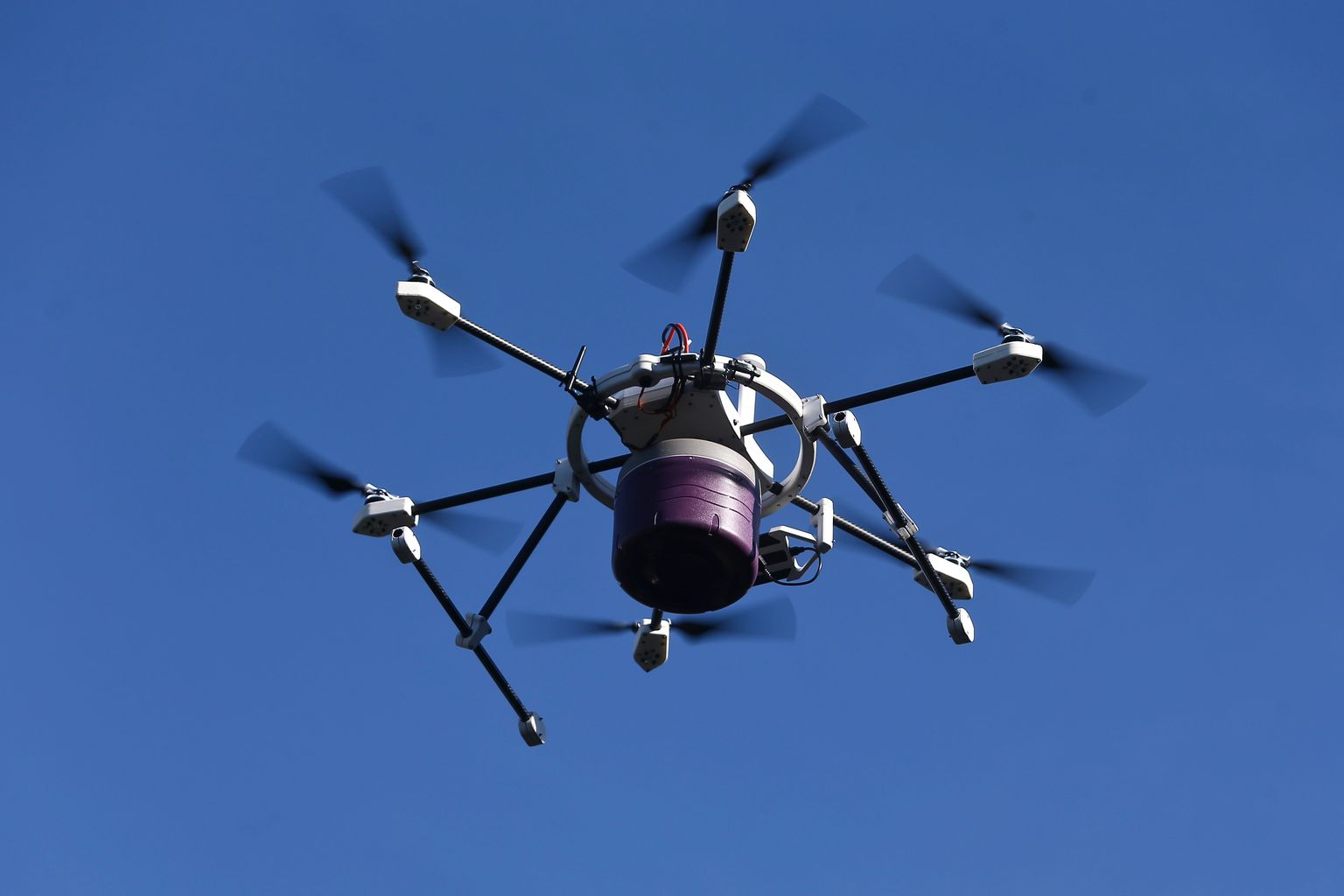
Jack Demmer Ford in Wayne, Michigan, launched commercial drone deliveries of automotive parts across a 12-mile radius of Metro Detroit on August 25, 2026, becoming one of the first US car dealerships to run a live, state-funded drone route. Drone maker blueflite supplies the tiltrotor aircraft, Airspace Link manages the airspace, and a $740,000 Michigan grant funded the buildout.
The launch moves the Ann Arbor–Detroit drone corridor from test flights into daily commercial operation — and it does so using a narrow regulatory pathway that keeps blueflite's aircraft flying despite a broader federal freeze on foreign-linked drone hardware.
Background
Michigan awarded the $740,000 grant in July 2025 through its Advanced Air Mobility (AAM) Activation Fund, a state program that pays for real-world drone and eVTOL corridors rather than lab demonstrations. Jack Demmer Automotive Group — a family-owned dealership operator founded in 1957 — partnered with Brighton-based blueflite and Detroit-based Airspace Link to build the route, with Southfield's Centrepolis Accelerator coordinating the effort.
It took 13 months from grant award to the first demonstration flight on August 25, 2026, largely because blueflite's aircraft had to clear a federal review process created specifically to let a small number of foreign-linked drone makers keep flying in the US.
How Blueflite's Cobalt 461 Sidesteps the Federal Drone Freeze
The FCC's Covered List bars the import and sale of drones and components linked to specified foreign entities on national-security grounds, and it has already forced several manufacturers out of the US market in 2026. Blueflite avoided that fate through a narrower exception: a "Conditional Approval," which lets the Department of War (DoW) — the renamed US Department of Defense — vouch for a specific aircraft's supply chain and exempt it from the Covered List.
The DoW granted blueflite's Cobalt 461 platform a Conditional Approval on May 26, 2026, alongside two other manufacturers, Verity AG and Air VEV. The FCC then added the Cobalt 461 to its list of aircraft cleared under Section 44807 — the federal authorization drone operators use to fly commercially outside the FAA's standard Part 107 rules — on June 1, 2026. According to DroneXL, only 15 aircraft have cleared the Conditional Approval pathway since it opened in December 2025, making the Cobalt 461 part of a small, closely watched group.
The Cobalt 461's specifications appear tuned to that regulatory line: it has a maximum takeoff weight of 54.98 pounds, just under the 55-pound threshold that triggers stricter FAA oversight, and carries a 7.6-pound payload. Tyler Bruder, blueflite's business development lead, said the tiltrotor design "keeps the cargo bay steady in flight," and the company plans to eventually fly the aircraft remotely from its headquarters rather than with an on-site pilot.
Inside the Ann Arbor–Detroit Delivery Route
The service radius extends 12 miles from Jack Demmer's Ford and Lincoln dealerships in Wayne, targeting the high-demand parts that most often stall a repair — the difference between a customer waiting a day or waiting an hour. Airspace Link's AirHub Drone Operations Management System, built by a company that holds SOC 2 and ISO 27001 security certifications, handles airspace coordination and safety compliance for each flight.
For now, flights stay within visual line of sight (VLOS) — meaning a ground crew member can see the aircraft throughout the delivery — rather than BVLOS (Beyond Visual Line of Sight), where the drone flies farther than an operator can visually track it. The FAA's Part 108 rule, which would formally open US airspace to routine BVLOS delivery, remains unfinished. Mark Hatfield, Jack Demmer's parts manager, said the dealership's near-term goal is proving the route can support multiple flights a day before the program scales further.
Justine Johnson, chief mobility officer at Michigan's Office of Future Mobility and Electrification, framed the launch as validation of the state's broader AAM strategy: "Drone delivery of automotive parts in metro Detroit demonstrates that Michigan's supply chain strengths and our growing aerial mobility ecosystem are a powerful combination." Centrepolis Accelerator CEO Dan Radomski added that the program is "a perfect example of what that looks like in practice" for translating state AAM funding into working infrastructure.
What This Means for Drone Pilots
The Jack Demmer program is a template other regions can copy, and it flags three things worth tracking:
- State AAM grants are producing live routes, not just pilots. Michigan's Activation Fund model — pay for a specific corridor, require commercial operation, not a demo — is a pattern likely to spread to other states courting drone logistics companies.
- The Conditional Approval pathway is now a viable path to market. With only 15 aircraft cleared since December 2025, manufacturers with foreign-linked supply chains have a narrow but real route to keep selling into the US if they can secure a DoW or DHS determination.
- Sub-55-pound aircraft remain the practical sweet spot. Staying under that threshold avoids a heavier layer of FAA oversight, and expect more delivery drones engineered specifically to that limit as B2B logistics programs scale.
The auto-parts use case also extends drone delivery's reach beyond the food and medical logistics that have dominated headlines this year — see our guide to what BVLOS means for commercial drone operations for the regulatory framework this and future delivery programs will eventually operate under. Michigan's approach also mirrors the broader push toward urban air mobility infrastructure, where states are funding real corridors ahead of nationwide rules.
FAQ
Sources: DroneXL — Michigan Ford Dealer Flies Auto Parts By Drone On $740,000 Grant | dbusiness — Auto Parts Delivery via Drones Takes Off at Jack Demmer Automotive Group
More like this
Related Articles
DJI Phantom 4 Pro V2 Service Ends Oct. 31: Owner Guide
DJI ends Phantom 4 Pro V2 repairs and support on Oct. 31, 2026. Here is what stops, what still works, and what owners should do be…
Zipline Drone Delivery Live in Round Rock, 5,000 Spots
Zipline drone delivery began in Round Rock, Texas on Oct. 9, 2026, with 5,000 early-access spots. Here's who can order, what it co…
FCC Vote on China Test Labs: 82% of Devices (Oct. 29)
The FCC votes Oct. 29 to end recognition of mainland China test labs on Dec. 1, 2028. Here's what the draft order says and what it…