Archer's New ZEE AI Model Predicts Airport Collisions
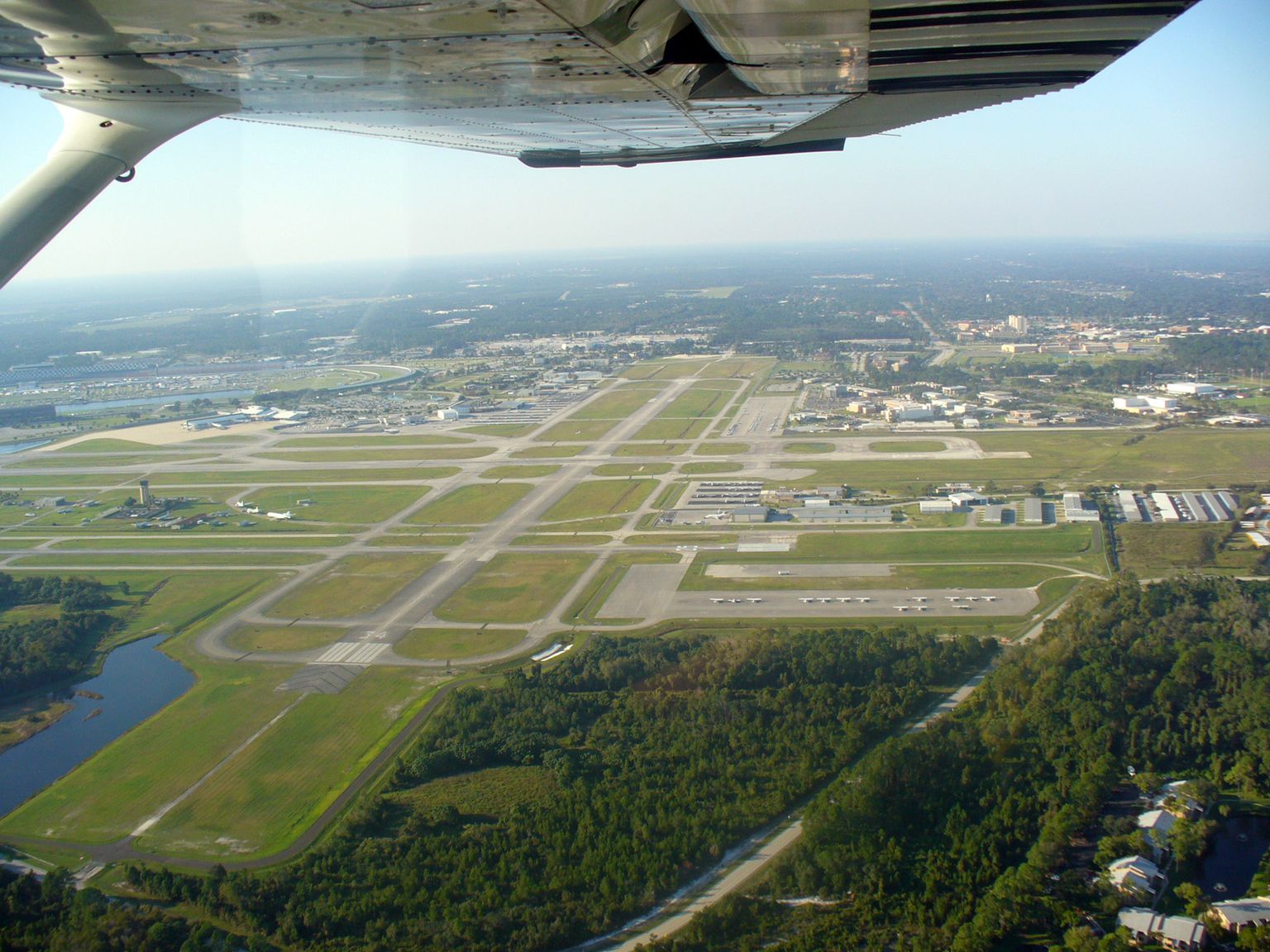
Archer Aviation unveiled ZEE, an aviation-specific AI foundation model, on August 5, 2026. ZEE predicts aircraft movements on airport runways and taxiways minutes before they happen, and Archer says it's built to support drones, air taxis, and commercial airliners alike — not just its own Midnight eVTOL program.
The announcement comes as Archer's own Midnight air taxi remains in the final phase of FAA type certification, alongside rival Joby Aviation. But ZEE is a standalone software play: a foundation model — a large AI system trained on broad data and adaptable to many tasks, similar in structure to the large language models behind chatbots — built specifically for aviation rather than flight hardware.
Background
Predicting where aircraft will be on the ground seconds or minutes from now is one of aviation's oldest safety problems. Runway incursions and other surface conflicts — planes, ground vehicles, or personnel occupying the same space at the wrong time — account for 30–40% of global aviation accidents, according to Archer. Air traffic controllers currently rely on radar returns, radio calls, and their own situational awareness to catch these conflicts, a workload that keeps growing as US airspace absorbs new categories of aircraft.
More than 44,000 flights cross the US National Airspace System every day, and the Department of Transportation has committed roughly $20 billion to modernizing the air traffic control infrastructure that manages them. That modernization push is also making room for entirely new aircraft types — eVTOL air taxis like Archer's own Midnight, and eventually higher volumes of drone traffic — that today's radar-and-radio systems weren't designed to track at scale.
What Is Archer's ZEE AI Model?
ZEE is an aviation-specific foundation model that fuses six data streams — ADS-B position data, air traffic control radio communications, airport maps and charts, aircraft state data, terrain, and weather — into a single predictive system. Archer says ZEE can forecast where an aircraft, vehicle, or drone will be on an airport surface several minutes into the future, rather than reacting only to where it is right now.
The model draws on Archer's proprietary data pipeline, built around a global network of more than 6,000 ADS-B receivers, and pairs it with a vision transformer — an AI architecture originally developed for image recognition — trained on high-resolution satellite imagery to recognize runways, taxiways, and aprons. Rather than output one predicted flight path, ZEE uses a technique called conditional flow matching to generate a range of plausible near-future trajectories at once, then flags when two of those paths could intersect.
"ZEE provides a highly accurate window into the future, transforming raw observations into predictive context, helping identify path anomalies and cross-route conflicts before they develop into safety risks," said Mario Srouji, Archer's VP of AI Products, in the August 5 announcement. Archer has begun testing ZEE at its home field, Hawthorne Airport in Los Angeles County, with early results the company says track closely against real-world flight data. Broader validation is now underway.
Why ZEE Matters Beyond Archer's Own Aircraft
Unlike most of Archer's public announcements, ZEE isn't tied to the Midnight aircraft. Archer describes it as a unified aviation intelligence platform meant to run across air taxis, uncrewed aircraft, commercial airliners, and airspace management systems generally — a deliberate break from selling AI as a feature bolted onto one company's aircraft.
"We are building an intelligence layer for the entire aviation system with ZEE," Archer CEO Adam Goldstein said. "The company that owns the data and the foundation model will help lead the aviation industry into the next era of flight." Srouji framed the moment in blunter terms: "Aviation is having its GPT moment. Our current national air system is built on legacy technology, and is ripe for AI innovation."
Archer says ZEE can run fully onboard an aircraft without an internet connection, or through a server-hosted system — a design choice aimed at both small uncrewed aircraft with limited connectivity and larger fleets that need centralized traffic prediction. Roughly 100 AI researchers and engineers now work on the model at Archer, according to the company.
What This Means for Drone Pilots
ZEE isn't a product a hobbyist or Part 107 commercial pilot can buy or fly with today — it's infrastructure aimed at airports, air navigation service providers, and aircraft manufacturers. But it matters for drone pilots for two reasons.
First, Archer explicitly lists uncrewed aircraft among ZEE's target use cases, alongside air taxis and airliners. If airports and air navigation providers adopt trajectory-prediction tools like ZEE, drones operating under BVLOS (Beyond Visual Line of Sight) waivers near controlled airspace could eventually be tracked and deconflicted by the same systems — the kind of automated traffic management the FAA's pending Part 108 rule anticipates. See our BVLOS explainer for how that approval process works today.
Second, ZEE is a visible example of a broader shift already reshaping the drone industry: AI models trained to predict and deconflict aircraft behavior in real time, rather than just detect obstacles after the fact. For more on how AI is already used across consumer and commercial drones — from obstacle avoidance to autonomous flight planning — see our guide to drones and artificial intelligence.
Recreational pilots flying near Hawthorne Airport, where ZEE is under active testing, shouldn't expect any change to current airspace rules; the system augments controller awareness rather than replacing existing procedures.
FAQ
Sources: Archer Aviation Investor Relations | Aviation Week
More like this
Related Articles
Pentagon Drone Gauntlet II Results: Neros Tops Both Boards
Neros topped both Pentagon Drone Gauntlet II boards on September 19, 2026, as UK rival Skycutter fell to fourth in the Pentagon's…
EASA Proposes Cutting Drone Registration to 100g in 2026
EASA's new Opinion 06/2026 would drop the EU drone registration and Remote ID threshold from 250g to 100g, matching the UK. Here's…
Flytrex Drones Now Predict Your Order Before You Do
Flytrex's rooftop drone docks and AI positioning system now predict food orders before they're placed, cutting delivery costs 60%…