Traveling with a Drone on a Plane: Rules and Tips
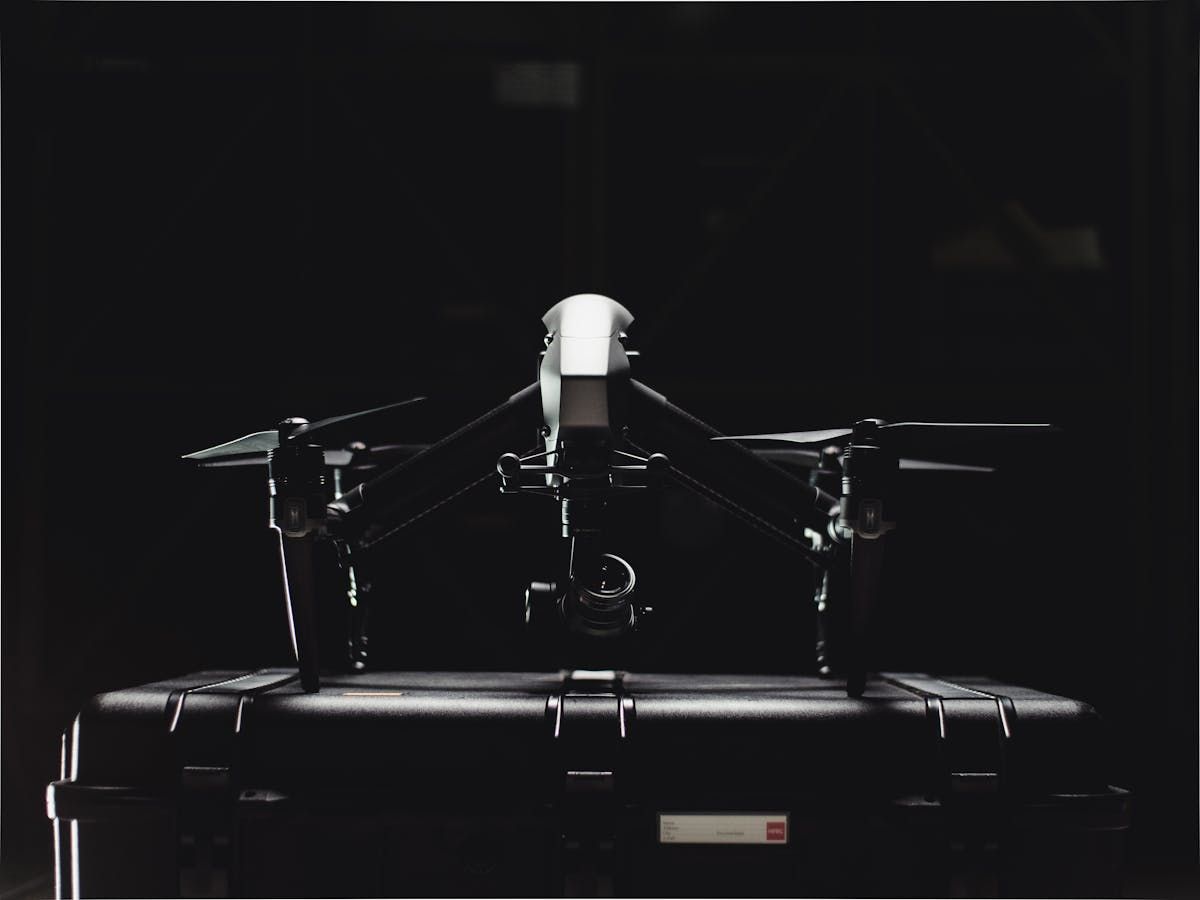
You just got a new drone and the first trip is already on the calendar. Then comes the question: can I bring the drone in my carry-on? Do the batteries go in checked luggage? The short answer: the drone body can travel in either carry-on or checked baggage, but LiPo batteries must go in your carry-on - no exceptions.
That rule comes from the IATA (International Air Transport Association), which classifies lithium batteries as dangerous goods - and every airline globally follows this framework. Ignoring these rules can result in confiscation at security, a denied boarding, or in the worst case, civil fines. This guide covers everything you need to know before flying with your gear.
Can I Bring a Drone on a Plane? Understanding the Basic Rules
The drone body itself - the aircraft frame, without the battery - has no special restrictions. You can check it in your luggage or carry it on, as long as it fits within the airline's size and weight limits.
What changes the equation entirely is the battery. Every LiPo (Lithium Polymer) battery - the technology used in virtually all consumer and professional drones - is specially regulated in civil aviation. The reason: if physically damaged or short-circuited, lithium batteries can ignite and, in extreme cases, cause a fire. When that happens in the cargo hold, the crew has no access to intervene. In the passenger cabin, the problem can be contained.
The rule is therefore clear: loose lithium batteries (outside the device) must travel in carry-on baggage, never in checked luggage. Both the TSA and IATA enforce this consistently.
LiPo Batteries on Planes: IATA Watt-Hour Limits
IATA categorizes lithium batteries by capacity in Wh (watt-hours), not mAh or volts. The DJI Mini 4 Pro has a battery rated at 47.49 Wh; the DJI Air 3S reaches 96.5 Wh; the DJI Mavic 3 Pro has a 77.6 Wh battery.
Carry-on rules for passengers:
| Capacity | Quantity allowed | Airline approval |
|---|---|---|
| Up to 100 Wh | No limit | Not required |
| 100 to 160 Wh | Maximum 2 batteries | Required in advance |
| Above 160 Wh | Prohibited on passenger flights | - |
In practice, the vast majority of consumer drones - DJI Mini, Air 3, Mavic 3, Phantom 4 - use batteries well under 100 Wh, eliminating any extra bureaucracy. Larger professional drones, such as some agricultural or inspection models, may have batteries that require prior airline approval.
How to convert mAh to Wh: multiply the capacity (in mAh) by the nominal voltage (in V) and divide by 1,000. Example: a 5,000 mAh battery at 15.4V → 5,000 × 15.4 ÷ 1,000 = 77 Wh. If the battery packaging doesn't list Wh, this calculation is the fastest way to find out.
For quick reference, here are the most popular models and their battery status:
| Model | Battery | Wh | Status |
|---|---|---|---|
| DJI Mini 4 Pro | Intelligent Flight Battery Plus | 47.49 Wh | Unrestricted |
| DJI Mini 3 Pro | Intelligent Flight Battery Plus | 47.36 Wh | Unrestricted |
| DJI Air 3S | Intelligent Flight Battery Plus | 96.5 Wh | Unrestricted |
| DJI Air 3 | Intelligent Flight Battery Plus | 96.5 Wh | Unrestricted |
| DJI Mavic 3 Pro | Intelligent Flight Battery Plus | 77.6 Wh | Unrestricted |
| DJI Avata 2 | Intelligent Flight Battery | 25.3 Wh | Unrestricted |
| DJI Phantom 4 Pro V2 | Intelligent Flight Battery | 89.2 Wh | Unrestricted |
| DJI Matrice 300 RTK | TB60 | 130 Wh | Airline approval required |
All popular consumer models fall well below the 100 Wh threshold. Enterprise and agricultural drones may require approval or may even be prohibited on regular commercial passenger flights.
These rules are universal - IATA's Dangerous Goods Regulations are adopted by every IATA member airline worldwide, including all US carriers. The FAA aligns with these standards for domestic flights. For international travel, the same Wh limits apply on every airline you'll encounter.
What Goes in Carry-On vs. Checked Baggage
Carry-on (required or recommended):
- All loose LiPo batteries
- Remote controller (has internal lithium cells - check the Wh)
- FPV goggles and other accessories with internal batteries
Checked baggage (permitted):
- Drone body without battery
- Propellers
- Chargers without internal batteries
- Carrying case or backpack
A good practice is to remove the battery from the drone before checking the case. If you're carrying the drone in your bag - which is recommended for compact models like the DJI Mini 4 Pro, which easily fits in a backpack - the battery attached in its compartment is not an issue, as long as the drone is powered off and spare batteries aren't loose.
For those carrying multiple batteries, use individual silicone protective covers or electrical tape on the terminals. Loose batteries in pockets or in contact with metal objects are a real short-circuit hazard.
How to Pack Your Drone for the Flight
Whether carry-on or checked, proper packing protects your equipment and prevents issues at security screening.
Backpack or hard case? Drone-specific backpacks, such as those in the DJI lineup, make it easier to pass through security - agents recognize the form factor and the gear stays organized. Hard cases (Pelican, Nanuk, SKB) are the best option for checked baggage: they resist impacts, pressure changes, and moisture.
At the security checkpoint: drones are unusual items for airport scanners. Expect to be called for a manual inspection. Keep the gear accessible, remove batteries from the bag along with your other electronics, and calmly explain what it is if asked. TSA agents are generally familiar with drones, but compact folded models can look ambiguous on the X-ray.
Propellers: no restrictions, can go in any baggage. Remove them from the drone for transport - it reduces bulk and prevents damage to the blades.
Gimbal protector: never travel without the gimbal cover. Turbulence or a bump in luggage can destroy the camera or stabilizer, even inside a case.
Travel mode: some drones have a "travel mode" option in the app that locks the initialization to prevent accidental power-on. The DJI Fly app offers this in advanced settings - useful to prevent the drone from activating inside your bag during the flight.
Battery charge level: IATA recommends transporting lithium batteries at partial charge - around 30 to 50% capacity. A fully charged battery has more stored energy available in the event of a failure. In practical terms: avoid boarding with batteries freshly charged to 100% if you can help it. The DJI Fly app has a configurable automatic discharge function for exactly this purpose.
Rules at US Airlines
US carriers follow TSA and IATA guidelines on lithium batteries. Here's how the major airlines communicate the rules:
American Airlines: accepts lithium batteries up to 100 Wh without restriction in carry-on. Batteries between 100 and 160 Wh require prior approval from customer service. Recommends individual packaging for loose batteries to prevent short circuits.
Delta Air Lines: follows the same IATA limits. Advises informing check-in staff when traveling with batteries above 100 Wh. Batteries may never be placed in checked baggage.
United Airlines: same policy. Recommends confirming rules for each specific route at time of booking, as codeshare flights operated by international partners may have additional restrictions.
In all cases, inform the check-in agent that you are traveling with LiPo batteries. This isn't required for batteries under 100 Wh, but it avoids surprises at screening and demonstrates good faith with the security team.
International Travel: Customs and Country-Specific Restrictions
Inside the plane, battery rules are standardized worldwide by IATA. What changes is what happens upon arrival - both at customs and with local drone regulations.
US Customs (returning to the US): if you purchased a drone abroad, keep the receipt. Items purchased outside the US above the duty-free exemption ($800 for most travelers as of 2024) may be subject to import duties when re-entering. Declaring items honestly at customs is always the correct approach.
Traveling with a drone internationally - customs in destination countries: if you carry an expensive drone to another country and back, be prepared to demonstrate it left with you to avoid being taxed as a new import on return. A photo of your receipt, a serial number note, or a Customs Form 4457 (Certificate of Registration, available from US Customs before departure) can help.
Countries with specific restrictions:
| Country | Status |
|---|---|
| Japan | Registration required; urban flights require authorization |
| India | Strict regulation; extensive no-fly zones |
| Egypt | Drones frequently confiscated at arrival |
| Cuba | Uncertain regulation; avoid without prior authorization |
| Morocco | Permit required from civil aviation authority before arrival |
| Norway and Iceland | Registration required; environmental protection zones |
European Union: EASA regulations apply across EU member states and are organized by drone category. Drones under 250g (like the DJI Mini 4 Pro) fall into the Open Category C0 class with simpler rules - but many EU countries still require operator registration and prohibit flight over gatherings of people without approval.
Before any international trip, check the drone regulations for your destination country through that country's civil aviation authority website or through the EASA database. It's not uncommon for tourists to have drones confiscated for not knowing local rules - and getting them back, when it happens at all, can take months.
FAQ
Sources: IATA Dangerous Goods Regulations | TSA - Drones | EASA - Civil Drones | US Customs and Border Protection - Duty-Free Exemptions
More like this
Related Articles

Drone Remote ID Explained: Do You Need One in 2026?
Remote ID is a digital license plate for drones. See who needs it in the US, UK and EU, the 3 ways to comply, module costs and the…
Best Cheap Drones With Camera in 2026: 6 Picks Under $500
Looking for a cheap drone with a good camera? We compare 6 budget picks from $149 to $450 by real flight time, gimbal, rules and h…
How High Can a Drone Legally Fly? Limits by Country (2026)
The FAA caps drones at 400 feet; the EU, UK and Australia cap them at 120 meters. See the exact legal limit for your country and w…