Armed Police Drones: EFF Urges Congress to Act (2026)
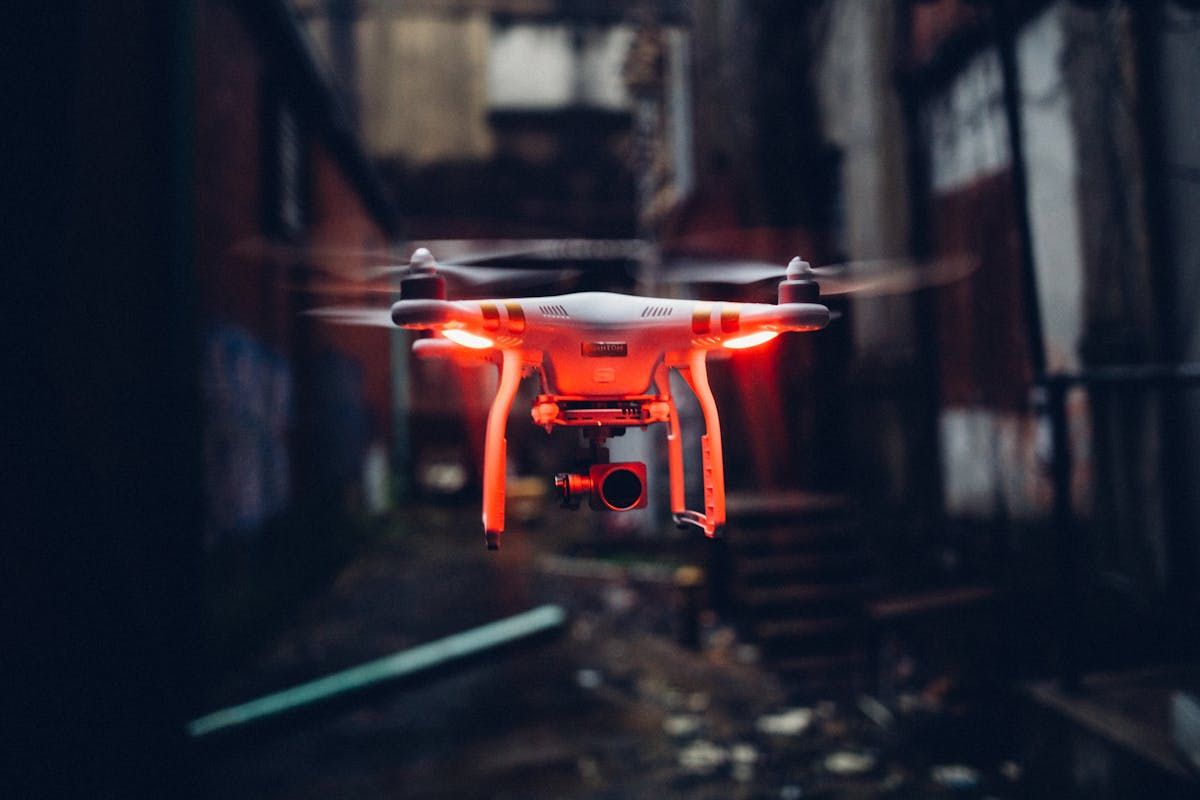
The Electronic Frontier Foundation (EFF) warned on June 26, 2026, that no U.S. law governs when police can deploy force from a drone — and that Congress must act before armed police drones become routine law enforcement equipment. The immediate catalyst: Skydio CEO Adam Bry reversed the company's written no-weapons pledge on June 15, confirming on a national podcast that the U.S. Army has already tested grenade droppers mounted on Skydio airframes.
Whether police can arm a drone is currently decided not by elected officials or federal law, but by the internal ethics policies of the company that built the hardware — a standard that just shifted at America's largest domestic drone manufacturer.
Background: Skydio's Pledge and Its Reversal
Skydio is the leading U.S.-based commercial drone maker and supplies Drone as a First Responder (DFR) fleets to thousands of police departments, fire departments, and 911 call centers. The company's website had included an explicit commitment stating it would not put weapons on its drones for domestic use — a pledge that gave public officials and civil liberties advocates some confidence as Skydio expanded into public safety.
That changed on June 15, 2026. In an episode of The Verge's Decoder podcast, Skydio CEO Adam Bry told host Nilay Patel that the earlier messaging had led people to believe the company would block weapons from being mounted on its aircraft, and that Skydio no longer holds that position. Bry confirmed the U.S. Army has already conducted experiments attaching grenade droppers to Skydio drones. He argued that drawing ethical red lines on weaponization would be "dangerously misguided."
The Legal Vacuum Behind Armed Police Drones
No federal statute in the United States specifically governs when law enforcement agencies may deploy lethal or non-lethal force from an unmanned aircraft. FAA regulations address airspace management, aircraft registration, and operational limits — not the use of force. State-level laws on armed drones vary widely and, in most states, are either minimal or nonexistent.
According to the Electronic Frontier Foundation, there are now more than 10,000 public safety drone programs operating across the United States. Before Skydio's reversal, the only meaningful barrier between a surveillance drone and a force-capable drone was a voluntary corporate policy — and that barrier just fell without any legislative process, court ruling, or public debate.
Understanding US drone laws makes this gap clearer: Part 107 and related FAA rules define who can fly what, where, and when. They say nothing about what a drone can carry or do once it is in the air under a law enforcement exemption.
The EFF argues that Congress has "precious little time" to establish binding rules before armed police drones move from isolated experiments to standard-issue equipment.
From Surveillance to Force: Two June 2026 Milestones
The distance from a surveillance drone to a force-capable one is shorter than most people assume. Two concrete developments from this month show how fast the gap is closing.
Armed school drones in Georgia and Florida: A company called Campus Guardian Angel is launching pilot programs in schools in both states for Fall 2026. The system deploys autonomous drones designed to swarm, distract, crash into, and spray irritants at potential threats. These programs are privately funded and require no federal regulatory review before launch.
Military-to-police technology migration: Skydio's CEO confirmed the U.S. Army has already run grenade-dropper experiments on Skydio platforms. Historically, surveillance technologies tested by the military — aerostats, cell-site simulators, license plate readers — have migrated to domestic policing within a few years. The EFF points to this pattern as a direct precedent for armed drones.
Both cases share the same structural problem: the decision to weaponize was made by a private company or a school district, not by a legislature.
What This Means for Drone Pilots
Armed police drone policies affect the entire drone community, not just law enforcement suppliers.
Regulatory spillover risk: Congress rarely passes narrow legislation. If armed drone incidents trigger a public backlash — a crash, an injury, a controversial use-of-force video — the resulting legislation would likely apply broad restrictions across all drone categories. Commercial pilots, photographers, and hobbyists could all find themselves regulated under rules written in response to armed law enforcement drones.
Corporate ethics as de facto regulation: The Skydio reversal is a live example of a broader trend visible across drones and artificial intelligence development. When no law defines the boundary, a manufacturer's self-imposed guidelines become the only constraint — and those can change overnight without notice to operators, customers, or the public.
Global precedent: The United States sets informal international norms for commercial drone policy. If American police agencies routinely deploy armed drones without a clear legal framework, other governments face pressure to follow suit or to impose blanket restrictions as a counterreaction. Either outcome reshapes the regulatory environment that all drone pilots operate in.
The EFF is asking drone pilots, civil liberties advocates, and industry stakeholders to contact their congressional representatives and support legislation that establishes clear, binding federal rules before armed police drones move from experiment to standard equipment.
FAQ
Sources: Electronic Frontier Foundation | DroneXL — EFF Warning | DroneXL — Skydio Reversal
More like this
Related Articles
Lowe's Launches Drone Delivery: Tools in 20 Minutes
Lowe's is now the first US home improvement chain offering drone delivery, using Wing and DoorDash to get tools and paint to your…
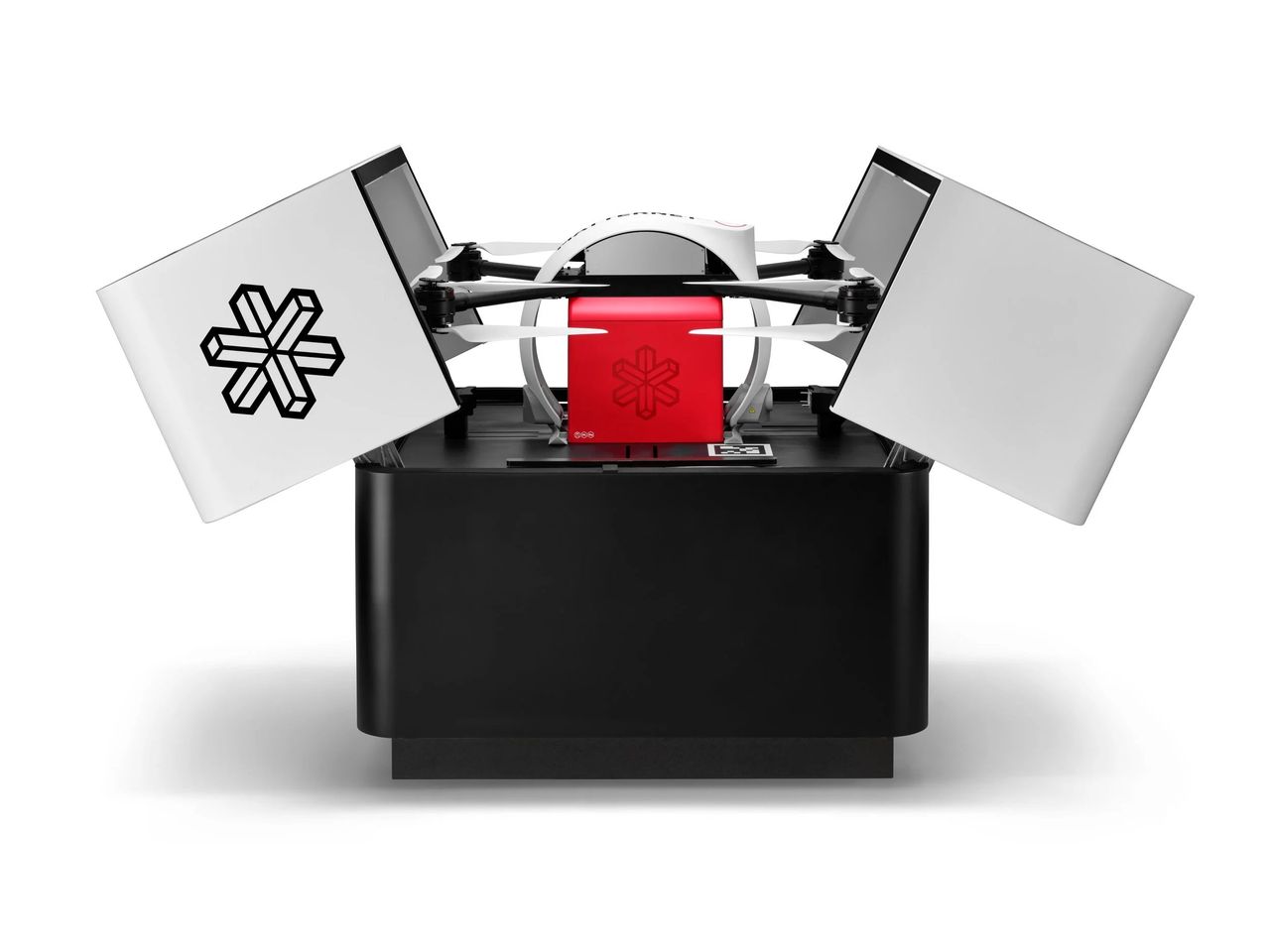
Matternet Unveils M3: 11-lb Drone, 10-Mile Range
Matternet unveiled the M3 autonomous drone delivery platform on Sept. 28, 2026: 11-pound payload, 10-mile range, new dock, and a 2…
Drone Pilot Guilty in CLT Runway Case: Up to 1 Year Jail
A Charlotte man faces up to a year in prison for flying a drone between two live runways at CLT — here's the federal law he broke…