AeroVironment's Locust Laser Wins First $50M Export Deal
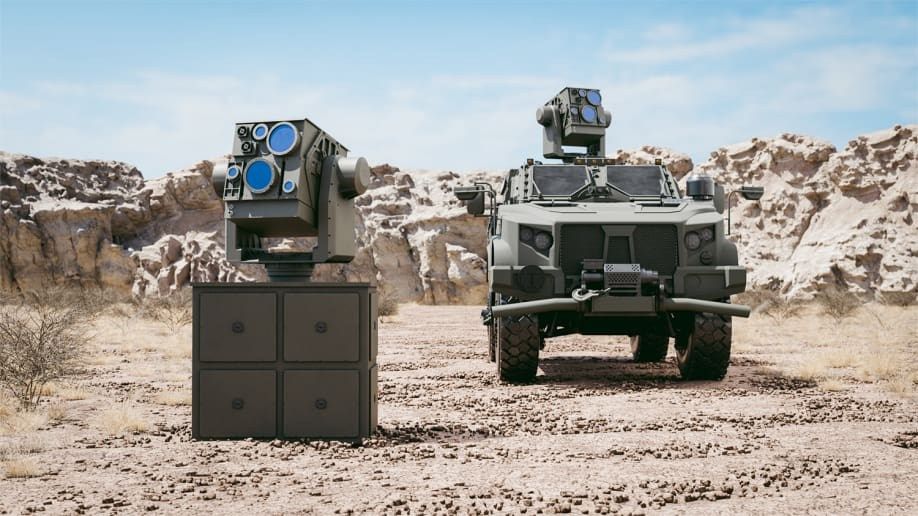
AeroVironment secured its first international order for the Locust directed-energy laser weapon system on September 8, 2026, a direct commercial sale worth more than $50 million. The deal marks the first export of a battle-tested counter-drone laser, as militaries worldwide race to field directed-energy weapons that can shoot down cheap drones for pennies per shot.
The buyer's identity was not disclosed in AeroVironment's announcement. The order was structured as a direct commercial sale (DCS) — negotiated straight between the manufacturer and the foreign customer — rather than routed through the U.S. government's Foreign Military Sales (FMS) process, a path that typically moves faster for allied buyers.
Background
Locust is a high-energy laser weapon built to shoot down Group 1–3 unmanned aircraft — drones ranging from small hobbyist-style quadcopters up to larger tactical UAS weighing several hundred pounds. It is one piece of AeroVironment's Halo_Shield, a modular, layered air-defense platform that combines detection sensors, tracking radar, and multiple "kill" methods — including lasers, jammers, and interceptor drones — into a single command-and-control network.
The international sale follows AeroVironment's $464.8 million contract with the U.S. Army in August 2026 for the Enduring-High Energy Laser (E-HEL) program, the first production-scale order for a high-energy laser weapon system in U.S. history. Locust has already logged real-world firsts: acknowledged laser kills against drones on the U.S. southern border, and deck-based test operations aboard the aircraft carrier USS George H.W. Bush.
"The threat from low-cost drones is global and has fundamentally changed the economics of warfare," AeroVironment CEO Wahid Nawabi said in the announcement. Mary Clum, the company's president of Space, Cyber, and Directed Energy, said the order "establishes a foundation for sustained and expanded international adoption."
Why Militaries Are Buying Directed-Energy Defenses
The economics behind the sale are stark. AeroVironment says each Locust shot costs less than $10 in electricity and consumables — a fraction of the $50,000 to $150,000 price of a single surface-to-air missile typically fired at a small drone. That gap has become impossible to ignore as drone swarms, cheap first-person-view (FPV) attack drones, and long-range one-way loitering munitions reshape modern battlefields, from Ukraine's front lines to repeated airport and base incursions across Europe and the Middle East.
Militaries and border agencies increasingly treat small drones as a persistent, low-cost threat rather than an occasional nuisance, which is pushing defense budgets toward layered counter-UAS systems that pair radar detection with cheap-to-fire kinetic and directed-energy interceptors. Locust's design — fixed-site, palletized, or vehicle-mounted — lets a buyer scale the same core weapon from a single air base to an entire coastline.
Directed-energy weapons also increasingly rely on the kind of autonomous target recognition and tracking software found in AI-driven drone systems, letting an operator cue Locust against a swarm faster than a human could track each threat manually.
What Locust Can Do
| Capability | Detail |
|---|---|
| Target class | Group 1–3 UAS (small to medium drones) |
| Cost per shot | Under $10 |
| Deployment modes | Fixed-site, palletized, vehicle-mounted |
| Integration | Multiple cueing sensors and C2 networks |
| Parent platform | Halo_Shield modular air-defense system |
| Prior contract | $464.8M U.S. Army E-HEL award (Aug. 2026) |
| New order | First international DCS, valued over $50M |
AeroVironment is also investing more than $30 million to expand Locust manufacturing in Albuquerque, New Mexico — a buildout the company says will create over 450 jobs and generate roughly $670 million in regional economic impact as international demand grows.
What This Means for Drone Pilots
This deal doesn't change any rule for hobbyist or commercial drone pilots, but it signals where counter-drone enforcement is heading globally. As more governments field directed-energy and kinetic counter-UAS systems around airports, military bases, and public events, the operational margin for flying carelessly near restricted airspace keeps shrinking — a drone that strays over a defended perimeter is no longer just a legal violation, it can be treated as a physical threat to be neutralized.
Pilots operating internationally, including near foreign military installations or during large public events guarded by counter-drone units, should treat published no-fly zones and temporary flight restrictions as hard boundaries. The trend also reinforces why regulators in the U.S., EU, and allied nations continue tightening Remote ID and airspace-authorization requirements: the same low-altitude gap that makes small drones valuable also makes them a target for the defense systems now scaling up worldwide.
FAQ
Sources: AeroVironment | Defense Daily
More like this
Related Articles
Massachusetts Drone Delivery Freeze: 16 Lawmakers Ask Healey
16 Massachusetts lawmakers asked Gov. Healey on Oct. 19, 2026 to freeze drone delivery certificates. MassDOT told Amazon it needs…
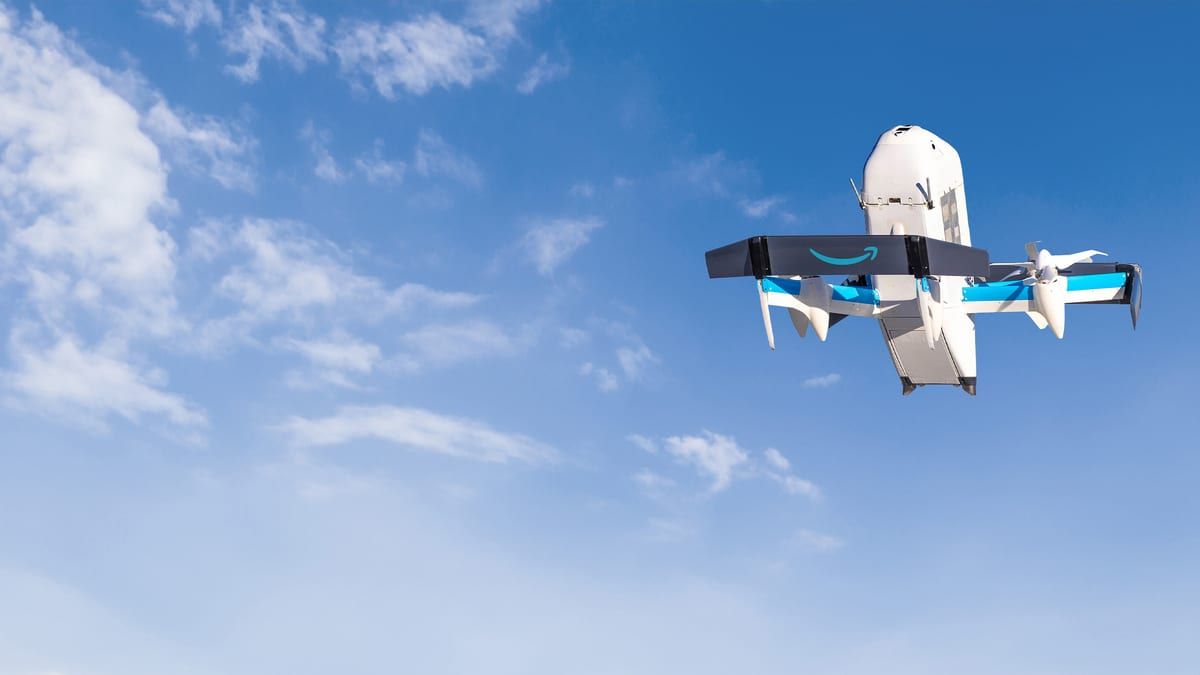
Amazon Drone Delivery Tallahassee: Mid-November Launch
Amazon Prime Air aims to start MK30 drone delivery in Tallahassee by mid-November, with up to 21 drones and a 7.5-mile range. Here…
Ghost Shark Sea Mines and Altius Drone Swarms Unveiled
Australia revealed Ghost Shark payloads on Oct. 19: 12 sea mines, Altius loitering-drone swarms and seabed caches. Here's what the…