DJI Air 3S
DJI Air 3S specs: 1-inch sensor, 3x tele camera, 50MP stills, 4K/60fps HDR, 46-min flight time. Launched Oct 2024 at $1,099 USD. Full specs vs the Air 3.
Price (USD)
$1,099
Full Specifications
| Weight | 720 g |
| Flight Time | 46 min |
| Max Speed | 75.6 km/h |
| Camera | CMOS 1", 50 MP, f/1.8 (wide) + CMOS 1/1.3", 50 MP (3× tele) |
| Video | 4K/60fps HDR, 4K/120fps, D-Log M, HLG |
| Obstacle Avoidance | Omnidirectional APAS 5.0 |
| Max Range | 20 km (FCC) |
| Wind Resistance | Level 7 (38 mph) |
| GPS | GPS + GLONASS + BeiDou + Galileo |
| Charging Time | 58 min (35W charger) |
| Dimensions | 207 × 100 × 84 mm (folded) |
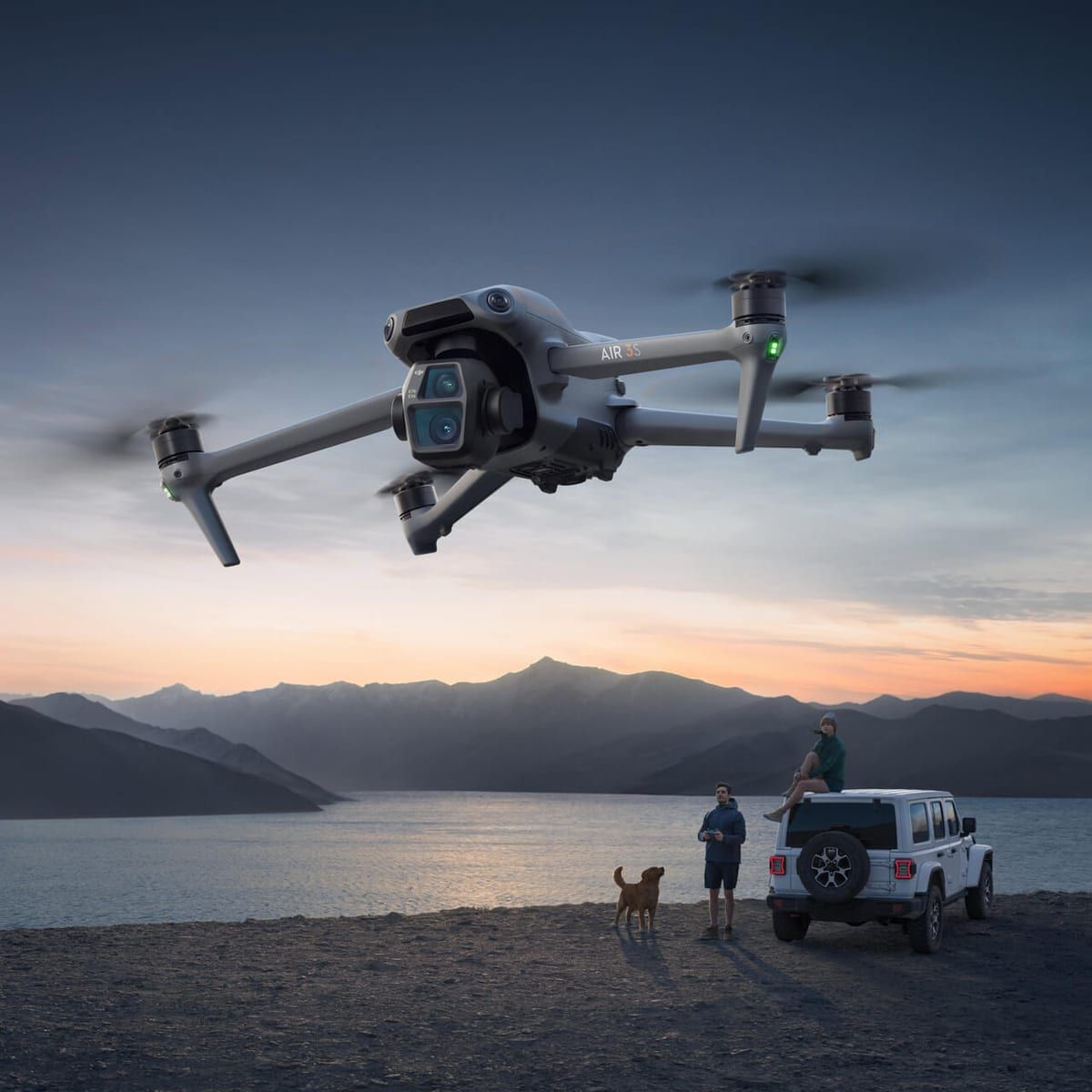
The DJI Air 3S weighs 720 g and launched in October 2024 at $1,099 USD, repositioning the Air line as DJI's most capable camera series below the Mavic models. Its dual-camera system pairs a 1" CMOS, 50 MP wide sensor (f/1.8 aperture) with a 1/1.3" CMOS, 50 MP 3× telephoto camera, recording 4K/60fps HDR video (up to 4K/120fps slow motion) with D-Log M and HLG color profiles. The most significant upgrade over the Air 3 is that one-inch sensor on the main camera, a format previously reserved for the Mavic 3 Classic and Mavic 3 Pro.
One-Inch Sensor: Why It Matters
A one-inch sensor captures significantly more light than the 1/1.3" sensor in the Air 3. In practical terms, this means noticeably cleaner images at ISO 800–1600, better dynamic range in high-contrast scenes (bright sky + dark foreground), and more natural background separation.
For photographers who shoot at golden hour, blue hour, or in challenging outdoor lighting, the one-inch sensor is a meaningful upgrade, not a spec-sheet distinction.
The tele camera (1/1.3", 50 MP, 70mm equivalent) is also upgraded from the Air 3's tele: same sensor size, higher resolution.
Simultaneous Dual-Camera Recording
The Air 3S supports simultaneous recording on both cameras, a capability absent from the Air 3. This enables split-screen compositions, seamless cuts between wide and tele without separate takes, and additional coverage flexibility in events and productions where you can't afford to miss a moment.
APAS 5.0
The updated obstacle avoidance system shows improved performance in vegetation and complex 3D environments compared to APAS 4.0 in the Air 3. It navigates denser environments with greater confidence.
For Whom
The Air 3S is the right choice for professional photographers and videographers who need the best possible image quality in a portable 720g package, particularly for mixed-light or low-light work. For purely daytime shooting, the Air 3 at a lower price delivers 85–90% of the result. The Air 3S earns its price premium in challenging lighting conditions.
FAQ
Sources: DJI: Air 3S specs